








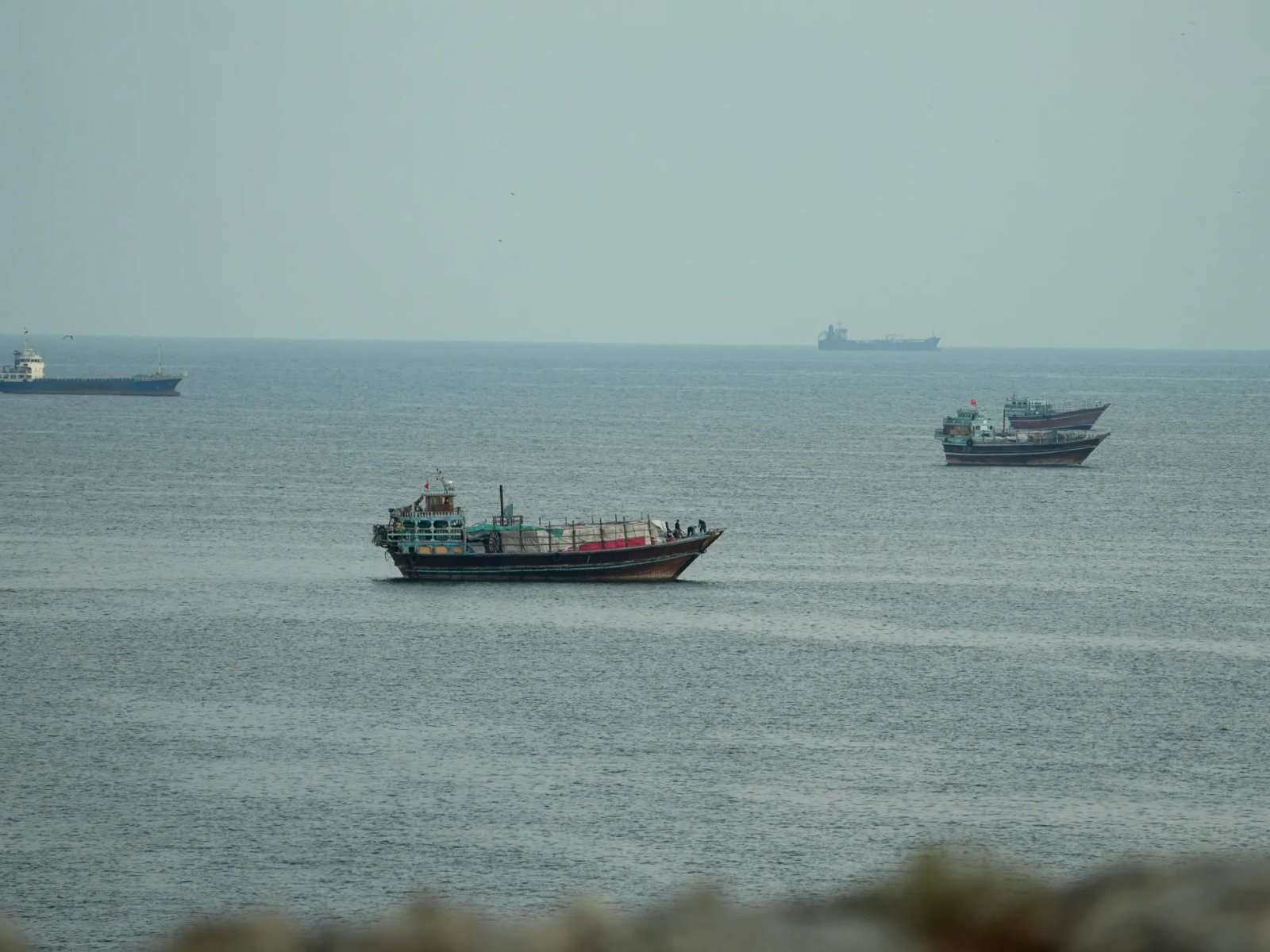
The United States military has significantly escalated its enforcement of the blockade against Iran, issuing a stern warning that any vessel participating in ship-to-ship transfers of Iranian cargo will be subject to direct military intervention.
The advisory, released Wednesday by US Central Command (CENTCOM), signals an aggressive expansion of Washington’s strategy to squeeze Tehran’s economy. According to the directive, ships that receive cargo originating from Iranian ports or its coastline will now be deemed “evading the blockade,” regardless of whether the receiving vessel ever enters Iranian waters. CENTCOM explicitly stated that such ships face the prospect of being “stopped, boarded, diverted, captured, or directed to proceed to the Iranian port where the cargo originated,” with the threat of authorized use of force for non-compliance.
This move marks a tactical pivot intended to seal critical loopholes that have allowed Iranian petroleum products to continue reaching international markets despite the naval blockade in place since mid-July.
For Tehran, the economic stakes are existential. Oil exports account for roughly 30 percent of the Iranian economy, and analysts suggest that the intensified US pressure is pushing the country’s export capacity toward zero. While Iranian authorities have not issued a formal diplomatic response to the new policy, state-affiliated media has struck a defiant tone. An editorial in the Fars News Agency suggested that Tehran might test the blockade by deploying a fleet of tankers, while simultaneously threatening to target regional energy infrastructure—specifically in the United Arab Emirates—if Washington intervenes.
Military experts warn that this tightening of the net significantly elevates the risk of a broader regional conflict. “This is potentially one of the most dangerous escalation scenarios we have seen in recent weeks,” said Andreas Krieg, an associate professor in Security Studies at King’s College London.
While Iran lacks the naval superiority to physically defeat the US blockade in a sustained conflict, analysts argue that Tehran may instead focus on making the enforcement of the blockade economically and politically unsustainable. By potentially striking at regional energy infrastructure or harassing maritime traffic, Iran could seek to spread the “economic pain” of the blockade to neighboring Gulf states, thereby testing the resolve of Washington’s regional partners.
The potential for miscalculation is high. If the U.S. Navy moves to sink or seize a vessel involved in an illicit transfer, the ensuing retaliation could trigger a cascade of attacks, threatening vital maritime chokepoints like the Strait of Hormuz and the Bab el-Mandeb.
“The fundamental contradiction is that Washington believes the blockade is working, while Tehran is approaching a point where the status quo is becoming economically intolerable,” Krieg noted. “The more successful the blockade becomes, the greater Iran’s incentive to escalate rather than continue absorbing the costs.”
As tensions simmer, the region faces the precarious reality where a single tactical operation intended to test resolve could inadvertently serve as the catalyst for a full-scale regional war.
Disclaimer: This content is auto-generated for informational purposes only.
Source: Read Original News