







Cinema is a Political Act: Girish Kasaravalli Reflects on 50 Years of Parallel Cinema at IFFI
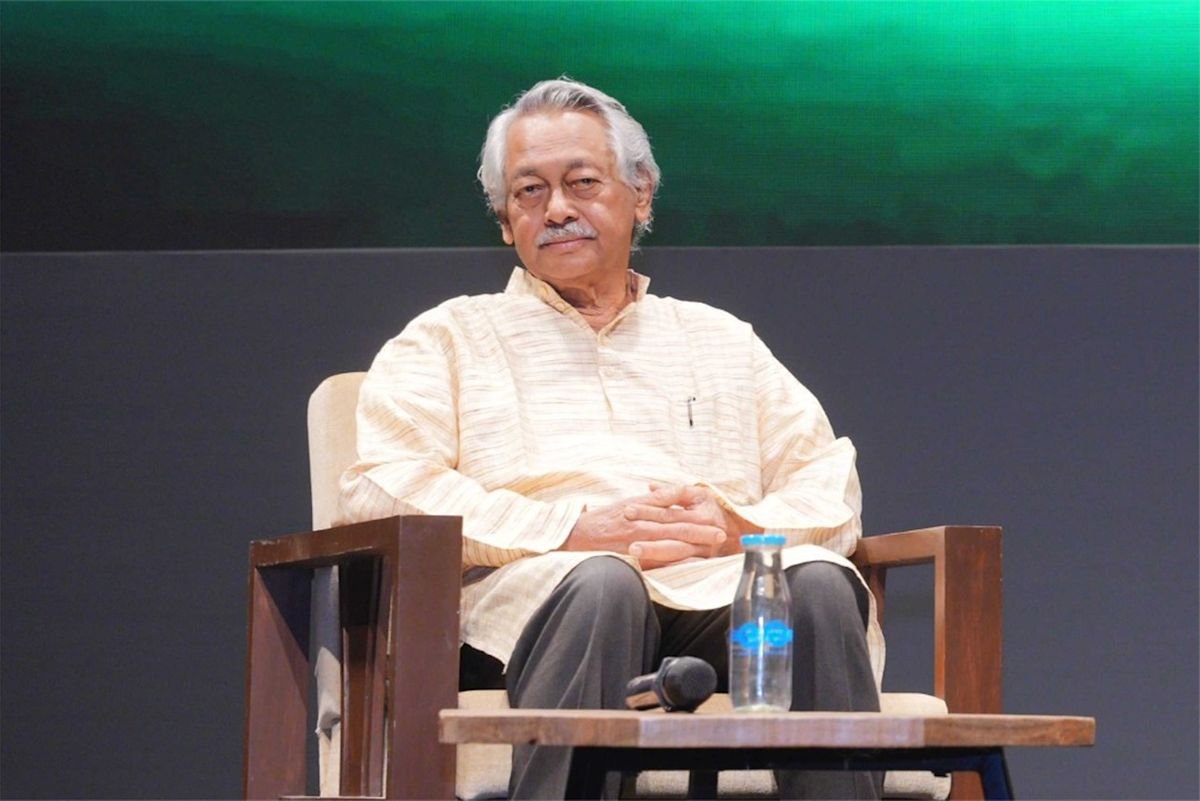
The 57th International Film Festival of India (IFFI) in Goa recently played host to a profound retrospective of Indian cinema, as veteran director Girish Kasaravalli took the stage for a masterclass titled “The Moral Universe of Parallel Cinema: 50 Years of Girish Kasaravalli.” At 75, the auteur engaged in a sprawling conversation with Variety’s Asia editor Naman Ramachandran, dissecting his influential career and the enduring burden of the filmmaker in a polarized society.
The Politics of the Frame
Addressing the age-old debate between art-house and mainstream cinema, Kasaravalli offered a firm stance: there is no such thing as “just entertainment.” According to the filmmaker, every choice made behind the camera serves as a political statement.
“Whoever makes something, whether he makes mainstream cinema or art cinema, he is making a political statement, either in support of the dominant ideology or opposing the dominant ideology,” he noted. For Kasaravalli, the act of filmmaking is inherently tied to the power structures of society, and a creator cannot claim neutrality when their work inevitably upholds or challenges the status quo.
The Anatomy of ‘Othering’
Throughout his storied career—spanning seminal works like Ghatashraddha (1977), Tabarana Kathe (1986), and Dweepa (2002)—Kasaravalli has consistently scrutinized how social structures marginalize individuals. When asked if his debut masterpiece Ghatashraddha, which deals with religious orthodoxy and exclusion, remains relevant to modern India, he asserted that his work has always been a study in “othering.”
“I always talk about how society looks at some people from a different lens, and in that process, they make them ‘other,'” he explained, labeling this alienation as the ultimate form of cruelty. Yet, he is careful never to turn his characters into simple vessels for ideology. Drawing inspiration from Jean-Luc Godard, he likened the creation of characters to the assessment of a home; one must view the subject from both the outside and the inside before forming a judgment, acknowledging that human beings are often too complex for binary moral labeling.
Aesthetic Integrity and the ‘Imperfect’
Kasaravalli’s approach to visual language is rooted in a rejection of Western aesthetic standards. He championed the concept of “imperfect cinema,” a term borrowed from Cuban filmmaker Julio García Espinosa, which challenges the assumption that technical perfection is the ultimate goal of film.
“We should make films according to that condition; we should never imitate the West,” he argued. For his own projects, such as Gulabi Talkies, he pushed for an “actuality” that eschewed pretty, conventional imagery. By opting for 16mm film to capture the grain and texture of the coastal environment, he prioritized the authenticity of the milieu over the polished gloss of traditional cinematography.
The Illusion of Closure
As the masterclass drew to a close, the discussion turned to the state of contemporary cinema and the role of the director. Responding to questions about his penchant for open-ended narratives, Kasaravalli insisted that a filmmaker who claims to have all the answers is being dishonest.
“He is also as confused as you are. He only throws up options so that you can start thinking. There is nothing called closure… life is always open,” he remarked.
The session concluded with a heartfelt tribute from IFFI festival director Ashutosh Gowariker, who hailed the director’s work as “textbooks” of cinema. Gowariker noted that Kasaravalli’s mastery lies in his ability to let his actors breathe, forcing the audience to grapple with the characters’ interior lives—a testament to a half-century of storytelling that refuses to compromise on depth or truth.
Disclaimer: This content is auto-generated for informational purposes only.
Source: Read Original News