





As global populations continue to age, the challenge of maintaining health and independence in later life has become a central focus of public health research. A recent study conducted in the Yanzhou District of Jining City, Shandong Province, offers new insights into this issue, revealing how individual biological resources and the physical environment interact to shape the trajectory of healthy aging.
The research, published in the journal Frontiers in Public Health, was led by Yuan Dong and Linxi Tang of the University of Science Malaysia. By analyzing data from 806 adults aged 60 and older, the study reinforces the “Healthy Aging Framework,” which posits that both an individual’s intrinsic capacity—their physiological and psychological resources—and the age-friendliness of their community are essential pillars for long-term well-being.
The investigation sought to answer a critical question: do lifestyle choices serve as a bridge between a person’s inherent health and their environment? Specifically, the researchers examined whether engagement in health-promoting behaviors acts as an indirect mechanism that allows individuals with higher intrinsic capacity and better community support to achieve superior aging outcomes.
Between September 2024 and January 2025, the team conducted comprehensive surveys across both urban and rural areas of the Yanzhou District. Participants were evaluated using four standardized tools: the Healthy Aging Questionnaire, the Chinese Frailty Screening Scale (to measure intrinsic capacity), the Age-Friendly Cities and Communities Questionnaire, and the Health-Promoting Behavior Scale for Older Adults. To ensure the robustness of their findings, the researchers employed structural equation modeling, accounting for a wide array of factors including age, income, education, marital status, and the presence of chronic diseases.
The data revealed a strong, positive link between supportive environments and healthy aging. Even after adjusting for demographic and health-related covariates, the study found that health-promoting behaviors—such as nutrition, physical activity, and social engagement—significantly mediated the relationship between a person’s surroundings and their overall health.
In the adjusted statistical model, the indirect association between intrinsic capacity and healthy aging through healthy behaviors was found to be statistically significant (beta = 0.054). Similarly, the role of an age-friendly environment proved even more influential, showing an indirect association of beta = 0.087. These results suggest that when older adults are placed in environments that facilitate easy access to services, social connection, and safe public spaces, they are more likely to adopt healthy routines, which in turn fosters better physical and cognitive longevity.
“Older community members who demonstrate greater intrinsic capacity, live in more supportive age-friendly surroundings, and report higher participation in health-promoting behaviors consistently attain higher healthy aging scores,” the authors noted in their findings.
While the study offers a clear picture of these structural correlations, the authors advise caution regarding the interpretation of their data. Because the research relied on a cross-sectional design—meaning data was collected at a single point in time—it cannot definitively prove that these factors cause healthy aging in a linear, causal sequence. Instead, the study highlights a complex, interrelated network where environment and behavior reinforce one another.
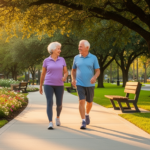
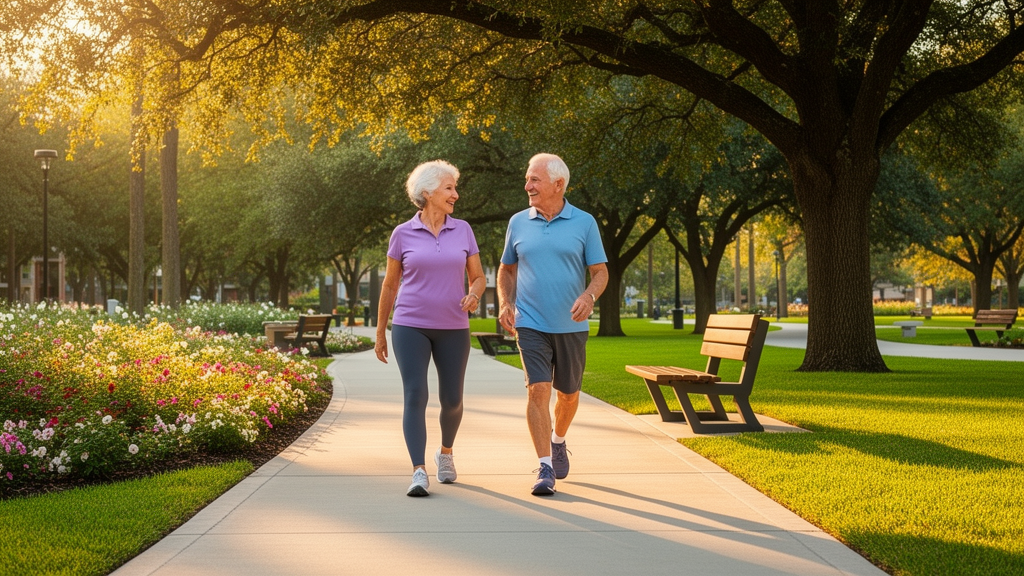
As urban centers continue to expand, the implications for policymakers are significant. The study suggests that focusing solely on medical interventions for the elderly may be insufficient. Instead, public health initiatives should prioritize the development of “age-friendly” infrastructure—such as accessible transportation, green spaces, and community health hubs—to empower older adults to engage in the very behaviors that sustain their independence. By investing in the environment, local governments may effectively cultivate the foundational conditions necessary for their aging populations to thrive.
Disclaimer: This content is auto-generated for informational purposes only.
Source: Read Original News