







The Minerals Income Investment Fund (MIIF) has issued a stern call for mining companies operating within Ghana to elevate their commitment to environmental conservation and ensure that the wealth extracted from the nation’s soil serves as a catalyst for long-term national development.
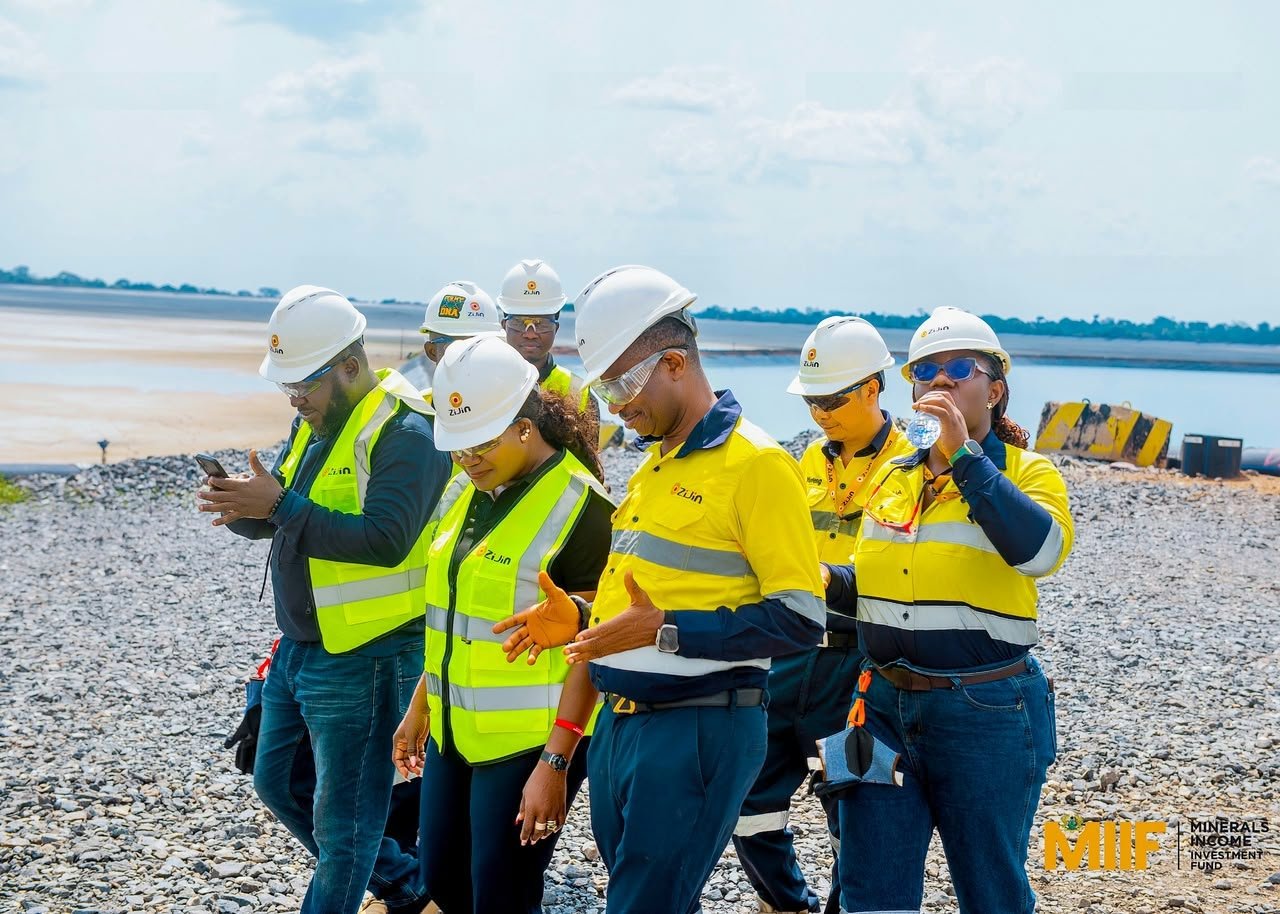
This appeal was made by Mrs. Justina Nelson, the Chief Executive Officer (CEO) of MIIF, during an official visit to the Zijin Akyem Mine in the Birim North District of the Eastern Region. The visit, which included key members of the Fund’s executive and senior management, served as part of a broader stakeholder engagement strategy aimed at assessing the operational landscape, investment climate, and socio-economic contributions of the extractive sector.
For the MIIF, the primary sovereign wealth fund of Ghana, the mandate transcends the mere collection of mineral royalties. During her address, Mrs. Nelson emphasized that the Fund is deeply invested in the principle of sustainable wealth creation. She noted that responsible stewardship of mineral resources is essential not only for current economic growth but for safeguarding the prosperity of future generations.
“The Fund’s interest extends beyond mineral royalty receipts,” Mrs. Nelson stated. “We are focused on ensuring that mining operations are conducted with a rigorous commitment to environmental integrity and that the benefits derived from these activities contribute meaningfully to the holistic development of Ghana.”
The delegation received a comprehensive briefing from the management of Zijin Akyem Mine, which officially took over operations in April 2025. Mr. Agyemang Okyere, the General Manager of the mine, provided insights into the company’s ongoing efforts to optimize operational efficiency and bolster production capacity. He highlighted that significant investments are currently being directed toward open-pit expansion, processing plant upgrades, and the strengthening of tailings storage facilities, all of which are designed to extend the life of the mine and stabilize long-term production.
Beyond operational metrics, the discourse focused heavily on the mine’s social and environmental responsibilities. Mr. Okyere emphasized the company’s commitment to local integration, citing proactive measures in job creation, technical skills development, and the prioritization of local procurement. These initiatives, he noted, are intended to support the socio-economic resilience of host communities by fostering alternative livelihoods that persist even after mining activities eventually cease.
A pivotal segment of the visit involved a presentation by the mine’s technical team, which detailed the company’s environmental sustainability framework. The team outlined several core areas of focus, including biodiversity conservation, progressive land reclamation, sophisticated water management systems, and stringent waste control protocols. These initiatives are essential in mitigating the ecological footprint of large-scale extraction and ensuring compliance with national and international environmental standards.
Furthermore, the technical team highlighted the mine’s community development programmes, which represent a strategic alignment between the corporate entity and the needs of the surrounding population. These programmes have channeled resources into critical sectors such as education, healthcare infrastructure, and sanitation, providing tangible benefits to the local populace.
The MIIF delegation’s visit underscored the increasing pressure on extractive firms to reconcile high-output production with the imperatives of environmental and social governance (ESG). As Ghana continues to leverage its mineral wealth for industrialization and economic stability, the government—through institutions like MIIF—is signaling that it expects mining companies to act as partners in progress, ensuring that the legacy of the industry is one of development rather than depletion.
By demanding accountability and transparency in environmental management, the Fund seeks to ensure that the ecological heritage of the Birim North District and other mining areas remains protected, even as the country capitalizes on its abundant natural resources.
Disclaimer: This content is auto-generated for informational purposes only.
Source: Read Original News