






The cultural footprint of the Ramayana is monumental, serving not just as an ancient epic but as a spiritual and moral North Star for over a billion people. Whenever a filmmaker dares to adapt such foundational mythology, they inevitably walk a tightrope between creative interpretation and the sacred expectations of the audience. Currently, that tightrope is fraying. With director Nitesh Tiwari’s upcoming Ramayana: Part 1 already generating immense buzz, the production has hit a firestorm of controversy, as the Vishva Hindu Parishad (VHP) has officially demanded a ban on the film, setting the stage for one of the most contentious releases in recent Bollywood history.
The Epic Under Fire: VHP’s Stance on Creative Liberty
At the heart of the outcry is a fundamental disagreement over how much liberty is acceptable when translating scripture to the screen. VHP International President Alok Kumar has been vocal and uncompromising, arguing that the film does not merely embellish for dramatic effect but fundamentally compromises the spiritual integrity of the epic.
The VHP’s objection is two-fold. First, they argue that the film engages in “historical fabrication,” allegedly omitting vital aspects of Lord Ram’s character. Specifically, the organization points to the lack of portrayal regarding Ram’s interactions with societal outcasts—such as his relationship with Nishadraj or his treatment of Kevat. According to the VHP, these moments are not minor subplots; they are essential pedagogical pillars that showcase Lord Ram’s commitment to social harmony and the eradication of caste-based prejudice. By allegedly sidelining these narratives, the VHP claims the film renders a hollow version of the Ramayana that fails to capture its true essence.
The ‘Ravana’ Problem: Hero or Villain?
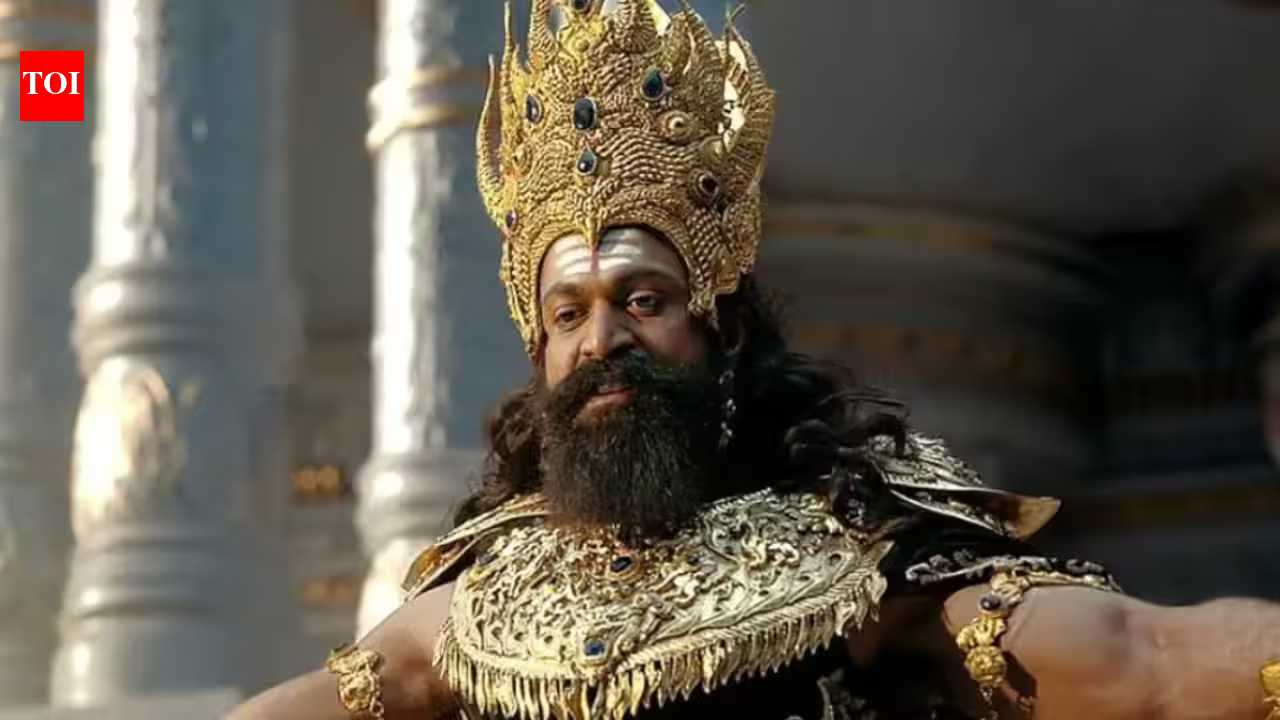
Perhaps the most combustible element of this controversy involves the portrayal of the primary antagonist, Ravana. Played by the charismatic Kannada superstar Yash—a casting choice that has excited fans of high-octane cinema—the character is reportedly being presented through a lens that challenges the traditional binary of “good versus evil.”
Critics from the VHP have alleged that the film attempts to rebrand Ravana, casting him as a “liberator of the oppressed” and a champion of the marginalized. In the traditional narrative, Ravana is the embodiment of vanity and ego, his downfall being the inevitable consequence of his moral bankruptcy. If the film indeed attempts to pivot toward a more sympathetic, nuanced, or “modernized” reading of the demon king, it is directly colliding with a deeply entrenched religious consensus. The VHP views this as an attempt to sanitize a villain to suit a contemporary political narrative—a charge that the studio and the creative team will find difficult to shake as the release date approaches.
The Clash Between Cinema and Scripture
This debate raises an age-old question in the world of entertainment: Does art exist to serve the source material, or does the source material provide a sandbox for the artist?
Namit Malhotra’s ambitious production aims to bring an international, visual-effects-heavy scale to the story, likely seeking to bridge the gap between traditional Indian values and modern blockbuster expectations. However, in the process of scaling up the narrative, the film seems to have invited an scrutiny that standard dramas rarely face. The VHP’s demand for the revocation of the film’s censor certificate and the cessation of screenings is a blunt instrument, yet it signals the depth of the anxiety surrounding this project. For the filmmakers, the challenge is to prove that their creative choices aren’t “distortions,” but rather artistic decisions meant to bridge the gap for a new generation. For their critics, no amount of technical brilliance can justify what they perceive as a sacrilegious departure from tradition.
Political Narratives and Cultural Ownership
The accusation that the film is “pushing a political narrative” is the most potent weapon in the VHP’s arsenal. In the current climate, where the Ramayana is deeply linked to national identity and socio-political discourse, any deviation from the conventional script is often viewed as a partisan maneuver.
By labeling the film as a project that hurts the sentiments of “more than one billion devotees,” the VHP is framing this not as a movie review, but as a defense of cultural heritage. This puts Ranbir Kapoor, who portrays Lord Ram, in an incredibly precarious position. As one of the industry’s most bankable stars, Kapoor is used to intense public scrutiny, but being the face of a project accused of religious distortion is a new frontier of pressure. The film’s success now depends on more than just box office numbers and CGI quality; it depends on whether the makers can de-escalate the perception that they are “subverting” the story for an agenda.
What Lies Ahead for the Production?
As the controversy simmers, the film’s producers face a difficult road. They must decide whether to engage with the VHP’s specific criticisms—perhaps by clarifying the film’s stance on the characters mentioned—or to hold firm to their artistic vision and weather the storm. History has shown that legal hurdles and calls for bans can either serve to derail a project entirely or, paradoxically, turn it into a lightning rod for publicity that only increases audience curiosity.
Whether or not the film successfully makes it to theaters without further friction remains to be seen. However, one thing is certain: the conversation surrounding Ramayana: Part 1 has moved far beyond the realm of casting rumors and trailer leaks. It has become a battleground for how a nation remembers its past and who holds the right to define its most sacred stories. For now, the audience waits, caught between the desire to see a legendary epic brought to life with modern technology and the mounting pressure to protect the traditions that have survived for millennia.
Disclaimer: This content is auto-generated for informational purposes only.
Source: Read Original News