


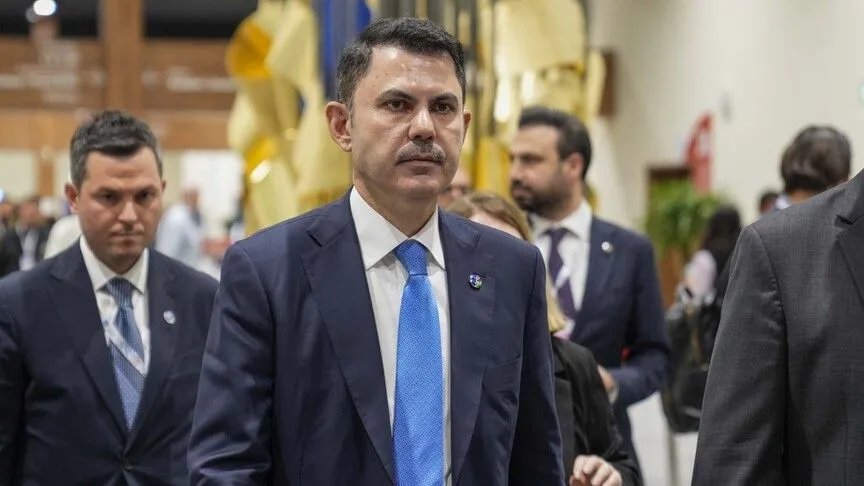
ANTALYA — The COP31 climate summit has concluded in a state of diplomatic impasse, with the Turkish presidency confirming that no consensus could be reached on a final agreement. Following weeks of intense negotiations, COP31 President and Turkish Environment Minister Murat Kurum announced on Sunday that the summit would end without a new, unified text, citing obstructionist tactics by various member states.
Speaking to reporters after a final plenary session in Antalya, Minister Kurum expressed deep frustration with the negotiation process, highlighting that progress was frequently derailed by procedural disputes rather than substantive climate action.
“Unfortunately, some countries became fixated on a word or an expression and brought other issues, unrelated to climate, into the discussions, preventing the process from moving forward,” Kurum stated. According to the Turkish Environment Ministry, these diplomatic hurdles prevented the summit from achieving the intended breakthrough on critical environmental policies.
The COP31 presidency had entered the conference with an ambitious agenda, proposing a suite of measures designed to accelerate the global transition to renewable energy. Central to these proposals were commitments to the protection of mountain ecosystems and oceans, as well as frameworks to promote carbon capture technologies in strict alignment with the Paris Agreement. A primary objective throughout the summit was to reaffirm and operationalize the 1.5°C temperature goal, a threshold scientists insist is vital to avoiding the most catastrophic impacts of climate change.
Despite what the presidency described as extensive efforts to facilitate dialogue—including a collaborative push alongside Australia—the divide between participating nations proved insurmountable. Minister Kurum noted that while a segment of the 196 participating countries signaled support for the proposed cover decision, others remained firmly opposed, effectively blocking a path to consensus.
In a definitive move, the presidency announced that it would not be drafting a new document to replace the stalled text. “There will be no new text from now on. We will not work on another text in an environment where consensus has not been reached,” Kurum said. He stressed that the presidency had exhausted its role as a facilitator, shifting the responsibility for the outcome directly onto the member states.
The failure to produce a unified agreement has prompted concerns regarding the efficacy of the current multilateral negotiation model. Minister Kurum issued a stark warning regarding the political stagnation characterizing the summit, suggesting that the repetitive nature of failed negotiations provides little value in the face of an accelerating climate crisis. “There is no benefit to anyone in a system built around holding meetings and failing to make decisions in negotiation rooms,” he warned.
As the summit adjourns, the focus shifts to how global climate efforts will proceed in the absence of a new COP31 mandate. Minister Kurum stated that the presidency would continue to prioritize the implementation of existing decisions established under the Paris Agreement. However, he emphasized that the international community now faces a critical moment of accountability.
“We did everything we could,” Kurum added, underscoring that the responsibility for the lack of progress rests with the collective of 196 nations.
While the Antalya summit concludes without the hoped-for breakthrough, observers remain concerned that the diplomatic deadlock could stall critical momentum needed to address rising global temperatures. With the window for climate action narrowing, the outcome of COP31 serves as a sober reminder of the ongoing tension between national interests and the global imperative to mitigate environmental collapse.
Disclaimer: This content is auto-generated for informational purposes only.
Source: Read Original News