




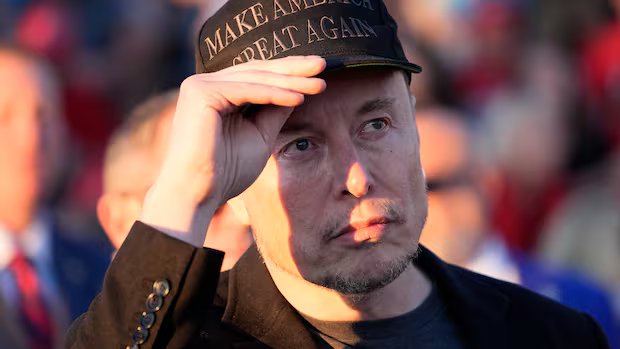
Elon Musk, the world’s richest man and a central figure in the Make America Great Again (MAGA) movement over the past two years, is officially distancing himself from the brand. Following a bruising midterm election cycle that saw a “blue wave” return Democrats to power, Musk is now characterizing his past political alignments as a misunderstanding.
“I’m not MAGA,” the Tesla and SpaceX CEO declared earlier this week during an interview at the New York Times’ DealBook Summit. “I’m not sure what MAGA means. If that means sort of blind adherence to a set of policies by the Republican Party, then I certainly don’t have that. I think there are positives and negatives in both parties.”
The pivot marks a stunning reversal for a billionaire who spent upwards of $400 million on Trump-aligned Republican candidates in the recent midterms—the highest individual campaign spend in the cycle—and frequently adopted the “Dark MAGA” moniker during 2024 and 2025 campaign events.
Political analysts are dismissing the rebrand as both opportunistic and transparent. “Now that it’s on the losing side, all of a sudden, he’s not MAGA,” said Todd Belt, a professor of political management at George Washington University. “This is just laughable. This is the guy who glossed himself ‘dark MAGA’ and had black MAGA stuff put together. He was completely in with it.”
The sudden distancing comes as Musk faces mounting legal and business liabilities. With Democrats having secured control of both the House and the Senate, the political climate in Washington has shifted abruptly. Analysts suggest Musk is attempting to insulate himself from anticipated scrutiny, particularly concerning his role in the Department of Government Efficiency (DOGE), a project that triggered investigations into the dismantling of foreign aid and allegations of illegal access to sensitive American data.
Matthew Dallek, a historian at George Washington University, argues that Musk’s attempt to claim he is a “moderate” fails to account for his actions. Dallek pointed specifically to the $200 million Musk funneled into the campaign of Texas Senate nominee Ken Paxton, widely considered one of the most staunchly MAGA candidates in the country.
“Musk has spent years making his ‘MAGA bed,'” Dallek said. “Now he’s got to lie in it, even when it’s politically uncomfortable.”
Beyond the ballot box, Musk’s business empire—heavily concentrated in states like Texas—now faces a government landscape no longer occupied by his allies. Potential regulatory hurdles, environmental investigations, and tax inquiries regarding his vast aerospace and tech infrastructure loom on the horizon.
As the political tides turn, observers believe Musk is attempting to “not poke the bear.” However, with the MAGA movement’s favorability at record lows, the tech mogul appears to have concluded that his previous political identity has become a significant liability to his bottom line.
Disclaimer: This content is auto-generated for informational purposes only.
Source: Read Original News