







MEXICO CITY — Explosions, burning vehicles, and intense urban warfare gripped the state of Sinaloa overnight as Mexican security forces captured Fausto Isidro Meza Flores, the high-ranking cartel kingpin known as “El Chapo Isidro.”
Meza Flores, a top leader of the Beltrán Leyva criminal organization and a key ally to the “Los Mayos” faction of the Sinaloa Cartel, was one of the FBI’s 10 most wanted fugitives. His arrest represents a significant, albeit volatile, security victory for the administration of Mexican President Claudia Sheinbaum, which has faced mounting pressure from the United States to dismantle powerful drug trafficking networks.
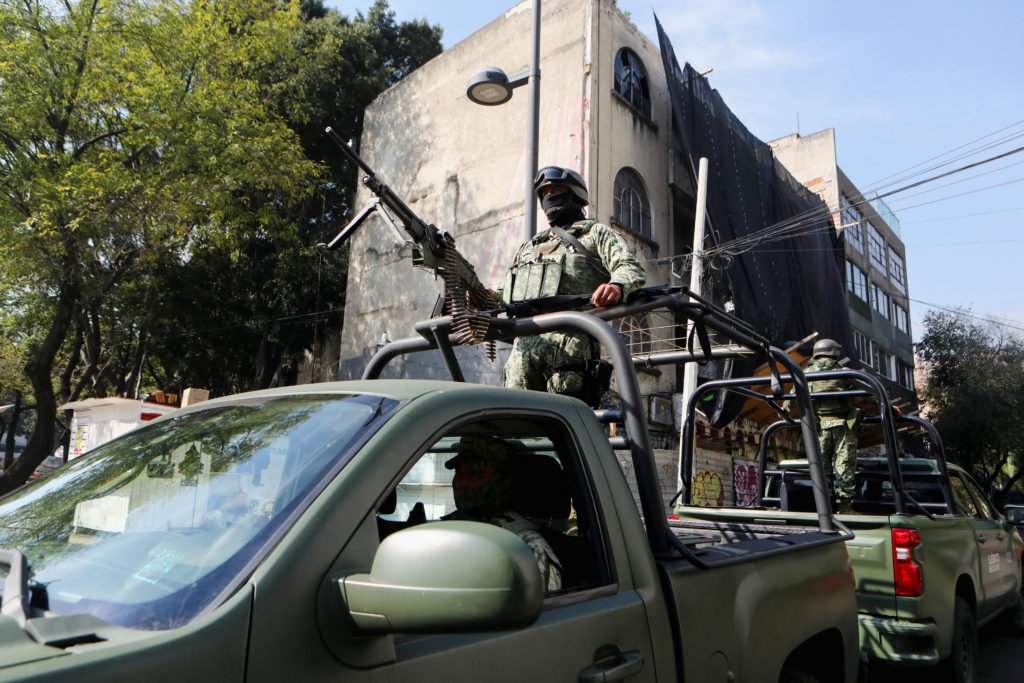
The operation, executed with “stealth and surprise” in the city of Guasave, triggered an immediate and ferocious response from cartel operatives. Armed with heavy weaponry and explosives, gunmen set fire to cars, trucks, and businesses, effectively paralyzing the city as they attempted to prevent the military from extracting their leader.
“Last night, many businesses were burned… along with cars and trucks,” said Paola Sánchez, a local firefighter. She described a night of terror as residents scrambled for cover in grocery stores and homes, while circling helicopters engaged in gunfights overhead.
Federal officials noted that the intensity of the cartel’s resistance prevented the army and National Guard from successfully escorting Meza Flores out of the city until 4 a.m. Saturday. At least 10 major roadblocks composed of burning vehicles were established by gunmen in a desperate attempt to stall the transfer.
Intelligence sharing between the Mexican government and the Trump administration was cited as a critical component in locating the kingpin. The U.S. Drug Enforcement Administration (DEA) lauded the capture as a “significant blow” to an organization responsible for fueling the fentanyl crisis in American communities.
However, security analysts warn that the “kingpin strategy”—targeting high-profile leaders without dismantling the underlying infrastructure—often carries a heavy cost. “They arrested the No. 1 and No. 2, but the entire network of hit men, street-level drug dealers, and political connections remains intact,” said security expert David Saucedo. He cautioned that the removal of a dominant figure often ignites brutal internal power struggles, potentially leading to a fresh wave of bloodshed in a region already fracturing under rival cartel factions.
As of Saturday morning, relative calm had returned to Guasave. Security Secretary Omar García Harfuch confirmed that armed forces would remain deployed throughout Sinaloa to maintain order. While the Mexican government celebrates the arrest as a step toward pacification, the lingering smoke from the night’s chaos serves as a stark reminder of the deeply entrenched power cartels still wield in the state.
Disclaimer: This content is auto-generated for informational purposes only.
Source: Read Original News