






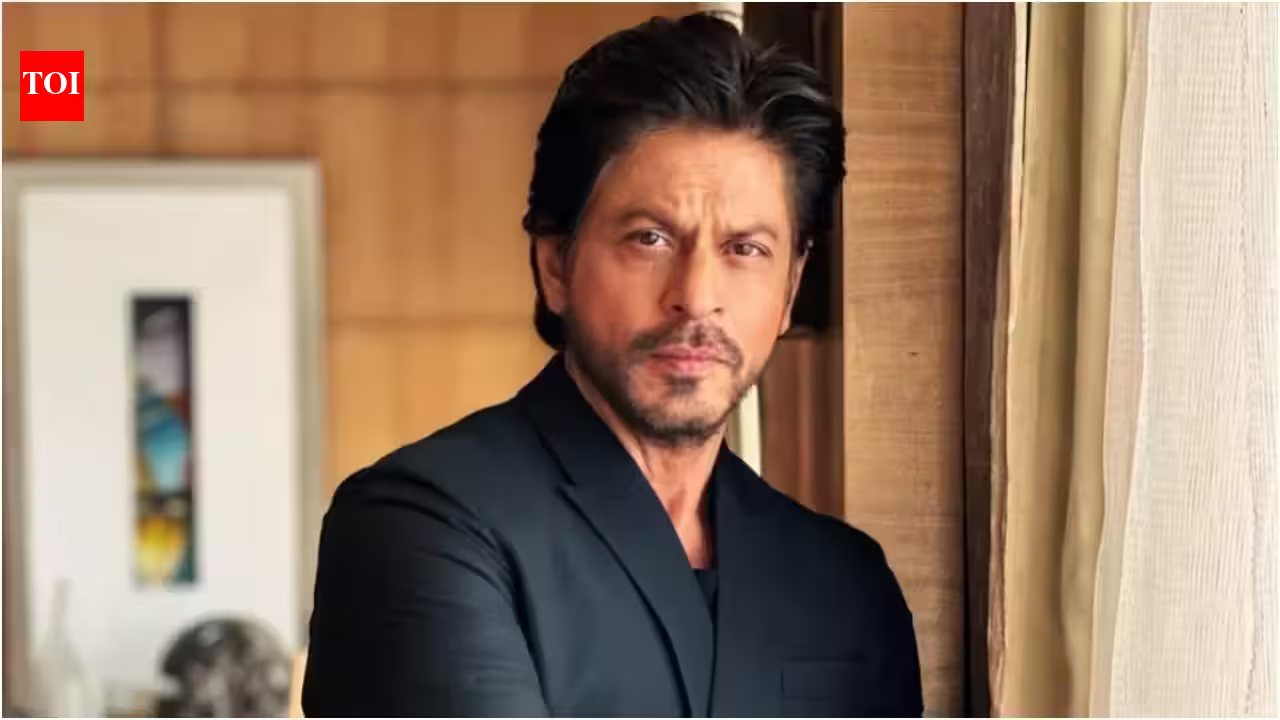
In an industry that often thrives on high-octane spectacle and the fleeting nature of box-office trends, it is rare to see the “King of Bollywood” step away from the glare of promotion to occupy the role of a statesman. Yet, this past Saturday, Shah Rukh Khan did exactly that. At the Global Peace Honours in Mumbai, the superstar traded the typical fanfare of a press junket for a poignant, deeply personal address that resonated far beyond the walls of the venue.
With the city of Mumbai having its own scars from historical tragedies, the atmosphere in the room was heavy with reverence. Khan’s presence, however, offered a sense of grounding. He wasn’t there to promote a film; he was there to advocate for the most difficult script of all: global harmony.
## The Lessons of Fatherhood: Turning Hatred into Hope
Perhaps the most disarming moment of the evening occurred when Khan pivoted away from the formal nature of the event to share a private conversation with his younger son. In a world where celebrity parenting is often kept behind high walls, Khan opened a window into his home, sharing a query that many parents dread—but which provides the foundation for his own philosophy.
“One day, my younger son asked me how hatred could be turned into love,” Khan shared with the audience. His answer was strikingly simple, devoid of the complex political jargon often associated with such events. He emphasized the fundamental choices we make every day: “If we all decide to choose dialogue instead of violence, trust instead of fear, and live together in harmony, love will always triumph.”
It is easy to dismiss such sentiments as the platitudes of a movie star, but coming from a man whose career has been built on the universal language of emotion, the words carried a distinct weight. Khan posited that peace isn’t a grand political resolution negotiated in smoke-filled rooms; it is a domestic decision, cultivated in the living room and projected into the wider world.
## Peace as a Personal Responsibility
Khan’s speech struck a chord because he refused to frame peace as an abstract goal for governments to solve. Instead, he placed the burden of responsibility squarely on the shoulders of the individual. “Peace begins in a small place—within us, in our own hearts,” he remarked.
In a social climate where digital discourse is often defined by polarized echo chambers and the immediate labeling of dissenters, Khan’s call to action was refreshing. He urged the audience to understand the stories of others, even when those stories clash with our own narratives. It was a plea for empathy in an age of outrage.
“We do not have to agree with everything,” he said, acknowledging the reality of human diversity. “But we must try to understand every person’s story.” By emphasizing that we are all, at our core, “ordinary people,” he effectively dismantled the hierarchy that often keeps us separated. His vision for India—a country he described as an exemplar of harmony—was framed not as a state of perfection, but as a continuous, active commitment to goodwill.
## Honoring the Fallen: A Somber Tribute
The evening’s tone turned solemn as Khan addressed the collective trauma that still haunts the nation. With a clear nod to the 26/11 Mumbai attacks, the Pahalgam tragedy, and the recent Delhi blasts, he paid a heartfelt tribute to both the civilian victims and the security personnel who laid down their lives.
He recited a series of verses that felt less like a speech and more like a liturgy for the brave. The words he delivered highlighted the silent, stoic pride of a soldier—a figure who doesn’t work for a paycheck, but for the “blessings of 1.4 billion people.”
The most powerful line of his tribute served as a challenge to those who seek to destabilize the nation through violence. When asked if they ever feel fear, Khan’s imagined soldier looked his detractors in the eye, noting that it is, in fact, the perpetrators who should feel the weight of their own cowardice. It was a moment of defiant patriotism that felt earned, bridging the gap between the glamour of the stage and the harsh realities of those who guard our borders.
## A Gathering of Icons for a Unified Cause
The event itself was a testament to the influence required to draw such an eclectic, high-profile crowd. Orchestrated by Amruta Fadnavis, the Global Peace Honours became a melting pot of cultural and political power. The presence of Maharashtra Chief Minister Devendra Fadnavis alongside cultural titans like Sachin Tendulkar underscored the gravity of the message.
Beyond the political figures, the entertainment industry turned out in full force. Actors like Ranveer Singh, Suniel Shetty, and Vikrant Massey were in attendance, lending their platforms to the cause. For a night, the competitive nature of the film industry—where actors vie for top billing and market share—was set aside in favor of a singular, non-commercial pursuit.
Seeing Tendulkar, the god of Indian cricket, alongside Khan, the titan of Indian cinema, serves as a powerful reminder of how much influence these individuals carry. When they choose to speak on the necessity of unity, the impact is measurable.
As the event drew to a close, Khan’s parting message was a call to move beyond the superficial barriers of caste and creed. He challenged the audience to walk the path of humanity, ensuring that the sacrifices made by our security forces are not reduced to mere headlines or annual memorials. If the true mark of a star is their ability to shift the national consciousness, then Shah Rukh Khan’s performance at the Global Peace Honours may well be one of his most important roles to date. He reminded us that while history is often written in blood, the future can be rewritten through the simple, courageous act of choosing peace.
Disclaimer: This content is auto-generated for informational purposes only.
Source: Read Original News