






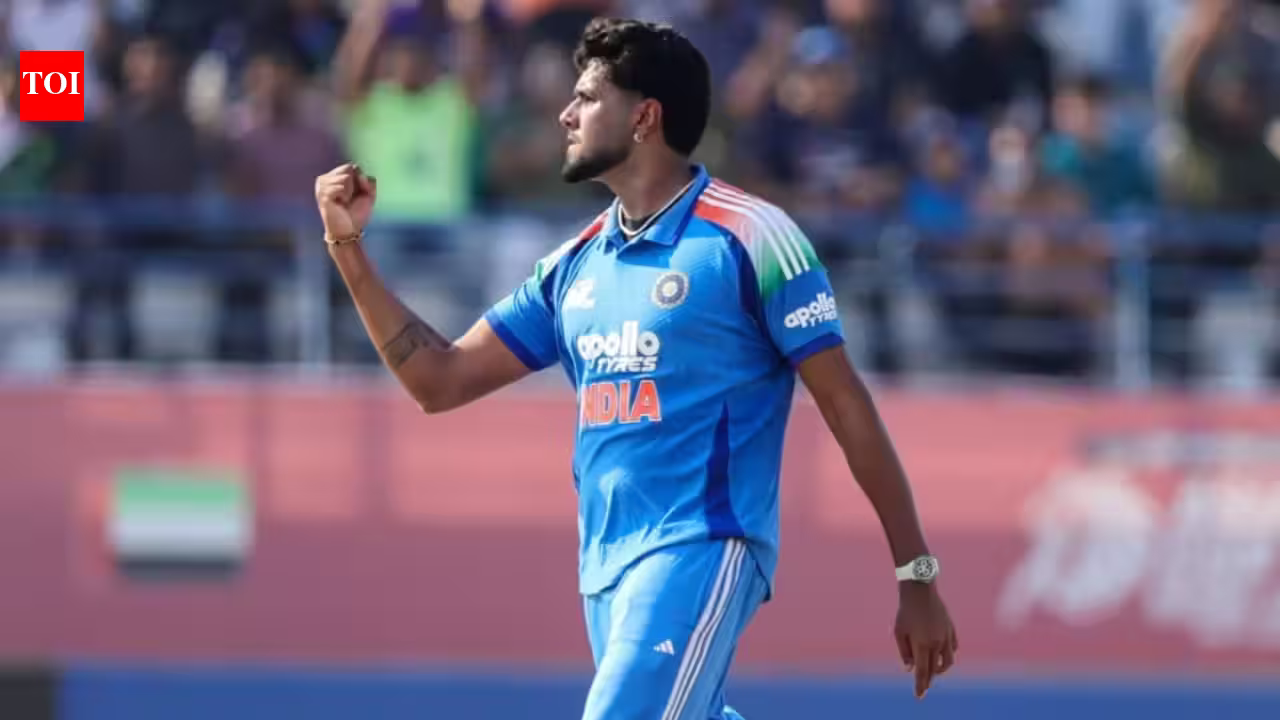
Tension reached a boiling point on Sunday at the Asia Cup Rising Stars 2026, as the perennial rivalry between India A and Pakistan A lived up to its combustible reputation. In a contest defined by fierce competitiveness and raw emotion, Indian pace spearhead Harshit Rana emerged as the face of the aggression, turning the heat up on Pakistan’s top order in an exchange that will be talked about for the remainder of the tournament.
The match, held against the backdrop of high stakes and intense public interest, began with a chilling lack of pleasantries. In an incident that set the tone for the afternoon, the customary pre-match handshake between captains Abdul Samad and Tilak Varma was conspicuously skipped, signaling that the traditional camaraderie of the game was being pushed to the sidelines in favor of a win-at-all-costs mentality.
The Opening Salvo: Pakistan Takes Command
Pakistan A captain Abdul Samad won the toss and elected to bat first, banking on a dry surface that promised to provide an early advantage to his batters. His decision initially appeared astute, as openers Shamyl Hussain and Maaz Sadaqat navigated the early overs with clinical precision. The duo dismantled any early rhythm the Indian seamers attempted to find, finding gaps with ease and keeping the scoreboard ticking.
As Pakistan crossed the 50-run mark without the loss of a wicket, the atmosphere on the field grew palpably heavier. India’s bowling attack looked desperate for a breakthrough, and it was here that Harshit Rana chose to insert himself into the narrative. Known for his fiery disposition, Rana began targeting the batters not just with the leather, but with a series of verbal volleys. Engaging in heated exchanges with both Hussain and Sadaqat, Rana turned the contest into a psychological battle, determined to dismantle the opening partnership through sheer presence and hostility.
Rana’s Aggressive Send-Off
The dam finally broke when Ayush Badoni was introduced to the attack, finding the breakthrough that the Indian team had been craving by dismissing Shamyl Hussain. However, it was Rana who ensured the moment left a lasting impression. Positioned at short third man, Rana hauled in the catch and, instead of opting for a muted celebration, immediately turned his attention toward the departing Hussain. With a series of animated gestures, Rana directed the opener toward the pavilion, ensuring his exit was marked by confrontation rather than silence.
The pacer was mobbed by his teammates, their celebration serving as a clear message that the Indian side was far from intimidated by Pakistan’s strong start. Rana’s impact did not stop at the psychological level; he effectively utilized the momentum gained from the breakthrough to dismantle the middle order. He struck again shortly thereafter, castling wicketkeeper-batter Rohail Nazir for a duck. This pivotal spell not only stalled Pakistan’s momentum but shifted the trajectory of the game firmly in India A’s favor, showcasing Rana’s ability to thrive under the immense pressure of an India-Pakistan clash.
Captains’ Contrasting Perspectives
Despite the lack of a handshake at the toss, the leadership of both sides maintained a professional outward demeanor, even while acknowledging the volatility of the matchup. Pakistan’s Abdul Samad remained steadfast in his belief that his side had the edge, citing the pitch conditions as the primary driver for his decision to bat. “The team is very confident today,” Samad remarked before the match. “The pitch looks dry… the boys are very confident. You’ll see a good match today.”
India A captain Tilak Varma, while admitting his side would have also preferred to bat first, expressed pride in the way his bowlers handled the challenge. Varma was particularly vocal in his support for his fast-bowling duo of Rana and Prince Yadav, noting how critical their contribution was after returning from injury layoffs. “It was a treat to watch. After coming from injury, bowling like that is important for them and the team,” Varma said. “For us, it’s just another game, but for spectators, it’s an interesting match; they always look forward to it.”
The Road Ahead
As the tournament progresses, the repercussions of such an intense encounter remain to be seen. For India A, the performance of the bowling unit—spearheaded by the combative Rana—provides a template for how they intend to approach the remainder of the Asia Cup. For Pakistan A, the challenge will be to maintain their composure after a middle-order collapse left them scrambling to repair the damage inflicted by the Indian pacers.
While the Rising Stars tournament is designed to act as a bridge for young talent to reach the international stage, Sunday’s match served as a reminder that the India-Pakistan rivalry remains a crucible. Whether it is the tactical decisions at the toss or the fiery send-offs in the field, every action in this matchup carries the weight of history. As the tournament continues, one thing is certain: the intensity displayed by Harshit Rana and his teammates has set an incredibly high bar for the remainder of the competition. With both sides boasting depth and talent, fans can expect the intensity to only increase as the road to the final narrows.
Disclaimer: This content is auto-generated for informational purposes only.
Source: Read Original News