







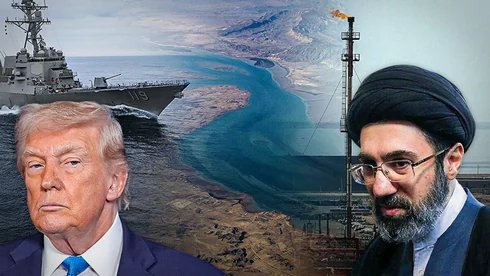
Tensions Spike in Persian Gulf as Iran Prepares to Challenge U.S. Naval Blockade
The Persian Gulf stands on the brink of a major escalation as Iran prepares a convoy of more than 14 oil tankers to challenge the ongoing U.S. naval blockade. Intelligence reports indicate that the vessels have been fully loaded at the Kharg Island terminal, assigned crews, and outfitted with Iranian flags, signaling a potential move toward the Gulf of Oman—and a direct confrontation with American naval forces.
The operation, reportedly dubbed “Operation Fereydoun” after a figure from Persian mythology, represents a high-stakes gamble by Tehran to break the economic stranglehold that has severely curtailed the nation’s oil revenues. With U.S. sanctions and maritime enforcement expected to drive Iran’s export earnings toward zero by mid-December, the regime appears to be pivoting toward a strategy of aggressive brinkmanship.
Western intelligence agencies are closely monitoring the fleet’s movements. Unlike previous “shadow fleet” tactics used to evade sanctions by turning off navigation transponders, analysts suggest this convoy may sail with Automatic Identification System (AIS) transmitters active. There are also reports that Tehran may place journalists, international antiwar activists, and civilians aboard the ships to heighten the diplomatic cost of any U.S. military intervention.
The situation presents President Donald Trump with a precarious dilemma. Should the U.S. Navy move to stop the convoy, Iran has explicitly threatened retaliatory strikes against critical energy infrastructure in neighboring Gulf states, including Saudi Arabia, the UAE, and Qatar. Such an attack would likely trigger a surge in global oil and gas prices, turning Iran’s domestic economic crisis into a global energy emergency. Conversely, allowing the convoy to pass would fundamentally undermine the credibility of the U.S. blockade and grant Tehran a significant geopolitical victory.
U.S. Central Command, led by Admiral Brad Cooper, reportedly has several tactical options on the table, ranging from precision strikes on engine rooms to boarding operations by Marine units. However, these plans are fraught with risk. A violent boarding attempt, should Revolutionary Guard personnel be stationed on the tankers, could mirror the 2010 Mavi Marmara incident, potentially spiraling into a broader military conflict.
Iranian officials have signaled a hardening stance. Mohsen Rezaei, a top advisor to Supreme Leader Ali Khamenei, recently stated he had received orders to bring the current period of “neither peace nor war” to a conclusion. While Deputy Foreign Minister Kazem Gharibabadi labeled the American blockade an “act of war,” Tehran maintains it remains open to negotiation via regional intermediaries.
Israeli intelligence is also tracking the mobilization. While local assessments suggest Iran would likely prioritize hitting Gulf energy facilities over Israel in the event of a clash, any U.S.-led counterattack could quickly draw Israel into a wider regional conflict.
As of this morning, no final order to set sail has been confirmed. Whether this is a genuine attempt to break the blockade or a calculated pressure tactic to force Washington back to the negotiating table remains the critical, unanswered question.
Disclaimer: This content is auto-generated for informational purposes only.
Source: Read Original News