









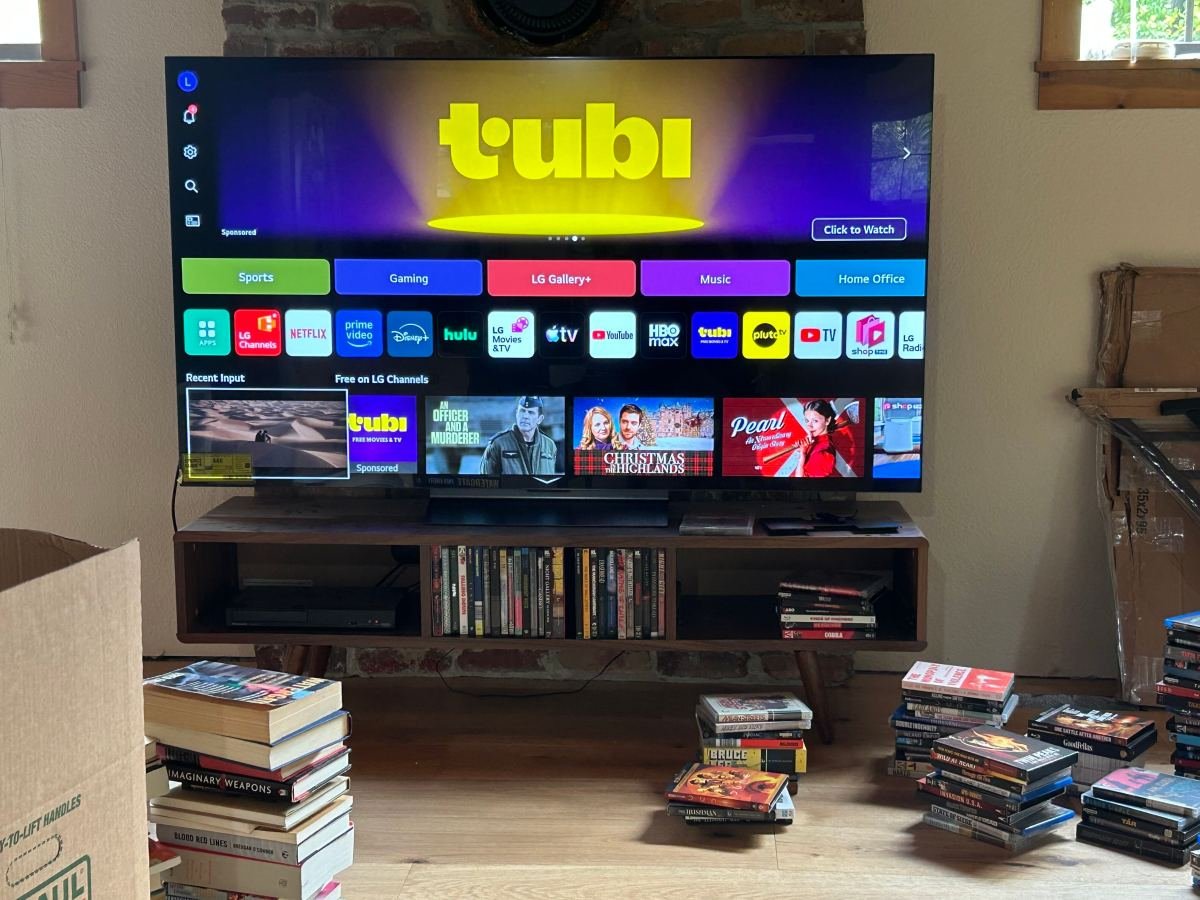
The modern living room has become the primary battleground for display technology, with manufacturers pushing the boundaries of screen size and panel quality. While the transition from 55-inch displays to 65-inch OLED panels is often framed as an objective upgrade, the reality of integrating a larger screen into a residential space involves complex spatial, technical, and perceptual considerations. Moving to a 65-inch OLED panel is not merely a matter of finding a larger wall mount; it represents a fundamental change in how a viewer interacts with high-definition content.
The Technical Evolution of OLED Panels
OLED, or Organic Light Emitting Diode, technology differs significantly from traditional LED-backlit LCD screens. Because each pixel serves as its own light source, the display can achieve perfect black levels by switching pixels off entirely. When scaling this technology to a 65-inch form factor, the engineering requirements increase in complexity. Maintaining uniform brightness and color accuracy across millions of self-emissive pixels requires sophisticated thermal management and processing power.
The latest 65-inch panels utilize advanced sub-pixel structures to enhance peak luminance without compromising the integrity of the organic compounds. This ensures that even at larger screen sizes, the contrast ratio remains infinite. However, the physical size creates a new demand on image processors. As the screen expands, the imperfections in lower-resolution content become more apparent. The internal upscaling engines must perform more rigorous interpolation to ensure that 1080p or compressed streaming signals remain sharp when mapped across the increased real estate of a 65-inch panel.
Spatial Dynamics and Viewing Distances
The transition to a 65-inch display often exposes the limitations of furniture arrangement and room architecture. The Society of Motion Picture and Television Engineers suggests an optimal viewing angle that occupies about 30 to 40 degrees of the field of view. When a display occupies too much of the viewer’s peripheral vision, the experience can become jarring.
At 65 inches, a viewer sitting too close will find themselves scanning the image rather than observing it as a cohesive whole. This results in visual fatigue, as the eyes must physically move to track action across the screen edges. Furthermore, the sheer weight and physical dimensions of a 65-inch unit necessitate precise wall mounting or heavy-duty stand considerations. Many users find that the added screen size requires a reassessment of the distance between the couch and the media console, often pushing furniture back several feet to maintain comfort. If the room layout does not accommodate this shift, the “cinematic” scale becomes a logistical burden rather than an immersive benefit.
The Impact of Reflectivity and Lighting
One of the most overlooked aspects of upgrading to a larger OLED screen is the interaction with ambient light. Large panels act as expansive mirrors. While modern panels utilize anti-reflective coatings, the surface area of a 65-inch screen increases the likelihood of catching stray light from lamps, windows, or overhead fixtures.
In a smaller 55-inch configuration, it is often easier to position furniture to avoid these reflections. At 65 inches, the screen catches a wider arc of light, making it significantly harder to find a “dead zone” where glare is minimized. Viewers often find they must invest in blackout curtains or adjust their lighting schemes entirely. The technical trade-off is that while OLED provides superior contrast, the glossy nature of the panel requires a controlled environment to ensure that deep blacks do not become washed out by reflections of the living room interior.
Calibration and Visual Processing
A common trap for new 65-inch owners is the “out-of-the-box” factory setting, which is usually tuned to be excessively bright and oversaturated to compete with other units in a retail showroom. On a larger screen, these settings are magnified, leading to artificial skin tones and “soap opera effect” motion smoothing that can appear highly distracting.
Proper calibration is essential for a screen of this size. Adjusting the white balance, gamma settings, and disabling motion interpolation are critical steps. When the display is tuned correctly, the 65-inch size allows for subtle gradients in cinematography to appear more distinct. Users often report that they can see fine details—such as the texture of fabric or the grain of film—that were previously obscured on smaller or lower-resolution displays. However, this level of clarity also reveals the limitations of poor-quality broadcast signals, which can look pixelated or blocky when scaled to a larger dimension.
The Utility of Modern Connectivity
Beyond the visual performance, a 65-inch OLED acts as a central hub for modern hardware, including high-end gaming consoles and next-generation media streamers. These devices leverage features like Variable Refresh Rate (VRR) and Auto Low Latency Mode (ALLM) to synchronize the panel with the output device.
At 65 inches, the immersion provided by these gaming features is unparalleled, particularly in titles that support high frame rates. The speed of pixel response on an OLED panel—typically measured in sub-millisecond ranges—means that there is no “ghosting” or trailing behind fast-moving objects. When combined with a 120Hz refresh rate, the experience feels fluid. However, this creates a new challenge: cables. High-bandwidth HDMI 2.1 cables are mandatory to handle the data throughput required for 4K at 120Hz. Managing these connections behind a large 65-inch mount requires careful cable management, as the increased size of the unit makes accessing the rear ports significantly more difficult once the display is installed.
Ultimately, the jump to 65 inches is a commitment to a specific type of viewing experience. While it offers technical superiority in color, motion, and contrast, it demands a disciplined approach to room setup, calibration, and content quality. For those prepared to manage the spatial and environmental requirements, the upgrade provides a high-fidelity window into digital content that smaller screens simply cannot replicate.
Disclaimer: This content is auto-generated for informational purposes only.
Source: Read Original News