









The Intersection of Ticketing Protocols and Geolocation
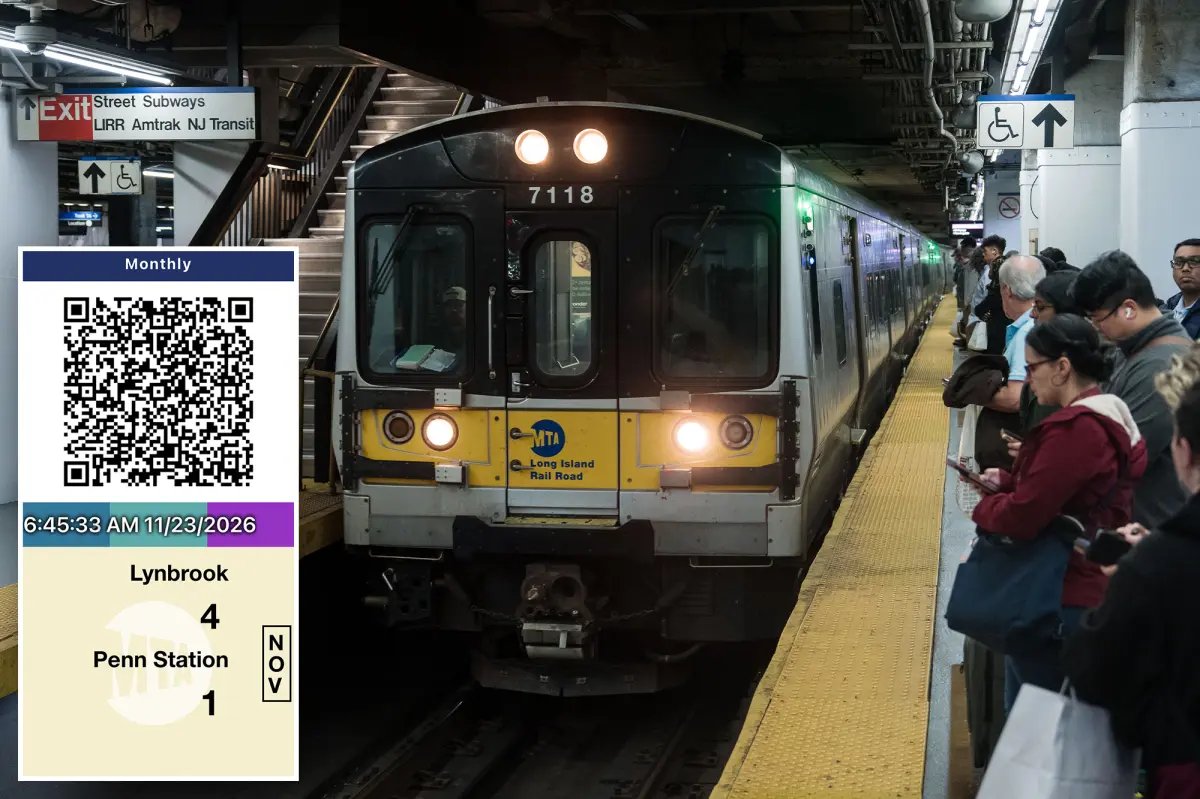
The Long Island Rail Road (LIRR), a core component of the Metropolitan Transportation Authority’s (MTA) transit network, has introduced a stringent policy requiring passengers to activate their digital tickets via the TrainTime application before boarding. This mandate, supported by a new eight-dollar administrative fee for non-compliance, was intended to streamline operations and ensure fare integrity. However, recent technical investigations into the application’s behavior suggest that the mechanics behind this enforcement may rely on persistent geolocation tracking, contradicting official assertions regarding how the agency monitors rider movements.
The TrainTime application serves as the primary gateway for digital ticketing, trip planning, and schedule management. Under the current enforcement model, users are expected to initiate their ticket activation sequence prior to the train’s departure. The MTA has maintained that its enforcement of this rule utilizes a timekeeping mechanism, ostensibly designed to verify the chronological alignment between ticket activation and the train’s departure schedule. Yet, evidence gathered from practical testing indicates that the application exhibits disparate behaviors based on a user’s smartphone privacy settings, suggesting that geographical telemetry is being synthesized to police passenger boarding habits.
Discrepancies in App Behavior
In a controlled observation, two distinct mobile devices were utilized to assess the application’s response to unactivated tickets during active rail journeys. The devices were configured with divergent privacy settings: one permitted the TrainTime app access to location data at all times, while the other restricted the application from accessing such information entirely. Both devices carried valid, yet unactivated, electronic tickets.
The results of this observation revealed a significant technical imbalance. The device with “always-on” location sharing consistently received automated pop-up notifications warning the user of the potential for a surcharge due to late activation. Conversely, the device with location access disabled remained silent, allowing the user to activate their ticket several stops into the journey without triggering the notification system or the associated threat of a penalty. Because LIRR tickets are generally issued as open-ended, non-train-specific assets, the application should theoretically lack the necessary context to determine a user’s physical presence on a moving train absent active geolocation data.
The Role of Third-Party Ticketing Infrastructure
The technological framework powering the LIRR mobile experience is provided by Masabi, a London-based transit technology firm. Their platform provides the software infrastructure that manages ticket transactions and validation logic within the TrainTime app. According to the internal privacy policy provided by Masabi, the company operates solely as a data processor. This designation places the responsibility for data governance, storage, and application usage policy squarely under the jurisdiction of the MTA.
This division of labor highlights a critical area for investigation regarding how transit agencies manage user information. While the vendor provides the mechanism for ticketing, the implementation of “enforcement triggers”—the logic that decides when to issue a warning or a fine—is determined by the agency itself. When queried about the disparity between the two devices and the nature of the data collected, the MTA declined to provide an interview, directing inquiries instead toward the existing terms of service and conditions. These documents assert that location telemetry is siloed from individual passenger accounts, a claim that appears increasingly difficult to reconcile with the observed functional triggers.
Security Implications of Data Harvesting
Cybersecurity professionals have raised concerns regarding the potential for overreach in the collection of transit data. When an application requires a user to opt into location services to function correctly, yet that same data is repurposed for punitive enforcement measures, it creates a lack of transparency that challenges established user privacy norms. The fundamental issue is that the TrainTime app is functioning as a geofencing tool. By detecting a device’s movement along a rail corridor, the backend system can correlate that movement with the status of a specific digital ticket.
For many transit users, the reliance on mobile ticketing is a matter of convenience. However, if the cost of that convenience includes the continuous monitoring of a commuter’s exact location to enforce secondary rules, the threshold of acceptable data collection is breached. Experts suggest that if the MTA is utilizing location data to track physical boarding patterns, it represents an expansion of the app’s purpose beyond its stated function as a ticketing and scheduling utility. This creates a technical environment where the privacy of the commuter is subordinated to the administrative desire to curb fare evasion through surveillance.
Moving Toward Transparent Enforcement
The current situation highlights the inherent tension between modernizing public transit and maintaining the digital privacy of its riders. As transit agencies continue to digitize their revenue streams, the algorithms governing those systems are becoming the de facto enforcement officers. If the LIRR is indeed using proximity data to verify ticket activation status, it must address the lack of clarity regarding how that data is stored, the duration for which it is retained, and who holds access to the movement history of individual commuters.
Looking ahead, the response to formal information requests will be crucial in determining whether the MTA will reconcile its internal practices with its public statements. For the average passenger, the choice remains between sacrificing location privacy to avoid automated alerts or navigating a system that may be collecting far more telemetry than is necessary for the simple task of fare verification. The outcome of this scrutiny will likely influence how future transit applications are audited for compliance with data protection standards, setting a precedent for how public agencies utilize the sensors embedded in the consumer hardware carried by their riders every day.
Disclaimer: This content is auto-generated for informational purposes only.
Source: Read Original News