






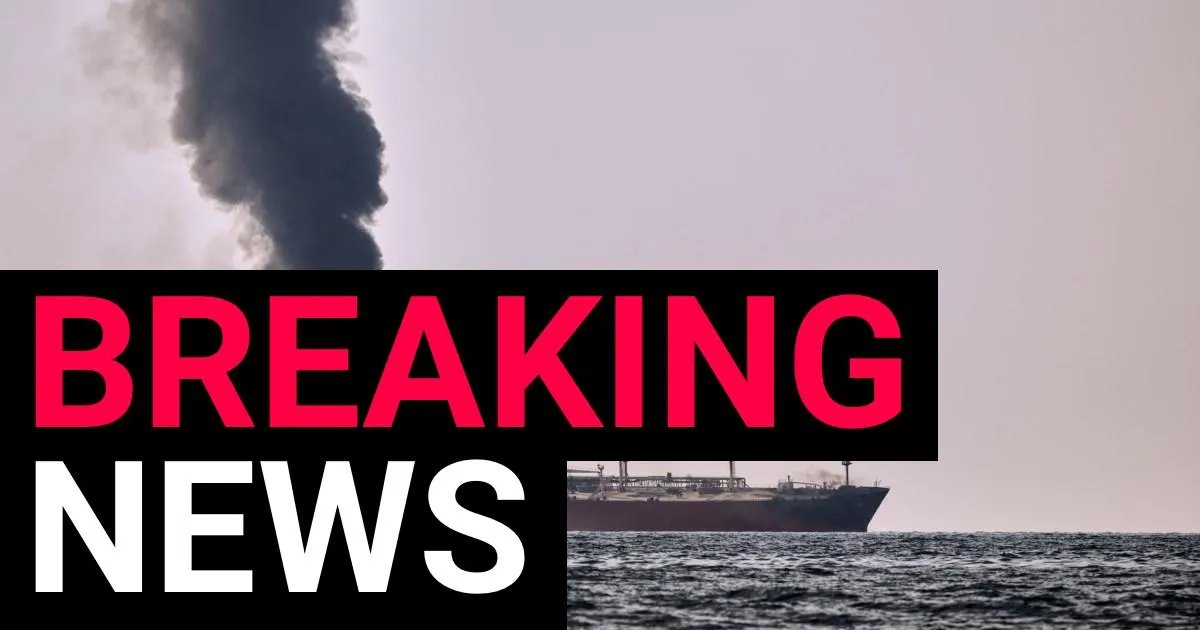
Attacks on shipping vessels in the Strait of Hormuz have surged to their highest levels since the conflict began, according to new data that highlights a rapidly deteriorating security environment in the vital global waterway.
The United Kingdom Maritime Trade Operations (UKMTO) Centre has confirmed more than 22 distinct incidents this month alone. However, authorities caution that the actual figure is likely significantly higher, noting that “additional incidents are known but cannot be independently verified.” Images released by the Lewis Pugh Foundation show the stark reality of the threat, including a liquefied petroleum gas tanker ablaze off the coast of Oman earlier this week.
The escalation comes as geopolitical tensions remain at a volatile stalemate. Dr. Katayoun Shahandeh, an expert from SOAS at the University of London, suggests the surge is a calculated effort by Tehran to project influence.
“Iran may not be able to challenge American military superiority directly, but it can make securing the Strait increasingly difficult and costly,” Dr. Shahandeh said. “The objective is not necessarily to regain complete control, but to demonstrate that the United States cannot guarantee its security without taking Iran into account.”
While Iran has publicly attributed many of the maritime incidents to accidental collisions with sea mines, analysts remain skeptical of these claims. The lack of independent verification has left the international community wary, particularly as the U.S. continues to monitor the region’s “severe” threat levels.
The situation is further complicated by shifting political winds in Washington. Following Republican losses in the midterm elections, there is renewed speculation regarding U.S. military posture. President Donald Trump, who recently lost control of both the House and the Senate, indicated in a Fox News interview that he is considering ordering new strikes against Iranian targets after the New Year should diplomatic progress fail.
However, Dr. Shahandeh warns that domestic political constraints may prevent a significant shift in strategy. “The war has been deeply unpopular with the American public, particularly because of its economic consequences,” she noted. “The Republican losses in the midterm elections have made further escalation an increasingly difficult political proposition for President Trump.”
As it stands, both the U.S. and Iran appear trapped in an impasse. While the U.S. maintains superior military force, it has been unable to force Tehran into submission, and Iran’s efforts to disrupt the Strait have failed to dislodge the American presence.
“We have effectively returned to a stalemate,” Dr. Shahandeh concluded. “The danger is that this impasse becomes prolonged, with each new incident carrying the risk of triggering a much wider, uncontrolled escalation.” For now, merchant shipping continues to navigate one of the world’s most dangerous corridors, with the threat of further violence looming on the horizon.
Disclaimer: This content is auto-generated for informational purposes only.
Source: Read Original News