








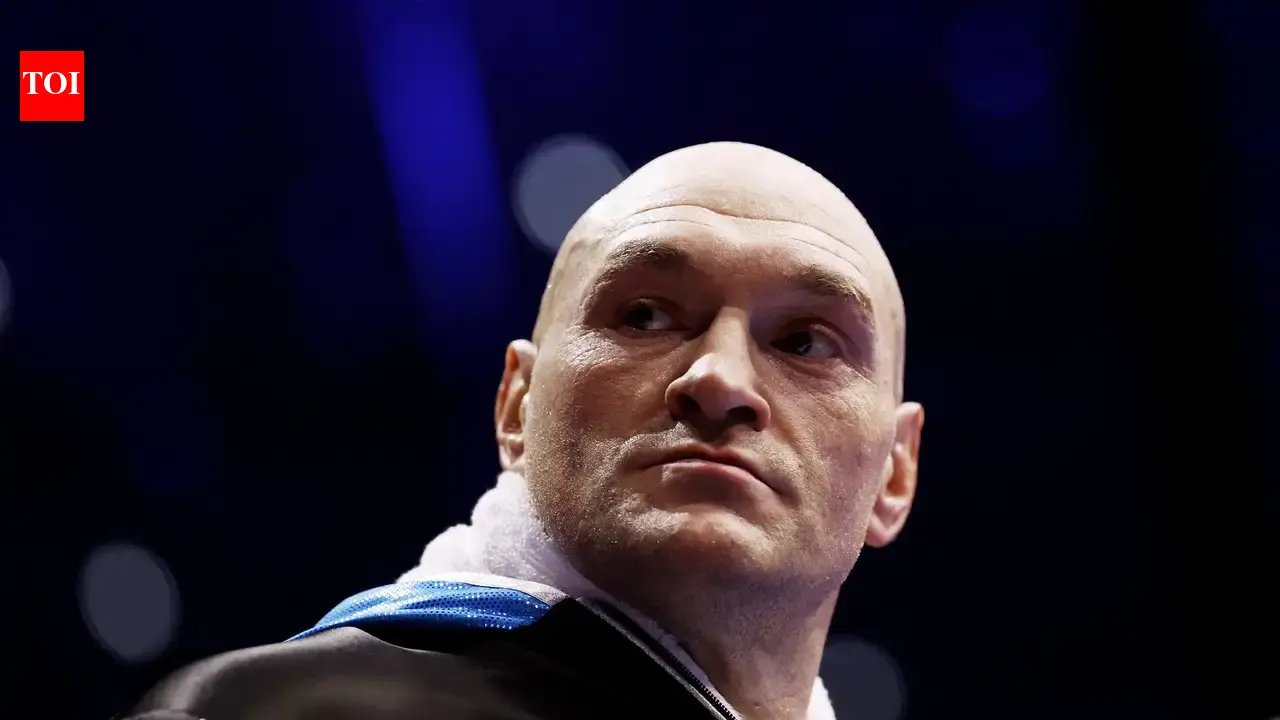
Tyson Fury, the self-proclaimed “Gypsy King” of heavyweight boxing, has long been defined by his prowess inside the ring—his undefeated record, his size, and his showmanship. However, as the world prepares for his highly anticipated, blockbuster showdown with Anthony Joshua this December, the 38-year-old fighter is peeling back the curtain on a far more dangerous opponent he faced years ago: his own mind.
In a candid, soul-baring account set to air in an upcoming Netflix documentary on November 27, Fury details a harrowing descent into mental illness that nearly claimed his career—and his life—following his historic 2015 victory over Wladimir Klitschko.
‘Words can’t explain the darkness I was in’
For years, the boxing world wondered why the heavyweight king seemingly vanished into the wilderness after ascending to the pinnacle of the sport. The reality, according to Fury, was a terrifying spiral of paranoia and psychological torment. In June 2016, following an emergency hospital visit initially suspected to be a heart attack, medical professionals diagnosed Fury with schizophrenia and bipolar disorder.
“Words can’t explain the darkness I was in,” Fury reveals in the documentary. “It was like a living version of the pits of hell. I thought I would end up in a padded room with the door locked, and that scared me so much.”
The diagnosis was the culmination of years of suffering that began in his childhood, but it reached a breaking point in the wake of his global success. Fury describes symptoms that were both debilitating and terrifying, including auditory hallucinations where he believed the radio was broadcasting messages directly to him, and an all-consuming paranoia that convinced him he was being targeted by the Illuminati.
His wife, Paris, remains a central figure in his recovery, recalling the chilling scene at the hospital where she found her husband surrounded by medical equipment, genuinely fearful for his life. “He looks seriously frightened,” she says, describing how he begged her to help him escape, claiming the “Illuminati” were closing in on him. Her initial confusion over the medical terminology—wondering if “schizophrenic” meant something synonymous with “maniac”—eventually gave way to a stark realization that these conditions perfectly described the erratic behavior she had been witnessing at home.
Addiction, isolation and the Halloween turning point
The years between 2016 and 2018 were a blur of substance abuse, weight gain, and deep isolation. Fury admits he struggled with alcohol and cocaine as a means of self-medication, trying desperately to silence the voices that made even simple conversation an ordeal.
The turning point, remarkably, came on a night meant for celebration. On Halloween in 2017, while attending a party in a glow-in-the-dark skeleton suit, the reality of his situation crashed down on him. Looking at the crowd around him, the former world champion felt a profound sense of shame. “I was a fat mess,” he admits. “I had the world in my hands and I threw it all away.”
Seeking solace, he returned home and reached a spiritual breaking point. Dropping to his knees, he surrendered his pride and prayed for intervention. That moment of vulnerability, he insists, was the spark that ignited one of the greatest comebacks in sports history, leading him to reclaim his heavyweight crown.
Despite his triumphant return to the sport, Fury remains under no illusions about his condition. He famously likened mental health to the Eagles’ classic Hotel California: “You can check out anytime you want, but you can never leave.” For Fury, mental health is a disease to be managed, not a sickness to be cured. He continues to see a psychiatrist weekly, even while training for the most significant fight of his life.
Fury prepares for Anthony Joshua showdown
Now, with his mental health prioritized as strictly as his training regimen, the focus shifts to the squared circle. On December 11, 2026, at the Principality Stadium in Cardiff, Fury will face Anthony Joshua in a monumental £200 million clash.
Billed as the definitive heavyweight fight of a generation, the contest represents more than just belts and bragging rights; it is the culmination of a long, often torturous path to redemption. As the marketing machine for the fight ramps up, the accompanying documentary serves as a powerful reminder that for all his bravado and power, Tyson Fury’s greatest victory has already taken place in the quiet, private war against his own psyche.
As he prepares to walk out under the bright lights in Cardiff, the world will see a champion who has looked into the abyss and fought his way back, proving that the most difficult battles are often the ones fought away from the cameras and the cheering crowds.
Disclaimer: This content is auto-generated for informational purposes only.
Source: Read Original News