








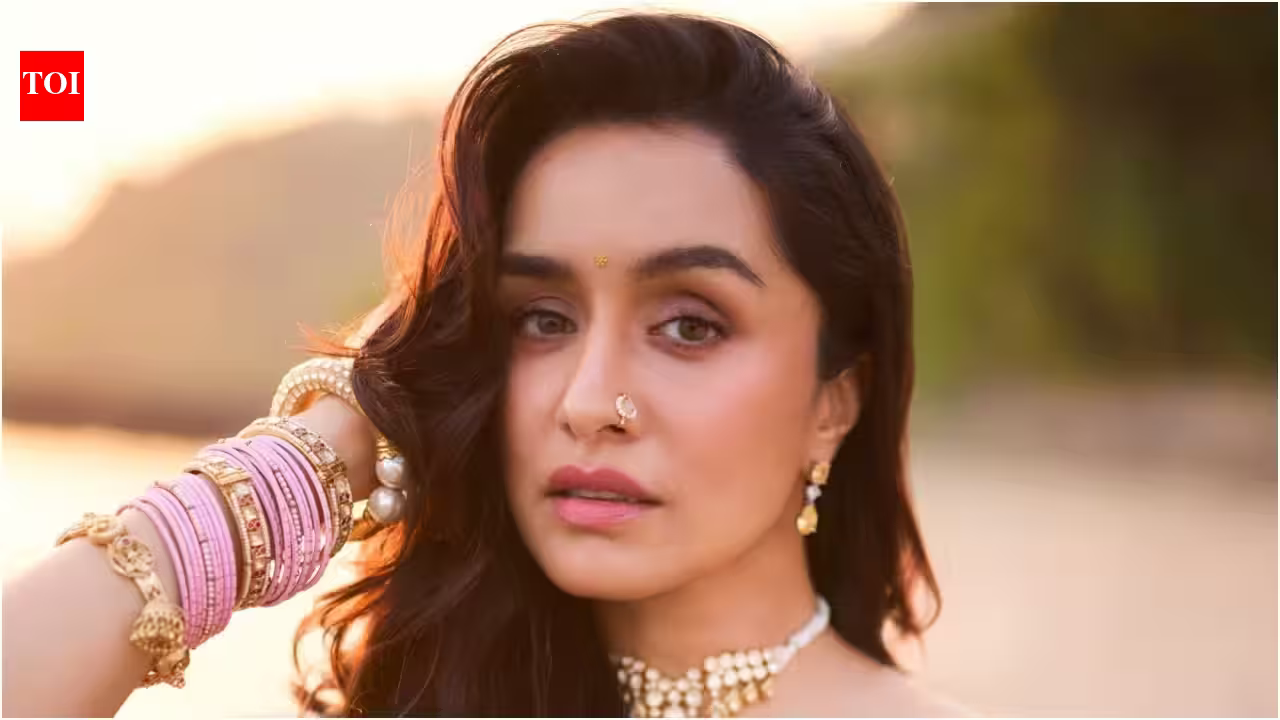
In an industry often defined by the fierce, high-stakes climb toward superstardom, Shraddha Kapoor has long been viewed as the quintessential Bollywood darling—a star whose charm and screen presence seem effortless. Yet, beneath the polished exterior of the Stree actress lies a pedigree that reads like a masterclass in Indian cultural history. While the world knows her for her box office dominance, the true story of her DNA lies in a heritage that spans nearly a century of melody, rhythm, and artistic transformation.
Shraddha isn’t just a product of the film industry; she is a scion of a musical dynasty. With a family tree that boasts no fewer than 19 luminaries tied to the performing arts, it is easy to argue that art is not just a career path for the Kapoors and Kolhapures—it is an inherited necessity.
The Mangeshkar Connection: A Lineage of Legends
To understand the weight of the legacy Shraddha carries, one must look toward her maternal grandfather, the late Pandharinath Kolhapure. A renowned classical singer in his own right, Kolhapure was the key that linked the family to the undisputed titans of Indian music: the Mangeshkars.
This connection places Shraddha in the extended orbit of the legendary Pandit Deenanath Mangeshkar. When we talk about the architecture of modern Indian music, we are talking about the voices that shaped the national identity—Lata Mangeshkar, the “Nightingale of India,” and the inimitable, versatile Asha Bhosle. To have these names within your family fold is to possess a heritage that transcends mere fame; it is an inheritance of cultural gravity.
The tapestry continues to weave through names like Usha Mangeshkar and Meena Khadikar, extending into the next generation with the likes of Hridaynath Mangeshkar and Chaitanya Bhosle. For someone like Shraddha, these are not just photographs on a wall or names in a history book; they are the aunts and great-aunts whose musical sensibilities provide the invisible scaffolding for her own artistic instincts.
Beyond the Mic: The Kolhapure Influence
While the Mangeshkar name carries immense musical weight, the Kolhapure side of the family brought a different kind of fire to the screen. Shraddha’s maternal aunts, Padmini Kolhapure and Tejaswini Kolhapure, defined eras of Indian cinema. Padmini, in particular, was a force of nature in the 1980s, known for her raw, emotive performances that paved the way for the grounded, character-driven acting style that modern audiences see in Shraddha today.
The “Kapoors,” of course, add their own flair. With the iconic, larger-than-life energy of her father, Shakti Kapoor—a man who redefined the archetypal Bollywood villain—and the steady, creative influence of her brother Siddhanth, the household was never a quiet one. It was a space where the dramatic arts and the musical arts collided daily. Watching the evolution of the family circle—which includes names like Priyank Sharma and Shaza Morani Sharma—it becomes clear that this is a clan that eats, breathes, and lives the entertainment ecosystem.
The Intersection of Music and Performance
It is no surprise that Shraddha frequently lends her own voice to her films. When she sings, she isn’t just a Bollywood actor trying her hand at a playback track; she is tapping into a reservoir of talent that has been refined by decades of professional musical training within her inner circle.
However, her legacy isn’t just about pedigree; it’s about the burden and the beauty of maintaining such a standard. In an era where “nepo-baby” discourse often oversimplifies the struggle of those born into fame, Shraddha’s career trajectory highlights a different reality: the pressure to honor a name. She has meticulously carved out a niche that balances the commercial requirements of a blockbuster star with the creative integrity of a performer who deeply respects her lineage. She hasn’t just coasted on the Mangeshkar name; she has utilized the musicality inherent in her bloodline to inform her screen choices, often leaning toward roles that demand emotional range and rhythmic precision.
Stepping into History: The Transformation for ‘Eetha’
This commitment to the craft is perhaps most evident in her upcoming project, Eetha. Directed by Laxman Utekar and produced by the powerhouse team of Dinesh Vijan, the film represents a departure from the glamorous urban roles that have defined her recent streak of success.
In Eetha, Shraddha is set to portray the legendary Vithabai Bhau Mang Narayangaonkar. For those unfamiliar, Vithabai was an icon of the Tamasha and Lavani folk traditions, a woman who wielded her art as a form of social resistance and cultural preservation. Playing a figure so deeply rooted in the traditional performing arts of Maharashtra feels like a full-circle moment for Shraddha. It is an opportunity to honor the musical roots of her maternal family—which has deep ties to the regional arts—while simultaneously pushing her boundaries as a dramatic actress.
Set for a December 2026 release, Eetha is already generating buzz not just for its subject matter, but for what it represents: a star stepping away from the glitz of the multiplex to inhabit the soul of a historical artist. It suggests that while the Mangeshkar legacy of melody is firmly in her blood, the Kolhapure legacy of acting is now firmly in her sights.
A Legacy in Motion
Shraddha Kapoor stands at a unique crossroads in Bollywood. She is a modern icon with a foot firmly planted in the golden age of Indian artistry. By honoring her past—from the classical mastery of her grandfather to the bold screen presence of her aunts—she has managed to maintain a relatability that is rare in today’s manufactured celebrity culture.
As she prepares to bring the story of Vithabai to life, one can’t help but think that she is finally merging her two worlds. Whether she is behind the microphone or in front of the camera, she is a living testament to the idea that talent might be inherited, but greatness is sustained through the work. For an artist like Shraddha, the music of her family is more than just a soundtrack to her life—it is the pulse, the heartbeat, and the motivation for everything that is yet to come.
Disclaimer: This content is auto-generated for informational purposes only.
Source: Read Original News