







When Rakul Preet Singh stepped out for the festive season this past November, she didn’t just make a fashion statement; she made a cultural declaration. While the glitz and glamour of Bollywood often lean toward heavy, Bollywood-inspired lehengas or standard six-yard drapes, the Ramayana: Rise of a Legend actress pivoted toward the North East. Opting for a traditional Mekhela Chador—a garment steeped in the storied looms of Assam—Rakul proved that true luxury isn’t just about the price tag, but about the heritage woven into every fiber.
The ensemble, which has since become the talk of fashion circles, carried a price tag of Rs 100,800. For the uninitiated, this is a significant investment, but when you consider the craftsmanship behind Assamese silk, it becomes clear that this wasn’t just a purchase; it was a patronage of an ancient, fading art form.
A Masterclass in Ethnic Elegance
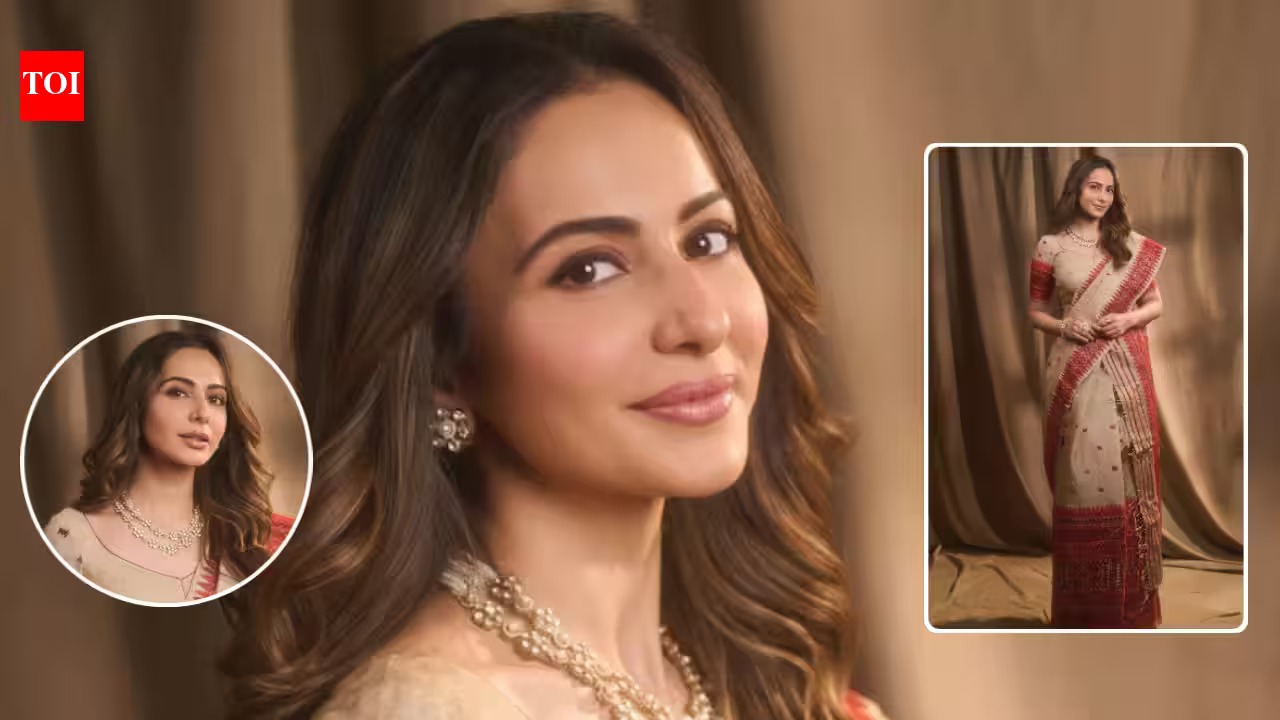
Rakul took to Instagram on November 20 to unveil the look, captioning it with a nod to the artisanal effort: “Chose to wear this beautiful Mekhela Chador woven with the golden threads of Assam for one of the Diwali evenings.”
The visuals were striking. Eschewing the neon-bright trends of modern festive wear, Rakul opted for a sophisticated cream-and-red palette. The ensemble relied on the natural, lustrous sheen of authentic silk rather than heavy sequins or synthetic embellishments. To complement the intricate gold-thread weaving, she styled the look with a minimalist approach: a two-layered gold-toned necklace, a matching bracelet, and delicate earrings. By keeping her accessories understated, she allowed the heavy, ornate weave of the fabric to command attention. It was a refreshing departure from the “more is more” aesthetic that typically dominates celebrity red carpets.
Decoding the Mekhela Chador
For those unfamiliar with the cultural weight of the garment, a Mekhela Chador is not merely a saree. It is an indigenous, two-piece attire that serves as the pride of Assamese womanhood. Unlike the singular wrap of a saree, this garment is structured in two parts: the Mekhela, which forms the lower, pleated wrap, and the Chador, the draped upper portion.
What sets this attire apart from mass-produced fashion is the method of its creation. The ornamental motifs seen on a traditional Mekhela Chador are woven directly into the fabric using complex looms. These designs are a language of their own, passed down through generations of weavers. The use of Muga silk—often referred to as the “golden silk” of Assam—adds a layer of exclusivity that synthetic fabrics simply cannot replicate. Because Muga silk is exclusively produced in the Brahmaputra Valley, it remains one of the most expensive and revered silks in the world. When Rakul chose this piece, she wasn’t just wearing a designer label; she was draping herself in a legacy of geography and history.
The Intersection of Cinema and Heritage
Rakul’s choice to spotlight this traditional wear comes at a high-profile time in her career. Fresh off the massive release of Ramayana: Rise of a Legend, directed by Nitesh Tiwari, the actress has been in the limelight for her portrayal of Shurpanakha. In a film that seeks to capture the epic scale of Indian mythology, it seems fitting that the actress would mirror that sense of “roots” in her off-screen style.
The film itself—a grand spectacle featuring Ranbir Kapoor as Rama, Sai Pallavi as Sita, and Yash as Ravana—has been a focal point of the 2026 box office. With a cast that includes stalwarts like Arun Govil and Lara Dutta, the project is a massive cultural tentpole. By wearing an authentic regional weave to a festive event, Rakul aligned her personal brand with the “Vocal for Local” movement that has been gaining steady momentum in the Indian luxury fashion scene. She is effectively bridging the gap between mainstream cinematic glam and the quiet, artisanal luxury of India’s weaving villages.
Why This Matters for Modern Fashion
Fashion journalists are often quick to critique celebrity outfits based on silhouettes and color palettes, but Rakul Preet Singh’s latest look offers a more profound talking point: the shift toward “Slow Fashion.” In a world of fast-fashion replicas and short-lived trends, the decision to invest over a lakh in a hand-woven piece sends a strong message to her millions of followers.
This isn’t just about a Rs 100,800 price tag; it’s about the value proposition of the loom. By wearing such a piece, Rakul is elevating the status of regional textiles, pushing them from the “ethnic day” category into the high-fashion, red-carpet, and gala-event spotlight. It challenges the notion that luxury is synonymous with Western cuts or heavy, imported embroidery.
As we move toward a future where consumers are increasingly conscious of the origins of their clothes, seeing a top-tier A-lister champion the golden threads of Assam is a win for the weaving communities of the North East. Rakul Preet Singh hasn’t just mastered a look; she has set a standard for what it means to be a modern Indian style icon—one who respects the past while walking confidently into the future. Whether she is playing a mythological icon or attending a private celebration, it is clear that she understands the power of a well-told story—both on screen and in her wardrobe.
Disclaimer: This content is auto-generated for informational purposes only.
Source: Read Original News