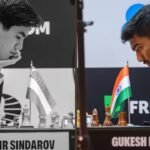








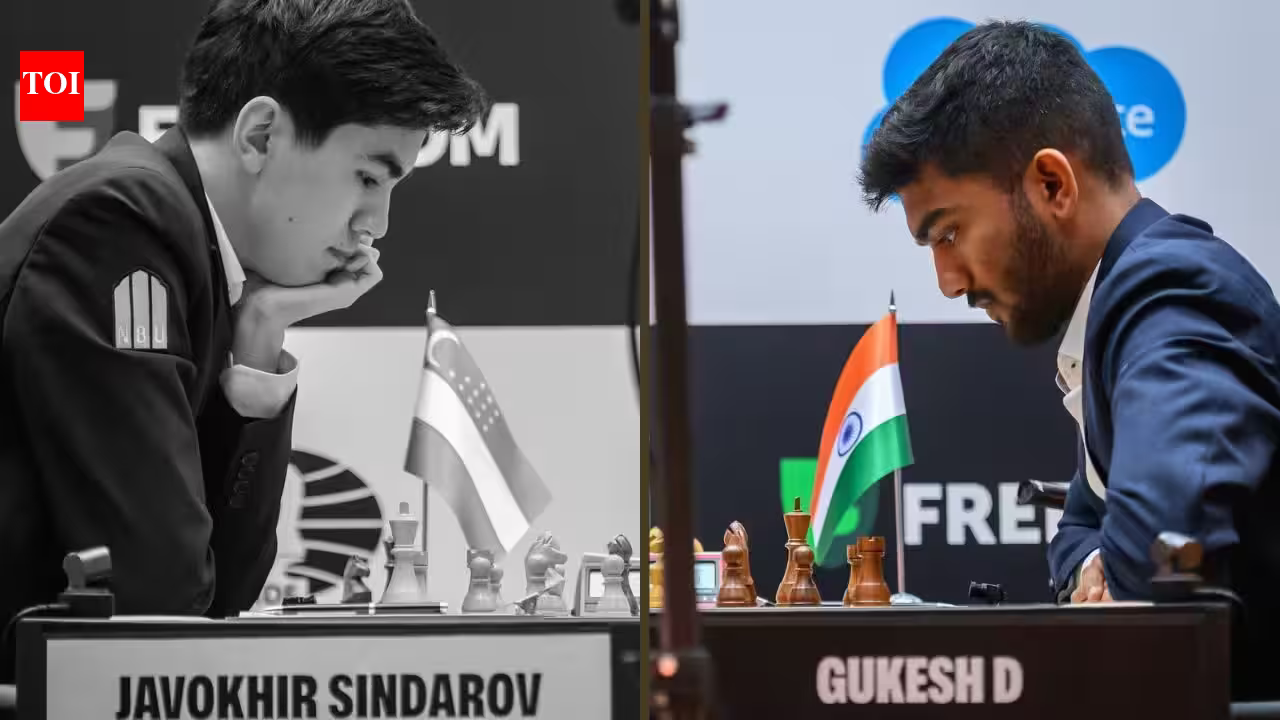
COLOGNY, SWITZERLAND — The tension was palpable in the air as the 2026 World Chess Championship curtain-raiser opened at a breakneck pace, pitting two of the sport’s most prodigious talents against one another. In a high-wire tactical duel, reigning champion Dommaraju Gukesh and challenger Javokhir Sindarov battled to a 38-move draw, a result that—while appearing neutral on the scoreboard—carried profound psychological implications for the remainder of the series.
The atmosphere in Cologny was electric, with spectators and analysts alike quickly fixating on a stark disparity in clock management. Early in the contest, digital clocks told a daunting story: by move 17, the Uzbek challenger Sindarov held a massive time advantage, commanding over an hour and eighteen minutes against Gukesh’s dwindling 29 minutes. With no time increments permitted before move 40, the pressure on the Indian champion was immense. Yet, in the face of this “time-trouble” gauntlet, Gukesh remained resolute, later reflecting that he never felt truly lost. “I thought I was always under control,” Gukesh said. “I was happy that I managed to spend some time and find a good solution.”
A Strategic Shift in the Berlin Endgame
The opening phase saw a surprising departure from tradition. Known for his tactical flair, Gukesh opted for the Berlin Endgame—a notoriously solid defensive setup that the champion rarely employs. This choice immediately signaled that Gukesh was prepared for a cerebral, grinding war rather than a wild opening brawl.
Sindarov, however, was eager to rewrite the script. On turn 13, the challenger unveiled a novelty—a knight maneuver (13. Ne4) never before seen in top-tier in-person tournament play. This injection of the unknown pushed the game into uncharted territory, bypassing standard middlegame maneuvering and plunging both players into a sharp, high-stakes endgame. Dutch Grandmaster Anish Giri, providing expert analysis, noted the danger: “White has a lot of initiative… very dangerous position for Black.”
Indeed, for several moves, Gukesh’s position appeared precarious. His rook, trapped in the corner of the board, seemed paralyzed as Sindarov’s pieces swarmed the center. However, displaying a cool-headed defensive mastery, Gukesh deployed critical maneuvers on moves 17 and 18 (17…Bb4 and 18…h6). By effectively neutralizing Sindarov’s momentum, Gukesh halted the White attack in its tracks.
The Turn of the Tide
The pivotal moment arrived on move 24. Sensing an opportunity to press his advantage, Sindarov pushed forward with an aggressive pawn move (24. f4). The resulting flurry of exchanges, rather than tightening the screws, provided the very escape hatch Gukesh needed. The champion responded with cold-blooded precision, sacrificing a pawn to liberate his king and finally dragging his trapped corner rook into the fray.
With his army unified, Gukesh’s position stabilized instantly. The “opening” phase was effectively neutralized, and the game moved toward a draw by three-fold repetition—a testament to the perfect equilibrium maintained by both players. Throughout the grueling 38 moves, neither grandmaster committed a single major blunder, showcasing a level of accuracy that thrilled the chess world.
Acclaim from the Elite
The global chess community was quick to laud the high-quality start to the championship. The sentiment among the elite was one of mutual respect and admiration for the composure shown by both youngsters.
Grandmaster Rameshbabu Praggnanandhaa hailed it as an “incredible” opener, noting Gukesh’s resilience under fire, while Vidit Gujrathi praised the sheer tension of the contest. Srinath Narayanan echoed these sentiments, labeling the match a “fitting” start to a world championship, defined by the highest caliber of play.
Perhaps the most telling assessment came from commentator and Grandmaster Peter Leko, who characterized the result as a quiet victory for the defending champion. “We should say that Gukesh is the winner of the game psychologically,” Leko observed during the broadcast. “Playing with the black pieces, he got under pressure, but he navigated all the difficulties… I think this is the boost he needed.”
As the dust settles in Cologny, the parity of the scoreline—half a point each—belies the underlying momentum shift. Gukesh heads into Game 2 with the defensive storm behind him and the inherent advantage of the white pieces in his pocket. If Game 1 is any indication of the tournament to come, the 2026 World Chess Championship is shaping up to be a masterclass in modern, high-stakes strategy.
Disclaimer: This content is auto-generated for informational purposes only.
Source: Read Original News