








The hidden cost of international shipping is being paid in air pollution by the very communities that host the world’s largest commercial ports. A new report by the non-profit Transport & Environment (T&E) reveals that a single vessel docked at port can emit as much toxic sulphur in a year as 19,300 passenger cars. Collectively, these idling ships inflict an estimated €2.5 billion in annual societal, health, and environmental damages across Europe.
While many industries have faced increasing pressure to decarbonize, the maritime sector remains a significant outlier in port cities. Instead of plugging into local electrical grids, thousands of commercial vessels continue to rely on onboard diesel generators to power their systems while at berth. This creates a constant, localized stream of pollutants pumped directly into the air of neighboring residential and commercial areas.
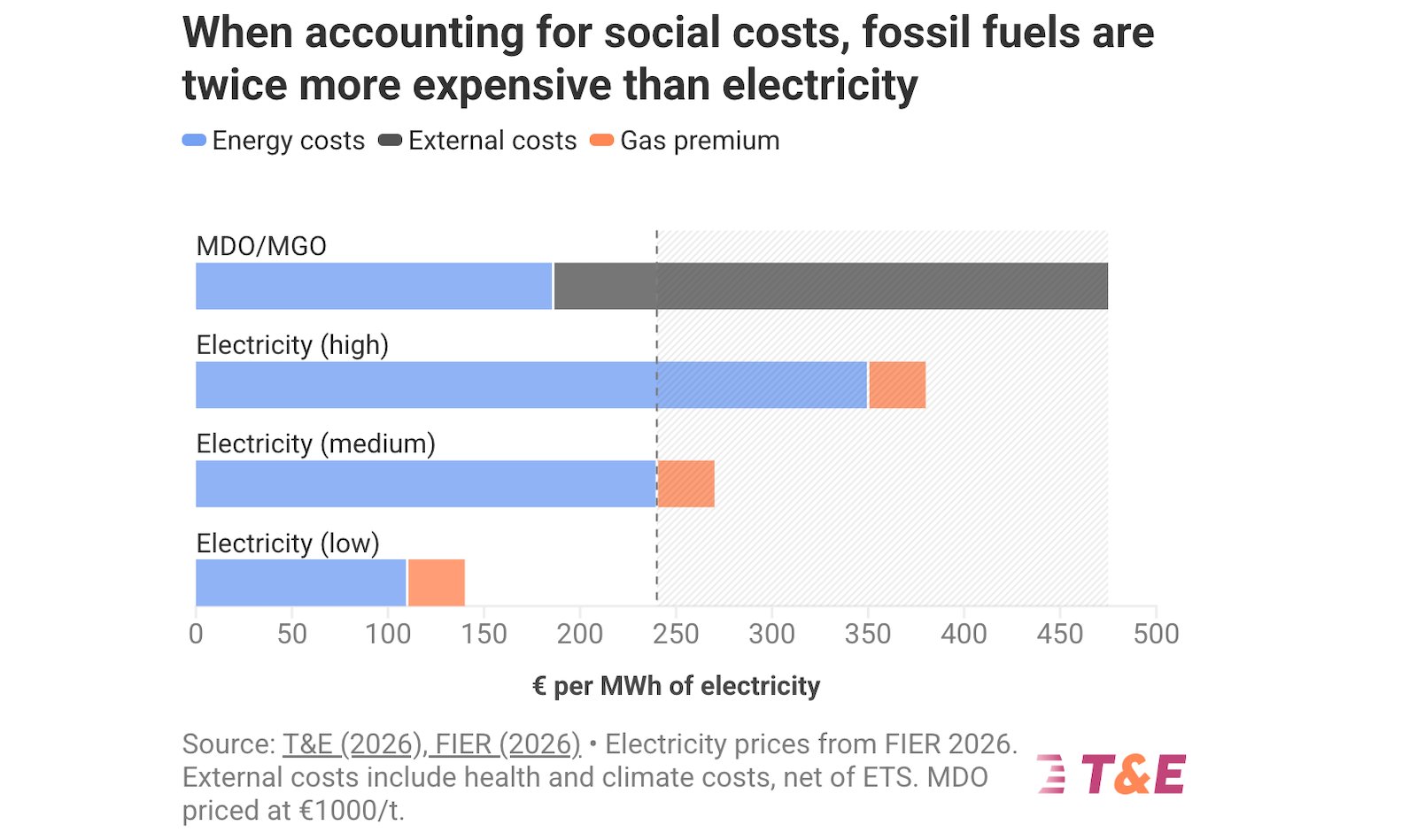
Research has consistently linked this form of air pollution to adverse health outcomes, with residents living near commercial harbors facing significantly higher risks of respiratory and cardiovascular mortality. The economic impact is equally stark; when the external costs of healthcare and environmental degradation are factored in, the “cheap” fossil fuels currently used by these ships become twice as expensive as utilizing clean, shore-based electricity.
The burden of this pollution is not distributed evenly. According to the T&E analysis of Europe’s 100 largest ports, the city of Rotterdam bears the highest cost, with shipping emissions resulting in €350 million in annual damages. Other major hubs also face massive tolls: Antwerp follows with €220 million, while Marseille and Hamburg each record €120 million, and Genoa accounts for €110 million.
Current EU regulations, specifically the Alternative Fuels Infrastructure Regulation (AFIR), are intended to curb this problem. However, the legislation contains significant loopholes. Under present rules, only large container ships, ferries, and cruise ships are mandated to connect to dockside power. This leaves a vast array of other vessels—including oil and gas tankers, bulk carriers, and car carriers—entirely exempt from the requirements.
“Port communities are paying the price for ships running their engines 24/7 at port,” said Eloi Nordé, a shipping policy officer at T&E. “Fossil fuels only seem cheap because companies offload health and climate costs onto the public. Fortunately, the solution already exists. Plugging ships into shoreside electric power would save society billions and make port cities far healthier to live in.”
The T&E report suggests that closing these legislative gaps would save Europe an estimated €1.56 billion in health and climate-related costs. Beyond the immediate health benefits, a broader mandate for shore power would provide the policy predictability necessary for ports to invest in green infrastructure. Currently, the lack of a comprehensive, long-term requirement discourages port authorities and grid operators from committing to the necessary upgrades.
As the European Commission prepares to review the AFIR regulation later this year, there is a growing coalition of industry and environmental stakeholders—including the Clean Port Cities coalition, DFDS, and Green Transition Denmark—calling for urgent reform. Their proposal advocates for the progressive inclusion of all vessel types in shore power mandates, the introduction of battery-charging regulations, and accelerated efforts to improve grid access at ports. They argue that by setting clear requirements before 2032, the EU can transition port operations toward a cleaner, more sustainable model that no longer relies on the health of local populations to subsidize operational costs.
Disclaimer: This content is auto-generated for informational purposes only.
Source: Read Original News