







New oil expansion plans in the Ecuadorian Amazon, scheduled for bidding between December 2026 and January 2027, threaten to reshape the environmental and social landscape of the country’s most sensitive regions. Government proposals involve 14 oil blocks covering approximately 5.7 million acres, raising alarms regarding the future of Indigenous territories, carbon sequestration capacity, and regional biodiversity.
Indigenous Sovereignty at Risk
The scale of the proposed development is vast, with 97% of the 5.4 million acres allocated to the “Southeastern Oil Round” overlapping directly with ancestral lands in Pastaza and Morona Santiago. The impact on local communities is profound: the planned blocks affect 100% of the Andwaoa and Shiwiar territories, 81% of the Achuar territory, and 42% of the Sapara lands. In total, 283 Indigenous communities face potential disruption, with the Shuar people alone accounting for 150 of these settlements. These territories, which serve as bastions of environmental stewardship, are now designated for industrial extraction.
Carbon Sink and Vegetation Cover
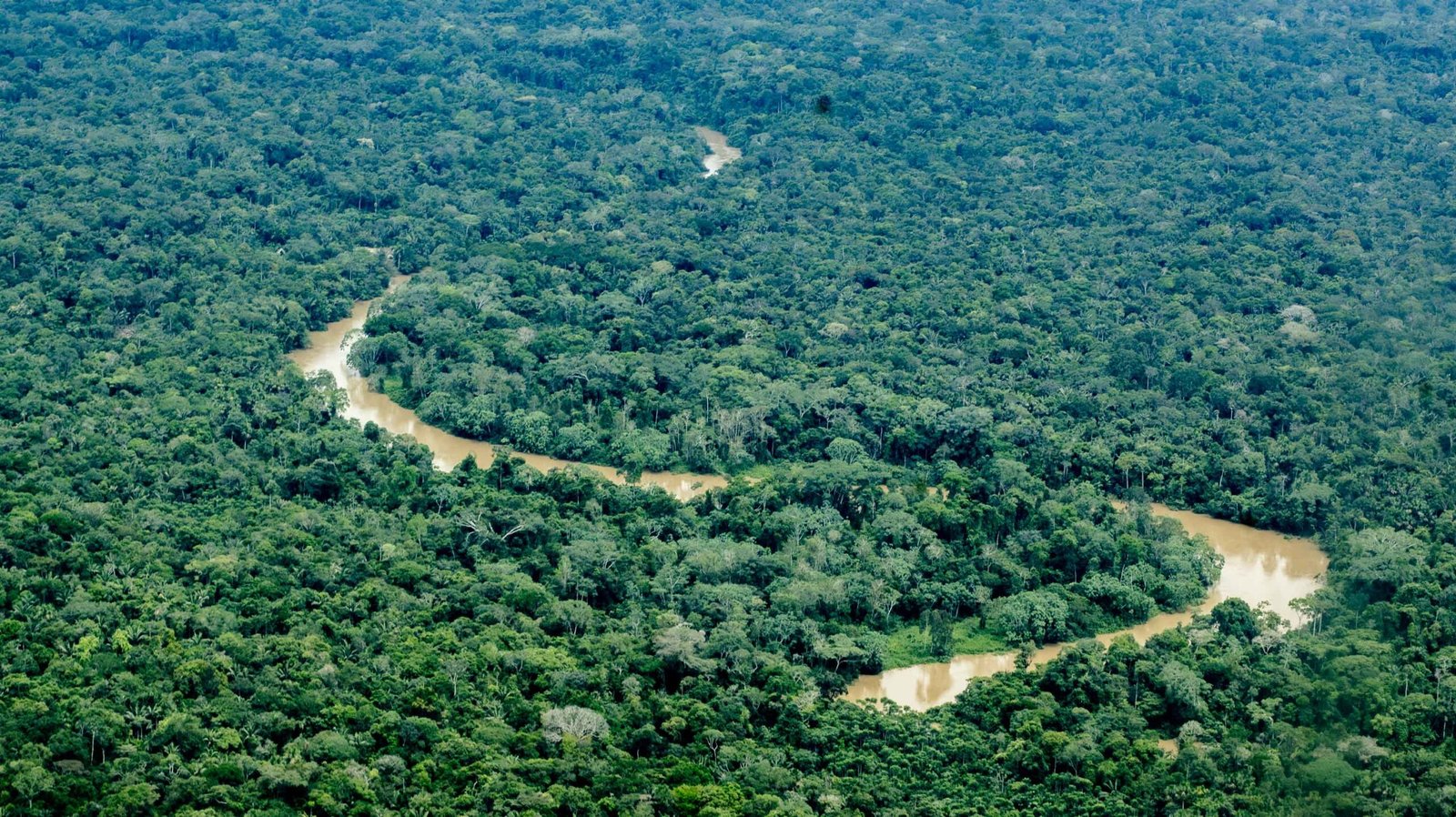
The targeted regions play a critical role in climate regulation. While the Ecuadorian Amazon as a whole maintains a net carbon sink of −9 million metric tons of CO₂e per year, the specific blocks up for bid contribute significantly to this balance. These areas currently maintain a net sink of −2.0 million metric tons of CO₂e annually—nearly a quarter of the entire region’s total sequestration capacity.
Conservationists warn that the degradation of these forests could reverse this vital ecosystem service. Analysis shows that in the Pungarayacu region (Block 20), human activity has already transformed land use to a degree 2.6 times higher than the Amazonian average, with 35.8% of the area now diverted to agriculture and forestry. Extending industrial extraction into these remaining natural zones threatens to further accelerate forest loss and diminish the landscape’s ability to mitigate climate change.
Biodiversity and Hydrographic Integrity
The proposed blocks also overlap with regions of extreme ecological richness. Mapping by the International Union for Conservation of Nature (IUCN) indicates that these areas support a high density of amphibians, birds, mammals, and fish. Even the “least rich” blocks contain nearly 1,000 species per 100-square-kilometer cell, while hotspots like Block 84 reach upwards of 1,252 species. Infrastructure development and the resulting habitat fragmentation pose an immediate threat to this baseline biodiversity.
Furthermore, the hydrographic consequences are substantial. The planned expansion intersects 25 sub-basins across the Napo, Tigre, Pastaza, Morona, and Santiago river systems. Analysis reveals that the blocks overlap with over 19,000 kilometers of waterways—a distance equivalent to 64% of the length of the Pan-American Highway. Given that these rivers are essential for Indigenous mobility, food security, and water access, the risk of contamination and ecosystem disruption extends far beyond the administrative boundaries of the oil blocks.
As the government moves toward the bidding process, the data suggest that the environmental cost of these projects—measured in lost carbon sequestration, threatened wildlife, and the destabilization of ancestral water systems—could be substantial. Experts emphasize that the cumulative risk to these river basins and their inhabitants requires an urgent re-evaluation of the region’s role as a critical, and increasingly fragile, carbon sink.
Disclaimer: This content is auto-generated for informational purposes only.
Source: Read Original News