






The world of Sanjay Leela Bhansali sets is legendary for a reason: they are cathedrals of perfectionism where no detail is too small, no emotion too raw, and no physical cost too high. When Padmaavat hit screens in 2018, the world was mesmerized by Ranveer Singh’s visceral, animalistic transformation into the ruthless Sultan Alauddin Khilji. It wasn’t just acting; it was a haunting possession. But behind the grandeur and the haunting gaze lay a grueling physical toll, recently brought back into the spotlight by veteran actor Raza Murad.
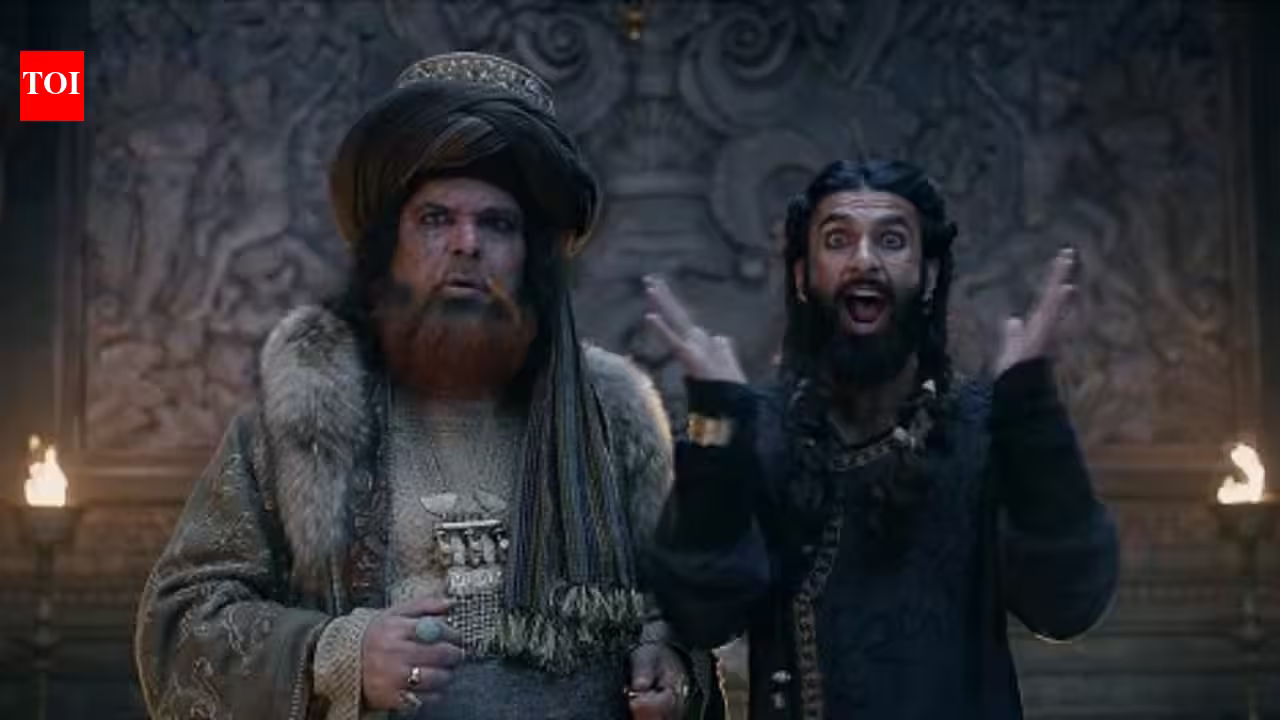
In a candid revelation that underscores the sheer intensity of the Padmaavat production, Murad—who played Jalaluddin Khilji in the epic drama—shared that a single scene required him to slap his co-star not once, but 24 times.
The Price of Perfection: 24 Slaps and a Swollen Cheek
For any actor, a slap scene is a choreographed dance of trust. Usually, it’s about angles and sound effects. On a Bhansali set, however, “the look” is everything. According to Murad, the director was unsatisfied with the lack of authenticity in the initial takes, demanding a “resounding” impact that resonated with the gravity of the script.
“Bara bar ho raha tha (I was actually slapping him), and it took 24 retakes because Sanjay wanted a resounding slap and he wasn’t getting that,” Murad shared in an interview with The Lallantop.
As the retakes piled up, the technicality of filmmaking faded, replaced by the reality of a swollen face. Murad noted that Bhansali remained fixated on the outcome, seemingly undeterred by the physical discomfort of his lead actor. “Sanjay was least bothered about how Ranveer would feel. He kept telling me, ‘Raza aap maariye, ek aur maariye’ (Raza, slap him, slap him again).” By the time the final cut was approved, the exhaustion and physical trauma were etched into Ranveer’s skin. The actor himself later admitted that he was operating purely on willpower by the end of the marathon sequence, a sentiment he echoed on social media at the time of the film’s release.
Channeling the Khilji Mentality
The anecdote reveals more than just the difficulty of shooting a period drama; it highlights the unique, often extreme, method acting approach Ranveer Singh adopted to bring the Sultan to life.
Murad describes witnessing a man who had completely vanished into the character. “He was very sporty and humble. He is very focused on his work. When he is in the middle of the shoot, he doesn’t talk to anyone. He is just in his character, just like a lion in a cage, Ranveer roams around like that,” Murad recalled.
This “lion in a cage” persona wasn’t just for the cameras. It was a sustained state of being. To maintain the volatility of Khilji, Ranveer reportedly cut himself off from the surrounding crew. He famously requested that people move out of his eye level during takes to ensure no distraction broke the fragile bubble of his character’s psyche. For an actor known for his exuberant, high-energy personality in real life, the discipline required to maintain the dark, brooding menace of Khilji for months on end is, in itself, a feat of immense mental fortitude.
The Bhansali Effect: Artistry at Any Cost
Sanjay Leela Bhansali is known in the industry as a taskmaster who pushes his cast to their breaking points, and Padmaavat stands as a testament to that philosophy. Whether it is the elaborate costumes, the painstaking set designs, or the repetitive, exhaustive takes, Bhansali’s vision is notoriously uncompromising.
While some might criticize the demand for 24 takes of a physical blow, the result on screen cannot be denied. Khilji is widely considered one of the most formidable antagonists in modern Hindi cinema. The audience felt the rot, the madness, and the hunger for power in every frame. Murad’s account serves as a reminder that the “magic” of cinema is often rooted in a very physical, very grueling reality that the audience rarely gets to see. It begs the question: how much should an actor endure for the sake of the frame? For Ranveer, the answer was evidently: whatever it takes.
A Legacy of Excellence
Despite the grueling nature of the shoot, there is no bitterness in Murad’s recollections. Instead, he speaks of his co-star with profound respect. “He is a gifted, sincere and an effortless actor,” Murad said. “I think he is one of the best actors; very few talented actors like him have come in the history of Hindi cinema.”
Padmaavat, based on the 16th-century epic poem, was a massive success that defied controversy and box-office expectations. It cemented the triumvirate of Deepika Padukone, Shahid Kapoor, and Ranveer Singh as a powerhouse ensemble. Yet, it is the performance of the Sultan that often remains the most discussed.
The story of the 24 slaps has become a piece of industry lore—a reminder that while technology can enhance a film, it cannot replicate the genuine, raw human reaction of someone who has been pushed to their absolute limit. Ranveer Singh didn’t just portray Khilji; he survived the Sultan, and in doing so, he left an indelible mark on the landscape of Indian cinema. It was a swollen cheek, yes, but it was also the foundation of a performance that will be studied for years to come.
Disclaimer: This content is auto-generated for informational purposes only.
Source: Read Original News