





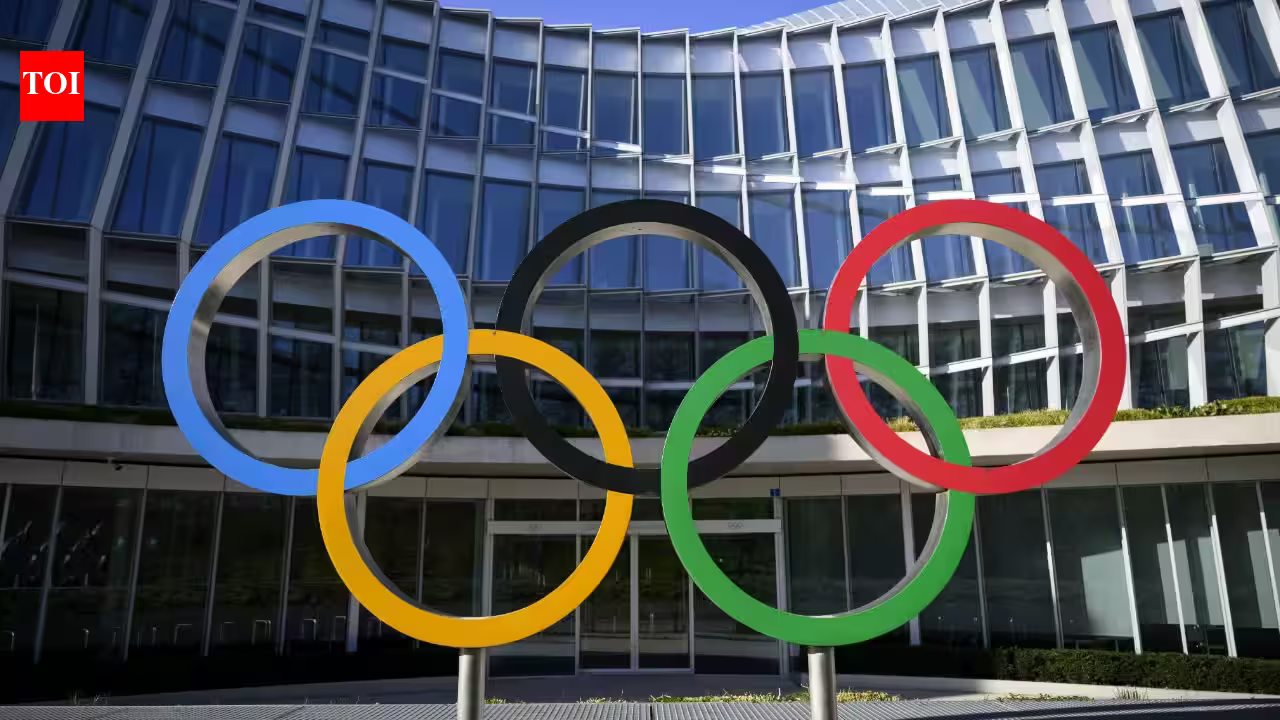
NEW DELHI — The eyes of the global sporting community shift toward the Indian capital this Thursday as a high-profile delegation prepares to deliver a pivotal presentation to the International Olympic Committee’s (IOC) Future Host Commission. This virtual session marks a definitive step forward in India’s ambitious quest to host the 2036 Summer Olympics and Paralympics, a bid that underscores the nation’s rapid ascent as a global hub for world-class sporting events.
Representing the nation from a command center in New Delhi, the delegation brings together a formidable lineup of leadership. Sports Minister Mansukh Mandaviya and Sports Secretary Hari Ranjan Rao will anchor the government’s commitment, supported by outgoing Indian Olympic Association (IOA) President PT Usha, Athletes Commission head and badminton icon PV Sindhu, Gujarat Sports Minister Harsh Sanghavi, and IOA CEO Raghuram Iyer. Together, they aim to paint a compelling picture of an India ready to welcome the world’s finest athletes to Ahmedabad.
A Strategic Vision Centered on Ahmedabad
The core of India’s pitch focuses on Ahmedabad, a city rapidly transforming into a premier sports destination. The strategy hinges on the “infrastructure-first” model, which leans heavily into the sustainability and viability of venues. Crucially, the city is already slated to host the 2030 Commonwealth Games, providing a built-in advantage: by the time the IOC makes its final decision, a vast majority of the necessary venues and logistical infrastructure will already be operational.
This proactive approach is designed to resonate with the IOC’s modern emphasis on “Games legacy”—ensuring that the investment in Olympic infrastructure provides lasting benefits to local communities long after the closing ceremony. By integrating the 2036 bid with existing regional development plans in Gujarat, India aims to prove that its proposal is not merely a one-off spectacle, but a logical extension of its national urban development roadmap.
Building on a Proven Track Record
India enters this contest not as a novice, but as a seasoned host of international sporting competitions. The delegation is expected to highlight the country’s impressive recent history of execution. Between January 2025 and June 2026 alone, India successfully managed 36 international events across more than 15 cities. Looking ahead, the pipeline remains robust, with another 19 international sporting competitions scheduled for 2027 and 2028.
This sheer volume of events serves as a testament to India’s organizational capability, safety protocols, and public enthusiasm. The IOC’s assessment, led by Kirsty Coventry, will rigorously weigh these logistical successes against the other six nations currently in the running: Germany, Hungary, Qatar, South Korea, South Africa, and Turkiye. With such stiff global competition, India’s narrative of growth and capacity will be the central pillar of their defense.
The Road to 2036: A Multi-Year Marathon
While Thursday’s presentation is a momentous milestone, it is merely the opening gambit in a long, tactical process. The IOC’s roadmap for selection is exhaustive. Following the presentations, the committee will initiate an “anonymous survey” in the third week of December. This tool is designed to gauge genuine public sentiment within the bidding nations—a critical metric for the IOC, which now prizes domestic support as a primary indicator of a successful, tension-free Games.
This sentiment analysis will feed into the initial assessment in March 2025, triggering the “Strategic Dialogue” phase. During this period, candidates will be required to submit formal responses to the Future Host Questionnaire and provide rock-solid financial guarantees. The intensity will only escalate as the process moves into the “Targeted Dialogue” phase, slated for 2028. It is only after this exhaustive due diligence that the IOC Executive Board will, by mid-2029, recommend a preferred host to the full IOC session for a final vote.
Measuring Success Beyond the Medals
As the delegation prepares to take the virtual stage, the stakes extend far beyond the gold medals eventually handed out in 2036. For India, this bid is an assertion of its role in the global arena. The technical criteria set by the Future Host Commission—ranging from the venue master plan and athlete experience to the long-term sustainability of the funding model—are designed to test the resolve of the host nation.
With figures like PV Sindhu lending their voice to the project, India is placing the athlete experience at the forefront. As the world watches, the message from New Delhi is clear: India has the passion, the venues, and the administrative strength to deliver an Olympic Games that aligns with the future of the movement. Whether this presentation successfully secures the nation’s position as a front-runner remains to be seen, but one thing is certain: India is no longer an observer in the Olympic conversation—they are a serious, calculated contender.
Disclaimer: This content is auto-generated for informational purposes only.
Source: Read Original News