








The Anatomy of Real Estate Litigation in India
The Indian real estate sector, despite being a primary driver of economic growth, is frequently marred by disputes regarding project delays, abandoned construction sites, and financial impropriety. The recent legal battle involving a homebuyer in Sonipat highlights a critical structural failure: the disconnect between construction progress and the disbursement of home loans by financial institutions. When a developer fails to deliver a project on time, the burden of repayment often falls unfairly on the buyer, leading to protracted legal battles within the framework of the Consumer Protection Act.
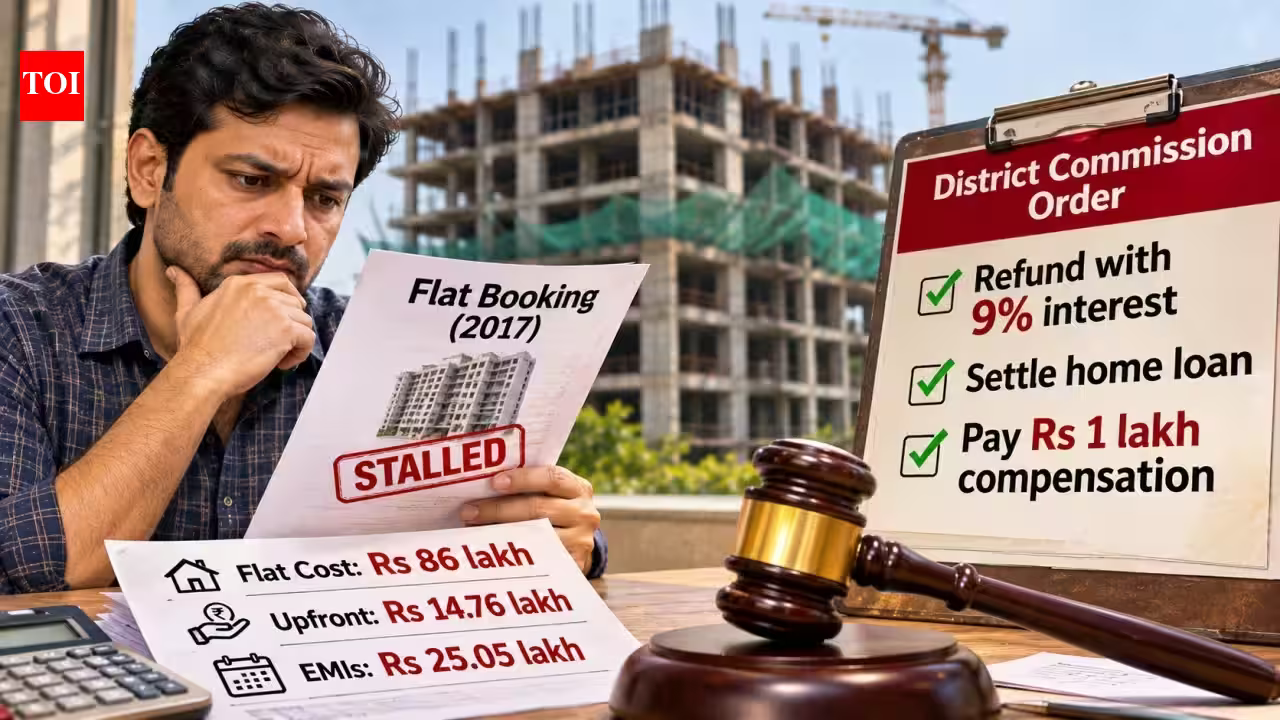
In this specific case, the developer promised possession by 2019, yet abandoned the project shortly thereafter. The buyer, having paid a significant booking amount and several years of Equated Monthly Installments (EMIs), found themselves in a debt trap. The developer’s defense—citing force majeure and alleging the purchase was for commercial purposes—is a common strategy used to dismiss consumer status and evade liability. However, the District Consumer Commission’s firm stance serves as a reminder that courts increasingly prioritize the rights of individual homebuyers over the defensive maneuvers of builders.
The Role of Tripartite Agreements and Lender Accountability
A crucial aspect of this dispute revolves around the tripartite agreement between the buyer, the builder, and the financial institution. In many Indian real estate transactions, the lender disburses funds directly to the developer based on milestones. The homebuyer’s grievance centered on the fact that the lender continued to disburse funds despite the project’s stagnation. This practice, often termed “subvention schemes” or front-loaded disbursements, has been a contentious issue in Indian real estate finance.
The District Commission’s decision to mandate that the developer settle the loan liability with the finance company shifts the burden back to the entity that failed to perform its contractual obligation—the builder. By ordering the developer to reimburse the buyer for paid EMIs and clear the remaining loan, the commission effectively nullified the financial impact on the victim. This ruling reinforces the expectation that developers must bear the financial consequences of their operational failures rather than passing the risk onto the consumer who holds no control over the construction timeline.
The Consumer Commission’s Balancing Act
The ruling in the District Commission was comprehensive, addressing not only the refund of the principal amount with interest but also providing compensation for mental agony and litigation expenses. The interest rate penalty, which escalates to 12 percent if payment is delayed beyond the four-week window, acts as a deterrent against non-compliance. These punitive measures are essential in the Indian legal landscape, where developers often treat litigation costs as a minor overhead rather than a significant liability.
However, the subsequent appeal by the homebuyer to the State Commission illustrates the limitations of judicial relief. The buyer sought to extend the EMI reimbursement period to include installments paid during the entire duration of the legal proceedings. While the State Commission acknowledged the validity of the original order, it declined to expand the relief, citing that the initial mandate to settle future loan liabilities already provided sufficient coverage. This outcome emphasizes a vital takeaway for litigants: while legal forums are protective of consumer rights, they operate strictly within the parameters of the specific prayers made in the original complaint.
Navigating Jurisdictional and Technical Defenses
Real estate developers in India frequently employ technical legal arguments to delay proceedings. Common tactics include challenging the “consumer status” of the buyer by alleging the property was purchased for commercial investment rather than residential use, or raising “limitation” objections to claim that the complaint was filed past the permissible window. In this case, the developer’s attempt to characterize the buyer as a commercial entity was soundly rejected.
The State Commission’s role in this case was to uphold the finality of the District Commission’s ruling while curbing attempts to expand the scope of litigation unnecessarily. The dismissal of the appeal suggests that once a court has ordered a comprehensive settlement—covering both the principal refund and the loan closure—further litigation for incremental costs may not yield the desired return. For professionals and investors, this highlights the necessity of precise legal drafting at the onset of a complaint to ensure all potential liabilities are covered in the initial filing.
Broader Market Implications and Regulatory Oversight
This case serves as a microcosm of the risks inherent in the Indian housing market, where transparency in construction and financial oversight remains a work in progress. Despite the Real Estate (Regulation and Development) Act (RERA) being in place to protect buyers, many consumers still find themselves turning to Consumer Commissions for more robust, immediate relief. The ability of a consumer forum to hold both the builder and the finance company accountable, albeit to varying degrees, provides a pathway for recovery in an otherwise opaque market.
For the real estate industry, this precedent reinforces the dangers of abandoning projects or neglecting communication with buyers. Builders who fail to meet delivery timelines and engage in poor financial management face not only the loss of reputation but also substantial monetary penalties that can jeopardize their liquidity. Furthermore, this case underscores the importance of rigorous due diligence by financial institutions. If lenders are consistently associated with projects that default, they may face increased regulatory scrutiny regarding their disbursement policies, potentially leading to more stringent credit assessment processes in the future.
In conclusion, the outcome of this dispute acts as a cautionary tale for all parties involved in real estate transactions. For the buyer, it underscores the importance of securing a robust tripartite agreement and maintaining meticulous documentation of payments and project status. For the industry, it highlights that the judicial system in India is increasingly intolerant of project mismanagement and that the costs of abandoning a project far outweigh the costs of transparent project execution. As the market matures, the integration of stronger consumer protection and institutional accountability remains the only viable path forward for sustained growth in the Indian residential sector.
Disclaimer: This content is auto-generated for informational purposes only.
Source: Read Original News