






The Philosophy of Retro-Modern Integration
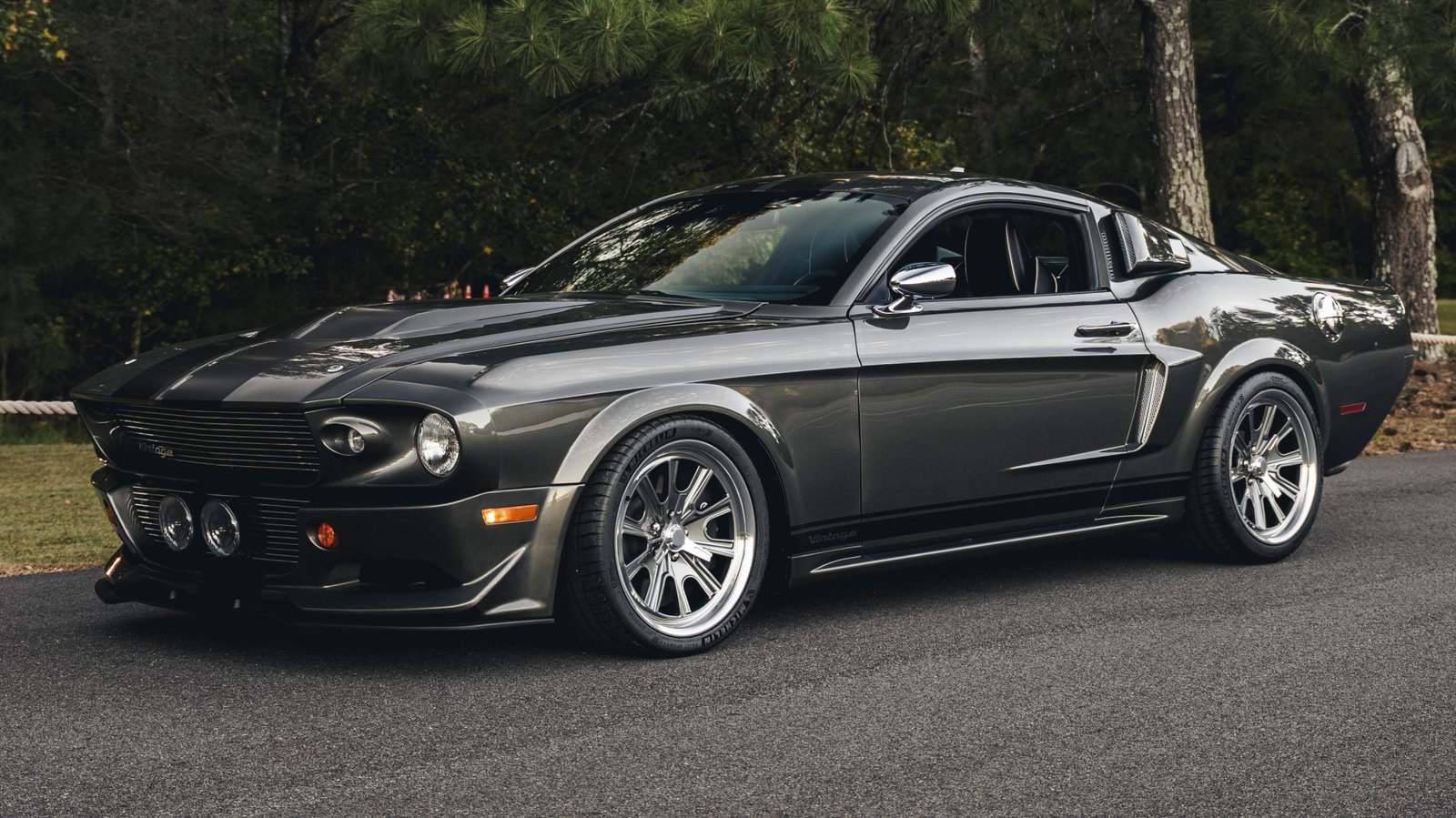
The automotive industry has witnessed a steady rise in restomodding, a practice where historical aesthetics are paired with contemporary engineering. Historically, this meant taking a vintage chassis and retrofitting it with modern components. However, New York-based firm Vintage Modern has pioneered a reverse methodology with its latest creation, the Vintage Fastback. By utilizing the chassis and powertrain of a modern S650-generation Ford Mustang and wrapping it in carbon-fiber bodywork reminiscent of the mid-1960s, the company is redefining how we think about vehicle heritage.
This approach sidesteps the common reliability and safety drawbacks of older vehicles while preserving the iconic silhouette that enthusiasts crave. The Vintage Fastback does not merely imitate the past; it leverages modern manufacturing precision—such as CAD-designed panel gaps and high-strength materials—to ensure that the vehicle performs with the stability of a contemporary machine. This creates a synthesis where the driver experiences the visceral familiarity of a classic aesthetic without the mechanical fragility typically associated with pre-emissions-era automobiles.
Engineering the Coyote V8 for Modern Demands
At the heart of the Vintage Fastback lies the legendary 5.0-liter Coyote V8 engine. By retaining the core architecture of the current Mustang, Vintage Modern ensures that the vehicle adheres to modern emissions standards and offers the refined power delivery expected of a modern sports car. In its standard configuration, the engine produces a robust 486 horsepower and 418 pound-feet of torque.
For those who view the factory specifications as merely a starting point, the firm provides a forced-induction upgrade. By integrating a 3.0-liter supercharger, the power output surges to 840 horsepower and 615 pound-feet of torque. This specification places the vehicle in a competitive performance bracket, eclipsing the specialized Mustang GTD. To manage this heat and airflow, the engineering team has integrated custom cooling systems within the carbon-fiber front fascia, ensuring that the performance remains consistent even during spirited track usage or aggressive street driving.
Material Science and Bodywork
The aesthetic transition from an S650 to a 1960s-inspired silhouette is achieved entirely through custom carbon-fiber body panels. Carbon fiber was selected for its high strength-to-weight ratio, allowing the builders to create complex curves and aggressive flared arches that emulate the original design language while maintaining the structural rigidity of the underlying modern frame.
The weight savings provided by these panels are critical. By replacing the steel components of the original Mustang architecture, the Vintage Fastback retains a power-to-weight ratio that rivals dedicated track vehicles. Furthermore, the exterior treatment includes a meticulous attention to detail, such as the implementation of retro-styled headlights and taillights that utilize modern LED projection technology. This ensures optimal night visibility while maintaining the period-correct glow and housing designs of the 1960s era. The standard chrome gas cap and the inclusion of classic-style wheels complete the visual transformation, masking the high-tech foundation beneath.
The Digital Cockpit in a Vintage Shell
One of the most jarring aspects of traditional restomods is the inability to integrate modern digital interfaces, such as infotainment systems and driver-assistance software. Vintage Modern has solved this by retaining the core cabin architecture of the S650 Mustang. Inside, the driver is greeted by the familiar, expansive twin-screen digital display. This provides seamless integration for navigation, vehicle telemetry, and smartphone connectivity, which are non-negotiable requirements for modern consumers.
While the digital guts remain, the sensory experience is elevated through manual customization. The firm re-trims the interior surfaces using high-grade Alcantara and premium leathers, replacing plastic trim pieces with bespoke billet aluminum components. The steering wheel is re-contoured for a more tactile grip, and the seats are reupholstered to provide a balance of comfort and lateral support. An available upgraded JL Audio sound system ensures that the interior environment is acoustically tuned to match the high-performance capabilities of the engine.
Market Impact and Production Scalability
The market for such high-fidelity conversions is currently witnessing rapid expansion. The Vintage Fastback project is significant not only for its technical execution but for its labor-intensive process. Each vehicle requires over 900 hours of skilled fabrication, painting, and assembly. This level of craftsmanship justifies the exclusive nature of the product, positioning it as a competitor to ultra-luxury bespoke commissions.
To meet the anticipated demand, the company is undergoing a significant expansion of its production facility, aiming to triple its current manufacturing footprint. This scaling effort is indicative of a broader shift in the automotive aftermarket: the move toward industrial-scale boutique manufacturing. By streamlining the supply chain for carbon fiber and standardized digital components, the firm is moving toward a model where high-end custom vehicles can be produced with the quality control standards of a mass-market manufacturer, yet the personal touch of a coachbuilder. As the brand scales, the Vintage Fastback serves as a proof-of-concept for how modern chassis architecture can be successfully repurposed to bridge the gap between historical design appreciation and contemporary performance expectations.
Disclaimer: This content is auto-generated for informational purposes only.
Source: Read Original News