








The Genesis of the GT41
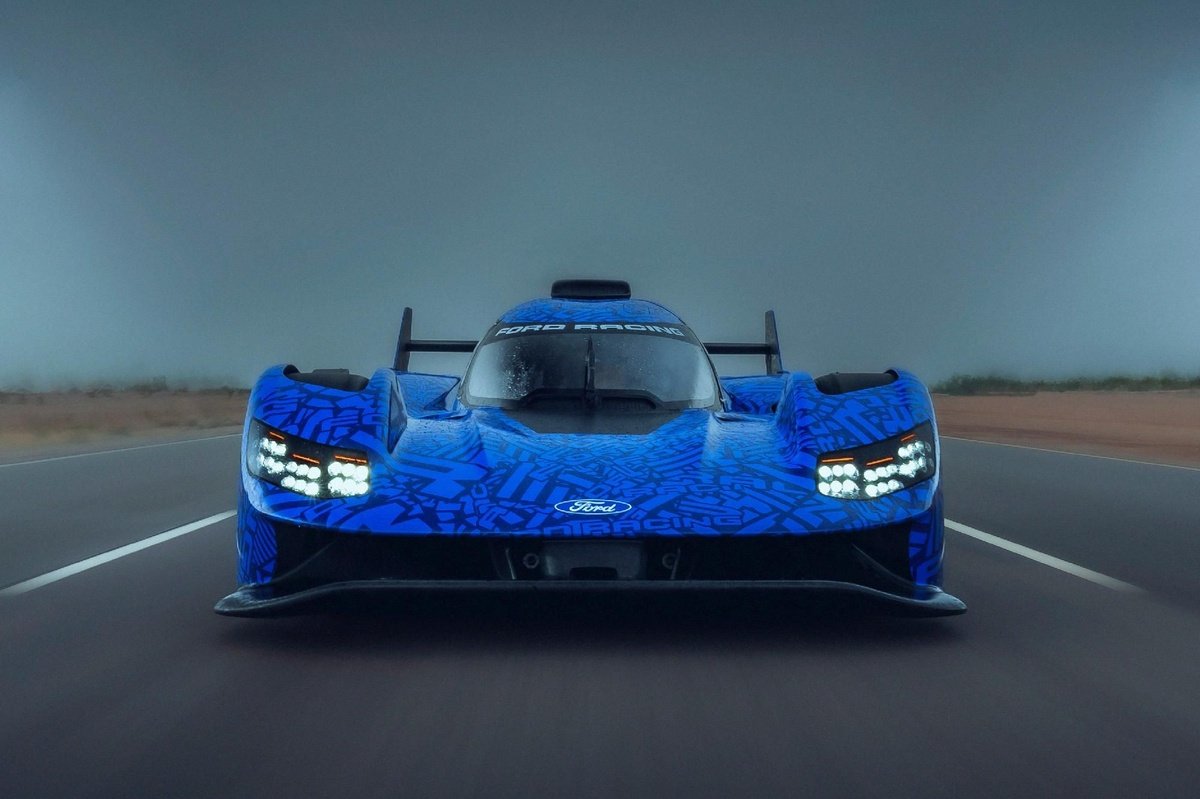
Ford has officially unveiled its upcoming contender for the 2027 World Endurance Championship (WEC), naming the prototype the GT41. Revealed on Thanksgiving, the car represents a strategic move to return to the pinnacle of endurance racing, drawing direct inspiration from the historic success of the original GT40. The naming convention is a deliberate homage to the past; while the original GT40 earned its title from its 40-inch height, the GT41 takes its name from the 41-inch measurement between the ground and the air intake, which serves as the highest point on the new chassis.
The vehicle currently features a camouflage livery, though this is a transitional state before the final race design is finalized in February. Ford is actively exploring various aesthetic themes, with a specific focus on different shades of blue. This color palette aligns with the company’s broader racing identity, particularly the recent Mustang GT3 program in the IMSA SportsCar Championship, which has successfully utilized both matte and glossy finishes on the track.
Technical Development and Aerodynamics
The GT41 is currently in a fluid stage of aerodynamic development. Engineers are rigorously evaluating various configurations to optimize downforce and efficiency. A key area of focus involves the front diveplane assemblies. While the initial reveal version did not feature these components, testing data from single and twin-flap iterations is being analyzed to determine the most effective setup for competitive endurance racing.
Under the skin, the prototype is powered by a naturally aspirated V8 engine. This choice prioritizes high-revving performance and reliability, essential components for surviving the grueling demands of 24-hour endurance events. The vehicle has already undergone extensive testing across major European circuits, including Circuit Paul Ricard, Portimao, Silverstone, and Monza. Most recently, the development team completed a 30-hour endurance simulation at Motorland Aragon, gathering critical telemetry data on mechanical endurance and fuel efficiency.
An In-House Engineering Philosophy
A defining characteristic of the GT41 program is Ford’s commitment to an in-house development cycle. Rather than relying solely on external motorsport consulting firms, the manufacturer has centered the operation at a specialized tech campus in Michigan, with Venture Engineering in Oxfordshire, UK, serving as the European logistical base.
Mark Rushbrook, global director of Ford Racing, emphasized that this is not a branding exercise but a deep technical engagement. The project requires Ford’s own engineers to be embedded within the team throughout the design, testing, and racing phases. This integration ensures that knowledge gained on the track can be rapidly translated back to internal engineering teams. Staffing for the program is largely complete, allowing the team to simultaneously operate two prototype cars during high-intensity test sessions as the 2027 season approaches.
Strategic Objectives and Market Impact
The return to the WEC is viewed by Ford leadership as both a technical challenge and a significant brand milestone. For executive chairman William Clay Ford Jr., the program is a continuation of the company’s historical legacy, which was cemented by victories at Le Mans in the 1960s. Beyond the prestige of competition, the program serves as a laboratory for automotive innovation. The company maintains that the data and engineering breakthroughs achieved on the track will eventually influence the development of future consumer vehicle technologies.
The 2027 WEC landscape will be highly competitive, with the GT41 set to face established programs from Toyota and Ferrari, as well as rising efforts from Cadillac, BMW, Genesis, Aston Martin, and McLaren. While Ford remains focused on the upcoming homologation and competition cycle, the team is keeping its future options open regarding potential expansion into the IMSA series.
Future Milestones
As the program moves into early 2027, the focus will shift to North American circuits for specialized testing sessions throughout December and January. The team is currently balancing the pressures of high-level competition with the necessity of a methodical build-up. By avoiding shortcuts in the development process, Ford aims to enter the WEC season with a mature, reliable platform.
The upcoming reveal of the finalized livery in February will be the next major public milestone. Until then, the engineering teams will continue their work to refine the car’s aerodynamics and powertrain performance. With the recruitment phase largely finalized and significant track mileage logged, the GT41 stands as a serious contender, designed to integrate the heritage of the Ford brand with modern, high-performance racing technology.
Disclaimer: This content is auto-generated for informational purposes only.
Source: Read Original News