








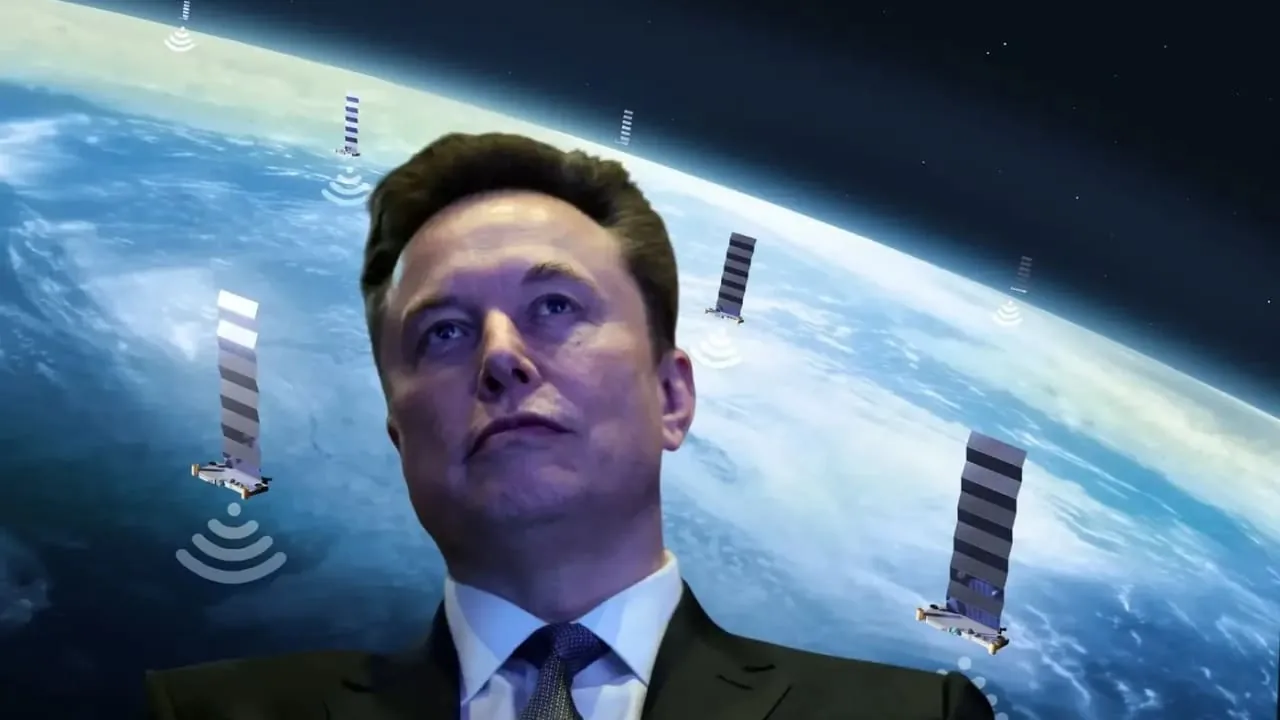
The US Federal Communications Commission (FCC) has authorized SpaceX to deploy a monumental constellation of one million satellites, a move that would fundamentally alter the landscape of near-Earth space. Known as “Starmind,” the proposed fleet is designed to support the rapidly surging demand for artificial intelligence computing by hosting massive data centers in orbit.
The scale of the authorization is unprecedented. If fully realized, the Starmind constellation would dwarf the total number of active satellites currently orbiting Earth. While SpaceX’s Starlink previously pioneered the model of “megaconstellations,” the Starmind project represents a significant escalation, raising urgent environmental and scientific concerns that have already begun to trigger debate among experts.
### Environmental Uncertainties and Regulatory Scope
The environmental impact of such a massive orbital infrastructure has become a focal point of contention. Research from University College London suggests that the deployment and lifecycle of one million satellites—each with a wingspan of 75 meters—would dramatically increase emissions from rocket launches and atmospheric re-entries. The study estimates a 70 to 150-fold increase in such emissions, potentially affecting ozone levels, global climate patterns, and upper-atmospheric air quality.
Despite these warnings, the FCC has maintained that these environmental risks fall outside its regulatory purview. In its authorization, the commission stated that the impact of rocket emissions is an “indirect result” of the system and does not reside within the agency’s jurisdiction. Furthermore, the FCC dismissed concerns regarding the atmospheric effects of satellites burning up upon re-entry as “speculative,” arguing they are not sufficiently established in the current record.
### The Problem of Orbital Congestion
The expansion of Low-Earth Orbit (LEO) raises immediate questions regarding space debris. As of early 2025, there are already more than 23 million debris objects in orbit ranging from one millimeter to ten centimeters. Experts warn that the density of objects in LEO is reaching a critical threshold where the collision risk would likely continue to rise even if all current space activity were to cease immediately.
SpaceX has defended its plans by noting that its satellites will utilize onboard propulsion for collision-avoidance maneuvers and station-keeping. The company also emphasized its commitment to designing satellites that burn up completely upon controlled re-entry over oceanic regions. However, analysts remain skeptical. Hugh Lewis, a professor at the University of Birmingham, has cautioned that even a modest 1% failure rate within a million-satellite fleet could result in thousands of derelict, non-maneuverable objects remaining in orbit annually, exponentially increasing the potential for catastrophic collisions.
### Transforming the Night Sky
The scientific community, particularly astronomers, has expressed grave concerns over the impact of Starmind on the observation of the universe. The American Astronomical Society (AAS) has warned that the sheer density of the constellation could undermine decades of public and private investment in astronomical facilities.
Visual simulations produced by Virginia Tech aerospace professor Shane Ross illustrate a night sky crisscrossed by bands of light, potentially outnumbering visible stars. Because many of the satellites are planned for “sun-synchronous” orbits, they would remain constantly illuminated, leading to significant contamination of long-exposure astronomical imagery. The FCC has rejected requests to impose additional restrictions on the project, suggesting that coordination between SpaceX and the US National Science Foundation is sufficient to mitigate these issues.
### A Long-Term Ambition
While the authorization is a significant milestone, experts note that immediate deployment is impossible. SpaceX has until 2040 to complete the project, with required milestones including the first launch by November 2033 and 50% completion by 2038.
Furthermore, the commercial viability of the project remains an open question. SpaceX has previously cautioned investors that the technology required to build and maintain space-based, solar-powered data centers for AI computing is, in some respects, still unproven. As the company begins to navigate the decade-long deployment schedule, the global community faces a complex trade-off between the promise of unprecedented computing power and the preservation of the planetary environment and the cosmic view.
Disclaimer: This content is auto-generated for informational purposes only.
Source: Read Original News