






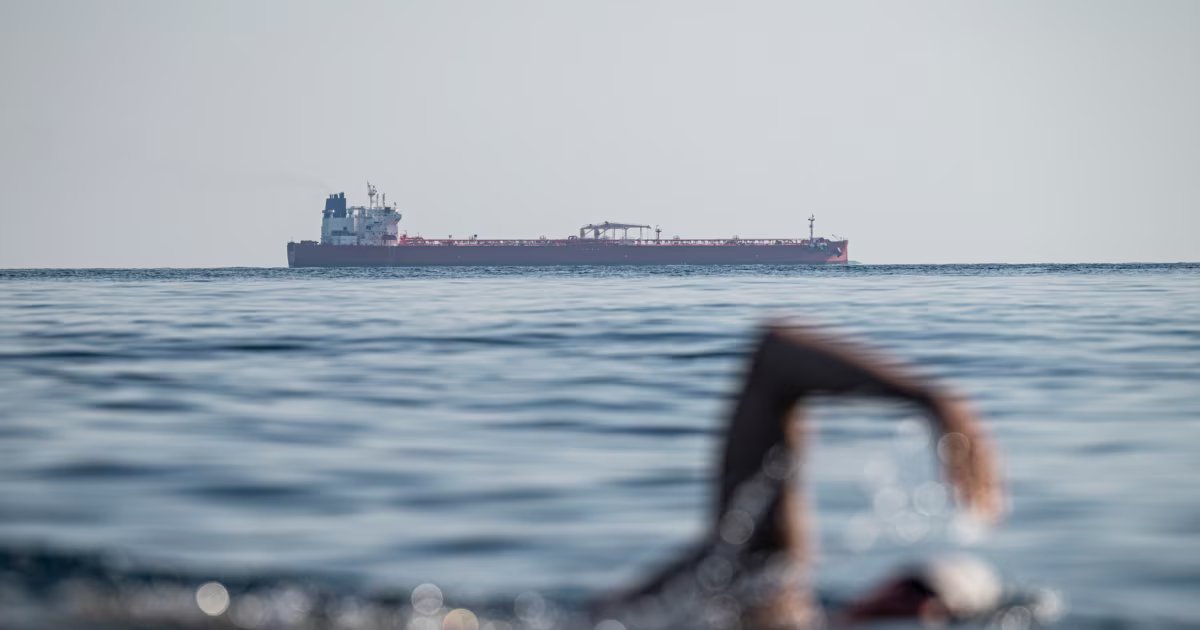
The waters of the Strait of Hormuz, a critical maritime chokepoint responsible for approximately one-fifth of the world’s global petroleum consumption, are currently serving as the backdrop for a stark environmental warning. British endurance swimmer and UN Patron of the Oceans, Lewis Pugh, recently completed a high-stakes swim through these contested waters, an endeavor intended not as a sporting achievement, but as a visceral protest against the long-term ecological devastation wrought by ongoing regional conflict.
During his transit of the strait, Pugh encountered the harsh realities of a volatile geopolitical landscape. He reported witnessing firsthand the vulnerability of the region’s marine environment, observing oil and gas tankers navigating the narrow passage amidst the looming threat of military confrontation. For Pugh, these vessels represent more than just economic assets; they are potential catalysts for an ecological catastrophe that could have irreversible consequences for the Persian Gulf’s fragile biodiversity.
“The environmental threats caused by the instability here will outlive all of us,” Pugh stated, highlighting the disconnect between immediate geopolitical maneuvering and the enduring damage inflicted upon the marine ecosystem. The Strait of Hormuz is not merely a transit corridor; it is a complex habitat home to endangered species, coral reefs, and extensive seagrass meadows. These ecosystems are already stressed by rising water temperatures and salinity shifts. The addition of constant military friction and the looming threat of industrial accidents from targeted tankers poses an existential risk to the region’s marine life.
The potential environmental fallout of an armed conflict in the Strait would be catastrophic. A major oil spill, whether caused by an act of war or a collision resulting from the disruption of maritime traffic, would devastate the shallow, enclosed waters of the Gulf. Unlike the open ocean, the Gulf’s limited circulation means that pollutants, such as crude oil or chemical additives from damaged tankers, would remain concentrated, smothering coastal habitats and destroying the breeding grounds of marine life.
Pugh’s swim is part of a broader campaign to elevate the status of environmental security in international diplomacy. He argues that political leaders frequently treat environmental degradation as a secondary concern, subordinate to national security and economic interests. However, the endurance swimmer contends that the two are inextricably linked. The disruption of these waters, he warns, will result in a “dead sea” scenario that leaves future generations to bear the cost of today’s military aggression.
The international community has long viewed the Strait of Hormuz primarily through the lens of global energy security and naval power projection. Pugh’s intervention seeks to shift this narrative, demanding that the ecological integrity of the waterway be recognized as a fundamental pillar of global stability. By placing himself in the path of industrial traffic in a militarized zone, Pugh has drawn global attention to the “silent victims” of war—the coral, fish, and migratory species that cannot flee from the impending threat of oil-induced suffocation.
As regional tensions persist, the environmental risk remains elevated. While diplomatic efforts to manage the conflict continue, the long-term protection of the marine environment remains largely absent from the negotiating table. Pugh’s warning serves as a sober reminder that while wars are fought over resources, the methods used to secure them may ultimately render those very resources and the environments they inhabit uninhabitable.
For the international community, the challenge now lies in addressing the humanitarian and geopolitical dimensions of the crisis without ignoring the ticking time bomb of environmental collapse. As Pugh emphasized upon completing his swim, the physical impact of a maritime disaster in these waters would be felt for decades, proving that the scars of conflict extend far beyond the political boundaries of the nations involved.
Disclaimer: This content is auto-generated for informational purposes only.
Source: Read Original News