







India to Bolster Border Security as Final S-400 Missile System Arrives by February
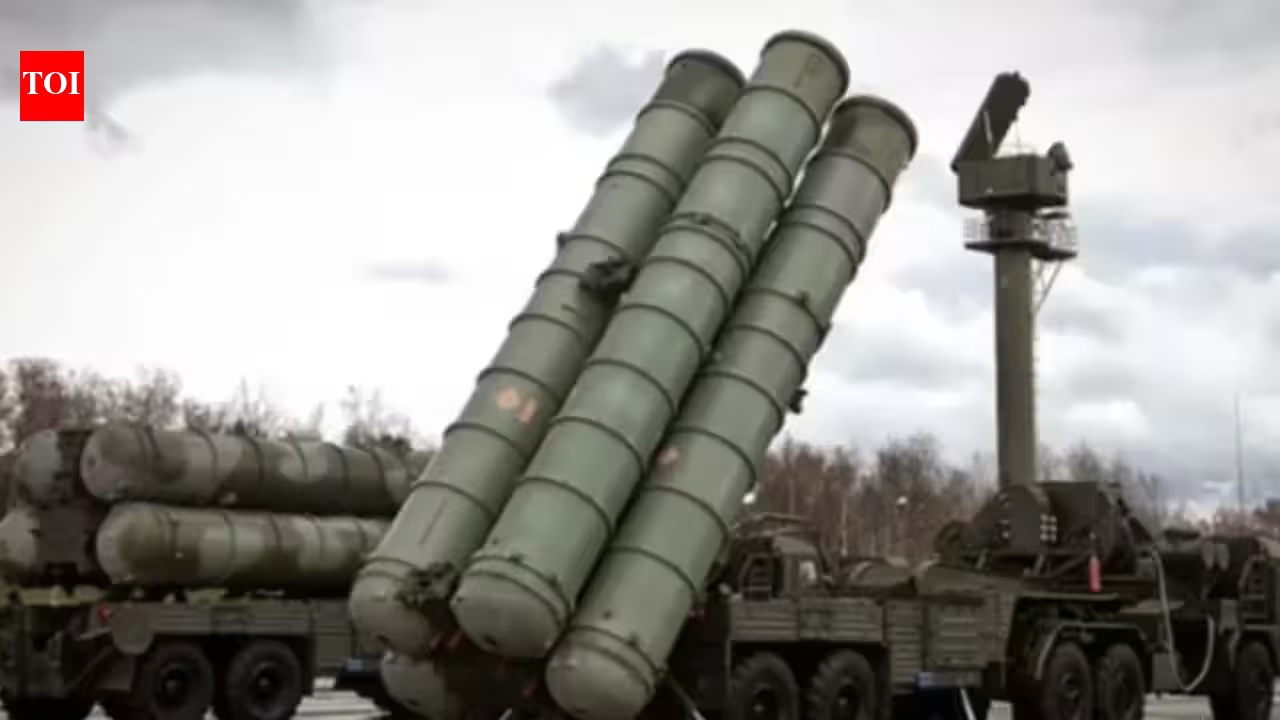
NEW DELHI: India’s aerial defense posture is set for a significant upgrade as the country prepares to take delivery of the fifth and final S-400 Triumf surface-to-air missile squadron from Russia by February 2027. This arrival marks the culmination of the landmark $5.43 billion deal inked in 2018, providing a vital layer of protection for the nation’s most sensitive frontiers.
Strengthening the Western Frontier
Strategic experts indicate that the latest unit is earmarked for deployment along the western front. Once operational, it will provide robust surveillance and interception capabilities along the 740-kilometer Line of Control (LoC). This move completes the initial procurement phase, with four units already actively safeguarding India’s western and eastern borders.
The S-400 platform has become a cornerstone of India’s deterrence strategy. Following its successful performance in high-stakes operational scenarios—including the neutralization of aerial threats—the system has earned a reputation for precision and reliability. Its ability to engage targets, including aircraft, drones, and ballistic missiles, at distances of up to 400 kilometers has made it a preferred asset for military planners.
Expanding the Deterrence Umbrella
The success of the S-400 has prompted the Defence Acquisition Council (DAC) to initiate a major expansion of India’s missile inventory. In March of this year, the DAC granted approval for the procurement of five additional S-400 units. To support this expanded fleet, India is also finalizing the acquisition of 280 short- and long-range interceptor missiles. These will serve both to replenish operational stockpiles and ensure that the Indian Armed Forces maintain a deep reserve of long-range defensive munitions.
Furthermore, the government is exploring a self-reliant approach to long-term maintenance. Discussions are underway regarding the establishment of a domestic private-sector enterprise tasked with the maintenance and repair of the S-400 systems, with a strong emphasis on technology transfer to ensure India retains the capability to service these advanced assets indigenously.
The ‘Sudarshan Chakra’: India’s Own Iron Dome
While the S-400 serves as the long-range backbone of the nation’s air defense, India is simultaneously working toward the development of ‘Sudarshan Chakra’—an ambitious, pan-India, multi-layered integrated missile defense shield.
This comprehensive security architecture is designed to create a “homegrown Iron Dome,” weaving together diverse assets into a single, cohesive network. The system integrates the long-range reach of the S-400 with the medium-range precision of the Barak-8 missile systems. Additionally, the inclusion of the indigenous Project Kusha missile system—currently under development—will provide the necessary depth to counter modern, multi-dimensional threats such as hypersonic weapons, sophisticated drones, and advanced ballistic missiles.
By layering these systems, India aims to create a virtually impenetrable aerial shield, significantly raising the cost for any adversary attempting to penetrate Indian airspace. With the final delivery of the current contract approaching, the nation moves one step closer to achieving a seamless and integrated air defense grid capable of neutralizing threats well before they reach their targets.
Disclaimer: This content is auto-generated for informational purposes only.
Source: Read Original News