








CDS General Raja Subramani Outlines Shift Toward ‘System-Centric’ Military Warfare
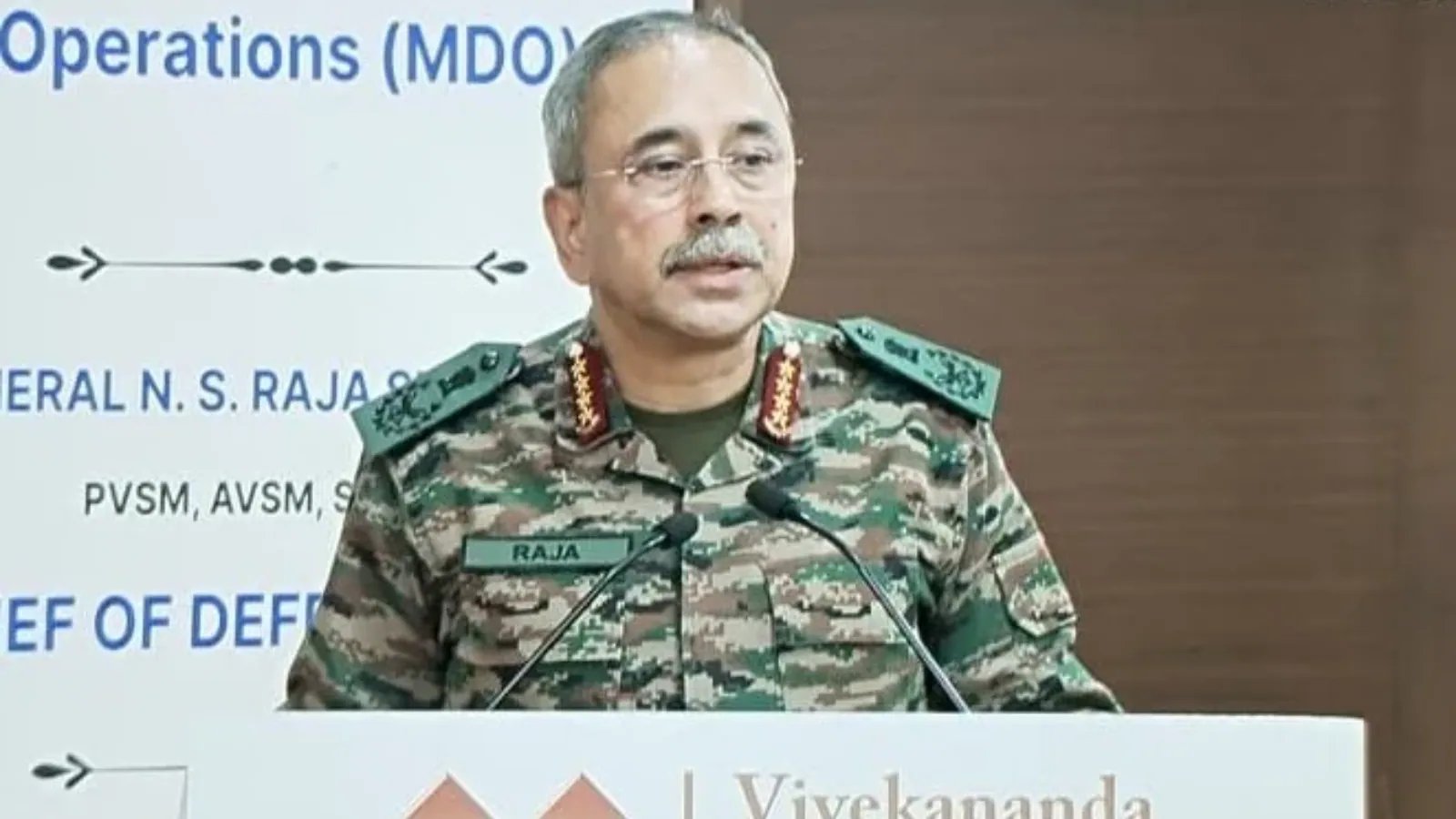
In a strategic pivot for the Indian Armed Forces, the newly appointed Chief of Defence Staff (CDS), General Raja Subramani, has announced that India is moving away from a traditional platform-based approach to warfare. Instead, the military will prioritize a system-centric and capability-based doctrine, aimed at enhancing agility and integration across all domains of conflict.
Drawing lessons from the high-stakes environment of Operation Sindoor—India’s multi-dimensional response to the Pahalgam terror attack—the CDS emphasized that modern security challenges require seamless synchronization across land, air, sea, cyber, space, and information theaters.
Moving Beyond Platforms
General Subramani, who recently succeeded General Anil Chauhan, highlighted that while physical hardware remains essential, the effectiveness of the modern military lies in how these components interact. “We want to transition from being platform-centric to system-centric and capability-based,” he stated.
Under the previous leadership, the military made significant progress in implementing a joint doctrine. General Subramani intends to accelerate this momentum, focusing on translating administrative integration into tangible battlefield success. The core objective is for various units to operate as a single, unified entity, rather than as isolated branches, ensuring that the combined effect of the force is far greater than the sum of its parts.
Tech-Enabled Decision Making
A cornerstone of this new strategy is the integration of cutting-edge technology. The CDS underscored that future operations will be won by those who can process data and make decisions at superior speeds.
“Innovation will require us to be tech-enabled,” said General Subramani. He noted that recent geopolitical conflicts have demonstrated the decisive impact of drone technology, electronic warfare, and real-time intelligence. To remain ahead, the military will cultivate an “intelligent willingness to take risks,” leveraging technology not just for observation, but for rapid, tactical execution.
The Pillars of Atmanirbharta
A central theme of the General’s vision is Atmanirbharta (self-reliance). The CDS stressed that true national endurance depends on reducing dependency on foreign suppliers for critical military resources. By fostering local ordnance production, indigenous logistics, and domestic repair facilities, India aims to maintain high-tempo operations even during prolonged periods of intense conflict.
Human-Centric Leadership
Despite the increasing reliance on algorithms, robotics, and advanced weaponry, General Subramani maintained that the soldier remains the most vital asset. The CDS signaled a shift in how personnel are trained, suggesting that military leadership must evolve to manage the complexities of a multi-domain environment.
“We are seeking to ensure that our human resources can effectively and successfully operate and even combat within such an environment,” he said. This will necessitate a structural transformation in leadership models and training regimes to ensure that commanders at every level are comfortable operating within the fast-paced, high-tech digital battlefield.
Looking ahead, General Subramani expressed firm confidence in the nation’s path. While the exact nature of future warfare remains unpredictable, he believes that by remaining “joint in design” and “multi-domain oriented,” the Indian Armed Forces will be well-equipped to defend national interests whenever called upon.
Disclaimer: This content is auto-generated for informational purposes only.
Source: Read Original News