








The intersection of high-fidelity home entertainment and interior design has reached a critical maturation point. For years, the television was viewed as an aesthetic burden—a large, black rectangle that dominated the living room even when powered down. Recent developments in display technology, particularly with the Samsung The Frame series and the newly released The Frame Pro, have fundamentally altered this paradigm. As retailers roll out aggressive pricing for the upcoming holiday season, it is essential to understand the engineering and software advancements that define these specialized displays.
The Engineering Behind the Canvas
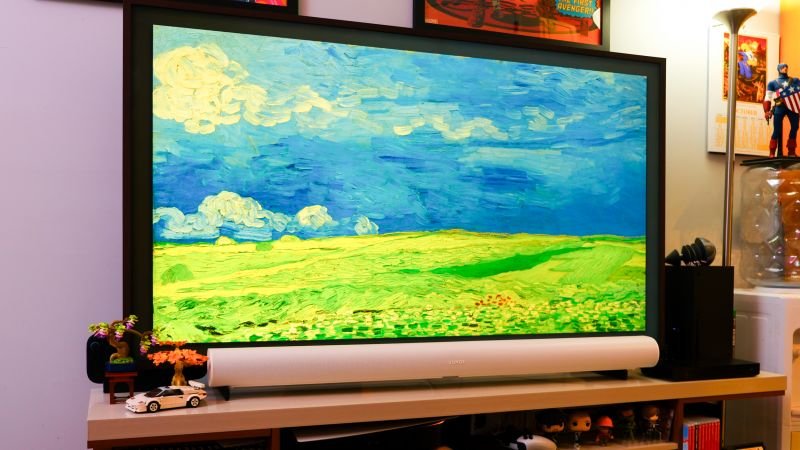
At its core, The Frame series is a QLED display engineered to resolve the primary complaint regarding modern television design: the “black hole” effect. When standard televisions are inactive, their screen surfaces reflect ambient light, drawing focus and disrupting the visual flow of a room. Samsung addresses this through a proprietary Matte Display coating. This layer is designed with microscopic textures that scatter light in multiple directions rather than reflecting it directly at the viewer.
The resulting image quality remains vibrant, with deep contrast and color accuracy, yet it eliminates the mirror-like sheen typical of glass-fronted panels. When the TV enters “Art Mode,” the sensor array adjusts the brightness and color temperature of the panel to match the ambient lighting conditions of the space. This makes the digital image appear as a physical medium, such as canvas or textured paper, rather than a backlit screen. The combination of hardware—the light sensors and the matte surface—allows the device to vanish into the decor, effectively masquerading as a static piece of art.
Key Differentiators in the Pro Series
The introduction of The Frame Pro represents a significant step up in build quality and technical capability. While the standard Frame is optimized for residential use, the Pro variant addresses the needs of users who demand superior color depth and high-end aesthetics. The most notable difference lies in the panel architecture. The Pro series utilizes a higher-density LED array, which allows for more granular local dimming control.
Furthermore, the Pro model includes a refined “Slim Fit” wall-mount system that is integrated into the chassis design to ensure the display sits perfectly flush against the wall. The integration of the One Connect Box—a feature common to the flagship series—remains central to this design. By offloading the inputs, power supply, and processing hardware into a separate, slim unit connected by a single, nearly invisible fiber-optic cable, the screen itself can be incredibly thin. This hardware architecture is what differentiates The Frame from standard televisions, which must remain thicker to accommodate internal ports and power boards.
Software Integration and Art Management
The display is only as effective as the content it showcases. Samsung provides an extensive Art Store, a subscription-based digital gallery that hosts thousands of works from world-renowned museums and galleries. The technical implementation here is robust: the software supports high-resolution files that can be scaled to fit the screen without pixelation.
Beyond the curated library, the software allows for significant customization. Users can upload personal photography, which the device processes through AI-driven algorithms to ensure the image sits correctly within the available aspect ratio. The motion sensor technology is also noteworthy. To conserve energy and extend the longevity of the QLED pixels, the TV detects movement in the room. When the space is empty, the screen enters a deep sleep mode; as soon as someone enters, it wakes to display the selected artwork. This automation ensures that the screen is only consuming energy when it is actively serving as a piece of decor or entertainment.
Installation and Practical Use Cases
The appeal of The Frame extends beyond its aesthetic utility; it solves several architectural and interior design constraints. In small urban apartments where space is at a premium, mounting a television that doubles as a rotating art gallery saves wall space that would otherwise be split between a screen and hanging frames.
Installation is notably more complex than a standard television due to the requirements for the flush-mount system. Users must ensure that the One Connect cable has a clear path through the wall or behind cable management tracks, as the cable is proprietary and cannot be replaced by standard HDMI cords. The customization extends to the physical bezel; Samsung offers magnetic, snap-on frames in various finishes such as wood, metal, or white. Because these bezels are held in place by magnets, they can be swapped out to match a room’s seasonal decor or a change in furniture, providing a level of physical personalization that is rare in consumer electronics.
The Long-Term Impact of Lifestyle Displays
The industry shift toward lifestyle displays is not merely a marketing trend; it reflects a deeper integration of smart home technology into the fabric of the modern household. As displays become more capable, the barrier between functional hardware and art installation continues to erode. By prioritizing light management, ultra-slim form factors, and sophisticated sensor arrays, manufacturers are moving toward a future where the television is no longer a peripheral device, but a dynamic, reactive element of the home environment.
Consumers currently looking at holiday promotions should prioritize the specific requirements of their living space—such as wall composition and the amount of natural light—before choosing between the standard and Pro models. The technical maturity of these devices suggests that they are not just luxury items, but reliable, long-term investments for those looking to unify their home theater and design aesthetics.
Disclaimer: This content is auto-generated for informational purposes only.
Source: Read Original News