








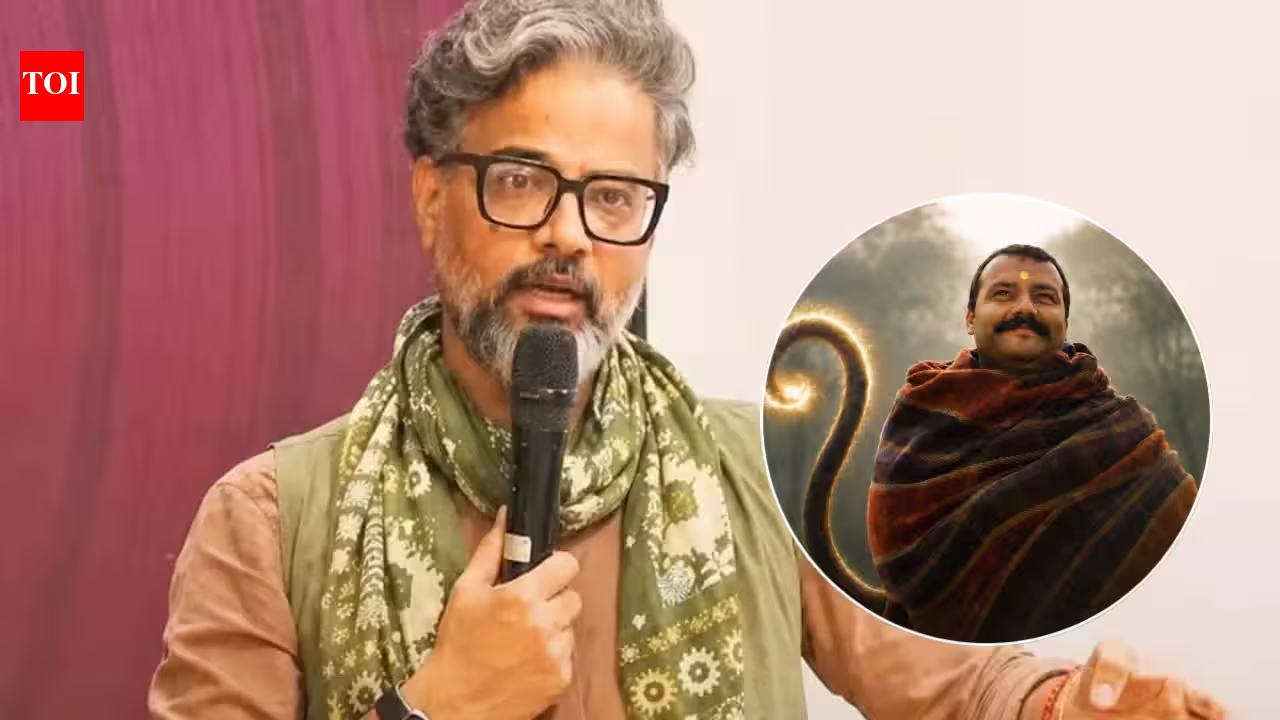
In an era where the box office is often dominated by aggressive marketing spends, star-studded ensemble casts, and digital takeovers that cost as much as the films themselves, Hanuman Ansh has emerged as the industry’s most unlikely unicorn. As the 57th International Film Festival of India (IFFI) wrapped up in Goa this weekend, the buzz on the red carpet wasn’t just about the gala’s closing ceremonies; it was about the quiet, seismic shift in how films find their audiences today. Director Vishal Chaturvedi, standing at the center of this cultural phenomenon, was quick to deflect the praise away from traditional PR machines and squarely onto the shoulders of the public.
For Chaturvedi, the journey of Hanuman Ansh is a testament to the fact that when you hit a nerve—or in this case, a spiritual chord—in the Indian consciousness, you don’t need a billboard to start a conversation.
The Digital “Anti-Marketing” Campaign
The success of Hanuman Ansh defies the conventional logic of modern Indian cinema. In a landscape where pre-release hype is manufactured through months of song drops, trailer launches, and city-hopping promotional tours, Chaturvedi’s biographical drama arrived with almost total silence. There were no neon-lit hoardings, no pervasive posters, and no aggressive digital ad buys. Instead, the film relied on a grassroots digital movement that seemed to ignite spontaneously.
“The response we received was remarkable,” Chaturvedi shared during the IFFI event. “Our film was released on a very small scale, but so many people came together to take it from one level to another.”
According to the director, the film’s momentum wasn’t ignited in a boardroom; it was forged in comment sections, WhatsApp groups, and social media threads where viewers became the film’s ambassadors. Millions of people, he notes, were essentially doing the marketing work for the production house, voluntarily sharing their emotional reactions to the story of Neem Karoli Baba. It is a rare instance of the “digital campfire” effect, where the audience—not the distributor—decides what is worth watching.
Defying the Odds: From Rs 10 Lakh to Rs 400 Crore
The trajectory of Hanuman Ansh is, by any financial metric, a miracle. The film opened with a modest collection of Rs 10 lakh, a figure that would usually signal a swift exit from cinema screens within a week. Yet, the film didn’t just survive; it thrived, scaling to unprecedented heights. By its 55th day of release, the film had shattered expectations, raking in a staggering Rs 314.63 crore domestically and pushing its worldwide gross to Rs 410.75 crore.
This massive leap highlights a significant disconnect between what the industry assumes audiences want and what they are actually seeking. While multiplexes are often crowded with high-octane actioners and franchise reboots, Hanuman Ansh tapped into a profound need for spiritual and biographical grounding. The film, which chronicles the life and teachings of Neem Karoli Baba, hit a demographic that felt underserved by the commercial noise of the current market. By the time the film reached its peak, it had become a cultural touchstone, proving that the hunger for content centered on Indian roots is far more potent than any studio’s advertising budget.
A Lesson for the Industry
The success of Hanuman Ansh serves as a sobering lesson for producers who insist that a film is “dead on arrival” if the marketing budget doesn’t run into the tens of crores. The film’s journey suggests that if the product is sincere, the audience will eventually find it.
“People across the country and subsequently from around the world helped the film reach such heights,” Chaturvedi noted. It is a validation of the “content is king” mantra that has been tossed around for years but rarely seen in such stark practice. In a time where audience fatigue toward over-marketed, hollow tentpole films is reaching a breaking point, Hanuman Ansh offered something authentic. It didn’t demand attention; it earned it through genuine recommendation. This “word-of-mouth” surge is the most valuable currency in the film industry, and as Chaturvedi points out, it is the only form of publicity that can actually guarantee longevity.
The Heart of the Project
Beyond the staggering box office numbers lies the core of the project: the spiritual legacy of Neem Karoli Baba. Bringing such a figure to the screen requires a delicate balance of reverence and storytelling, and the team seems to have struck that balance perfectly. With Shobhinaw Satyaa anchoring the project in the lead role, supported by a cast including Purnima Tiwari, Chandan Anand, Anil Rastogi, and Vihaan Shedge, the film avoided the “docu-drama” trap, instead delivering a cinematic experience that resonated with the masses.
Produced by Swambhu Media Network, the film’s release date shifts—moving from July 31 to August 7—hardly dampened its potential. If anything, the delay allowed the anticipation to simmer, proving that quality content isn’t necessarily beholden to the calendar. Now, as the film transitions to its streaming chapter on Sony LIV starting November 27, it enters a new arena. Having already captured the hearts of theatrical audiences, it is now poised to reach those who may have missed out on the initial run, likely finding a permanent home in the digital library of countless households.
Looking Forward: A New Blueprint?
Can Hanuman Ansh be replicated? Probably not. The magic of a “sleeper hit” is that it cannot be manufactured; it requires the perfect alchemy of timing, emotional resonance, and a public looking for something honest. However, for filmmakers struggling under the thumb of overbearing studio requirements and crushing marketing demands, Vishal Chaturvedi’s success offers a glimmer of hope. It provides a blueprint for creators who want to tell stories without compromising their vision to fit a marketing brief.
As the industry looks back at 2026, the story of Hanuman Ansh will undoubtedly be cited as a case study. It reminds us that at the end of the day, movies are not just units of commerce to be sold via targeted ads—they are communal experiences. When an audience truly connects with a story, they will do more than just buy a ticket; they will become the megaphone. And for Hanuman Ansh, that megaphone was loud enough to be heard around the world.
Disclaimer: This content is auto-generated for informational purposes only.
Source: Read Original News