






A controversial proposal to construct an 18-storey life sciences hub in Paddington has moved a significant step closer to reality, despite stark warnings from local planning officials regarding its environmental impact. Westminster City Council’s Planning Sub-Committee voted four-to-one in favour of the development on Tuesday, November 24, effectively overriding formal officer recommendations to refuse the project.
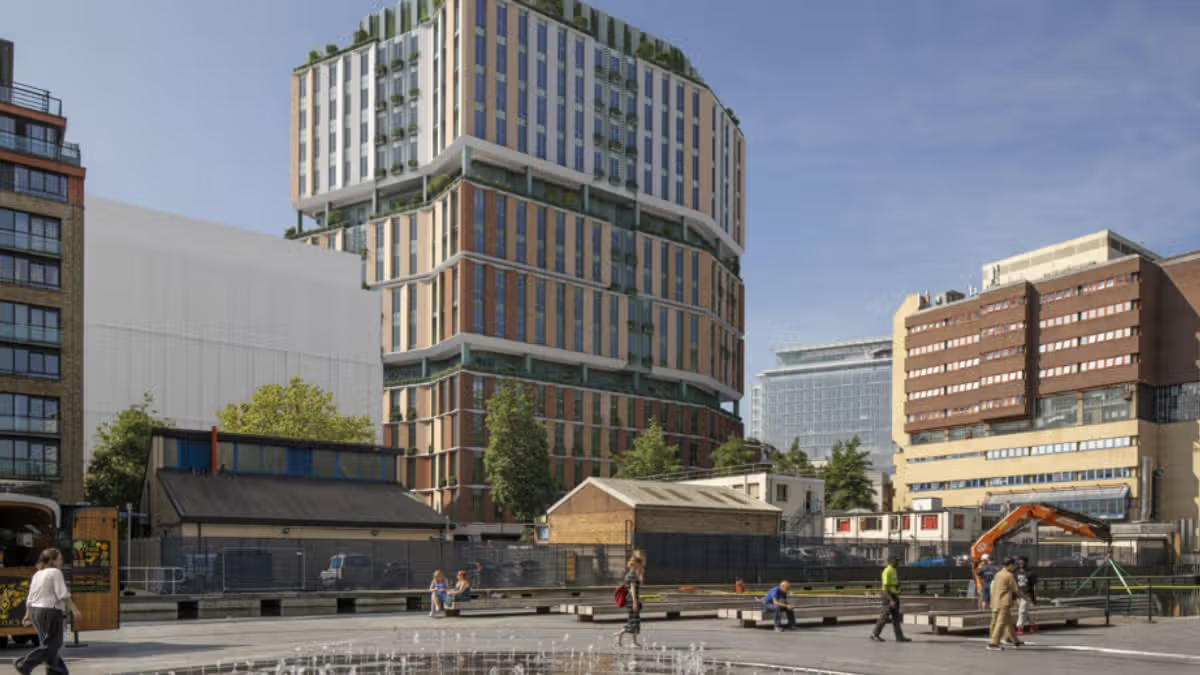
The plan, submitted by Cohort Limited, involves the demolition of the existing Imperial College London medical campus on Praed Street. In its place, the developer intends to erect an 87-metre-tall tower designed to host high-tech laboratory research spaces, diagnostic facilities, and office accommodation. Proponents of the scheme argue that the hub will serve as a catalyst for economic growth, estimating that the facility could generate more than £230 million annually for the UK economy.
However, the decision has reignited a fierce debate between the pursuit of economic and scientific advancement and the preservation of urban environmental standards. In their assessment of the project, council officers explicitly warned that the public benefits of the scheme “come at a significant cost to the environment.” Their recommendation for refusal was rooted in concerns regarding the building’s overall environmental footprint, potential heritage damage to the surrounding area, and the significant loss of natural daylight that the tower would impose on neighbouring residents.
Beyond the internal council report, the project has faced broad opposition from heritage and planning advocacy groups, including Historic England, The Royal Parks, and The Twentieth Century Society. These organizations have raised alarms about the impact such a high-rise structure will have on the character of the historic London district.
Defending the approval, Councillor Jim Glen, who chaired the committee, emphasized the long-term strategic importance of the site. He framed the project as a necessary evolution of Paddington’s identity, particularly in relation to its scientific heritage. “It’s absolutely vital that we are forward-looking and we take Sir Alexander Fleming’s legacy and move forward with it into the next century,” Councillor Glen stated. He argued that the facility would represent a “world-class” asset for the capital and the nation at large.
The developer behind the scheme has billed the project as a “visionary” venture, claiming it will attract top-tier researchers and entrepreneurs to foster innovation in healthcare. While specific tenants have yet to be disclosed, the design is explicitly intended to support clinical trials, with potential future integration into the nearby St Mary’s Hospital network.
Despite the committee’s green light, the project remains in a state of regulatory limbo. Because of the project’s scale and its regional significance, it requires final sign-off from the Greater London Authority (GLA). During an initial Stage 1 review, the GLA expressed support for the general redevelopment of the site but noted several “outstanding issues” that remain unresolved. The proposal must now undergo a rigorous Stage 2 assessment by the Mayor of London’s office before construction can formally commence.
As the project awaits this final hurdle, the case serves as a stark example of the challenges facing urban planning in London: balancing the pressure for high-density, economically productive infrastructure with the competing needs for environmental sustainability and the protection of local quality of life. Final conditions and legal agreements, including Section 106 contributions, are expected to be finalized in the coming months.
Disclaimer: This content is auto-generated for informational purposes only.
Source: Read Original News