






The Strait of Hormuz, a narrow maritime chokepoint essential to global energy supply, has become the stage for a silent environmental catastrophe. As geopolitical tensions between Israel, the United States, and Iran reach a breaking point, the resulting uptick in attacks on commercial shipping has triggered a surge in oil pollution, threatening one of the world’s most biologically diverse marine ecosystems.
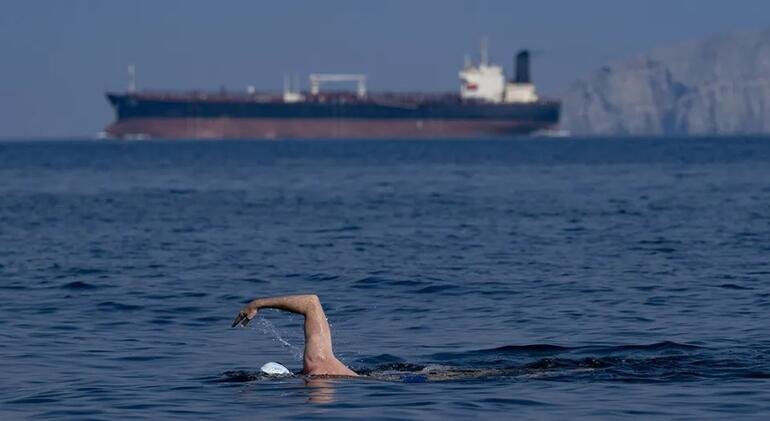
Lewis Pugh, the UN Patron of the Oceans, recently completed an arduous three-day swim across the 15-kilometer stretch of the Strait to draw global attention to this crisis. Known for his extreme swims in the Antarctic and on Mount Everest, Pugh’s latest journey was driven by a grim reality: the intersection of active armed conflict and an unfolding ecological disaster.
“The impacts of this conflict on nature will outlive us,” Pugh told the UN Environment Programme (UNEP) following his crossing. “It’s loss of biodiversity, it’s pollution, and it’s climate change—all three wrapped up into one.”
The Gulf region’s environment was already fragile, reeling from decades of heavy industrial activity, desalination operations, and oil extraction. Because the water in the region is shallow, warm, and semi-enclosed, it is exceptionally vulnerable. Unlike vast oceanic expanses where pollutants can be diluted, the Gulf holds onto chemicals, heavy metals, and oil, allowing toxins to circulate and persist for years. When a vessel is struck, the resulting spill does not just dissipate; it settles into coral reefs, smothers mangrove forests, and permeates the entire marine food chain.
During his transit of the Strait, the environmental cost of the conflict was made terrifyingly tangible. Pugh witnessed firsthand the destruction of two vessels, one of which was an oil tanker that left the surrounding sea in flames. “When the projectiles hit that vessel, it literally shook the sea,” he recounted. “The environmental consequences are devastating. Oil in the water decimates wildlife, washes up onto the shores, and into the mangroves. Dolphins and turtles are swimming there, and they’ll ingest it. It eventually settles to the bottom and enters the food chain. You could be far away from this conflict and still eat a fish carrying those toxins.”
The ecological toll extends far beyond the immediate sights of fire and oil slicks. The Strait is a sanctuary for dolphins, sea turtles, and rare dugongs, as well as a vital migration corridor for ospreys. By turning these waters into a combat zone, the fighting is dismantling a delicate balance that supports local economies, including fisheries and essential regional desalination plants.
Pugh emphasizes that the environmental impact of war is frequently ignored in diplomatic discourse, yet it poses an existential threat to the foundations of life. He argues that lasting peace is impossible if the natural resources necessary for survival are systematically poisoned.
“We need to stop this fighting, and we need to open up the Strait,” Pugh stated. “The environmental cleanup needs to start as soon as possible, but that cannot happen while there is active conflict.”
As the hostilities continue, the window to prevent permanent, long-term degradation of the Gulf’s marine biodiversity is closing. For Pugh, his swim was not just a feat of physical endurance, but a desperate plea for the international community to recognize that, in the theater of war, the environment is never a bystander—it is a victim that, once broken, may never fully recover.
Disclaimer: This content is auto-generated for informational purposes only.
Source: Read Original News