







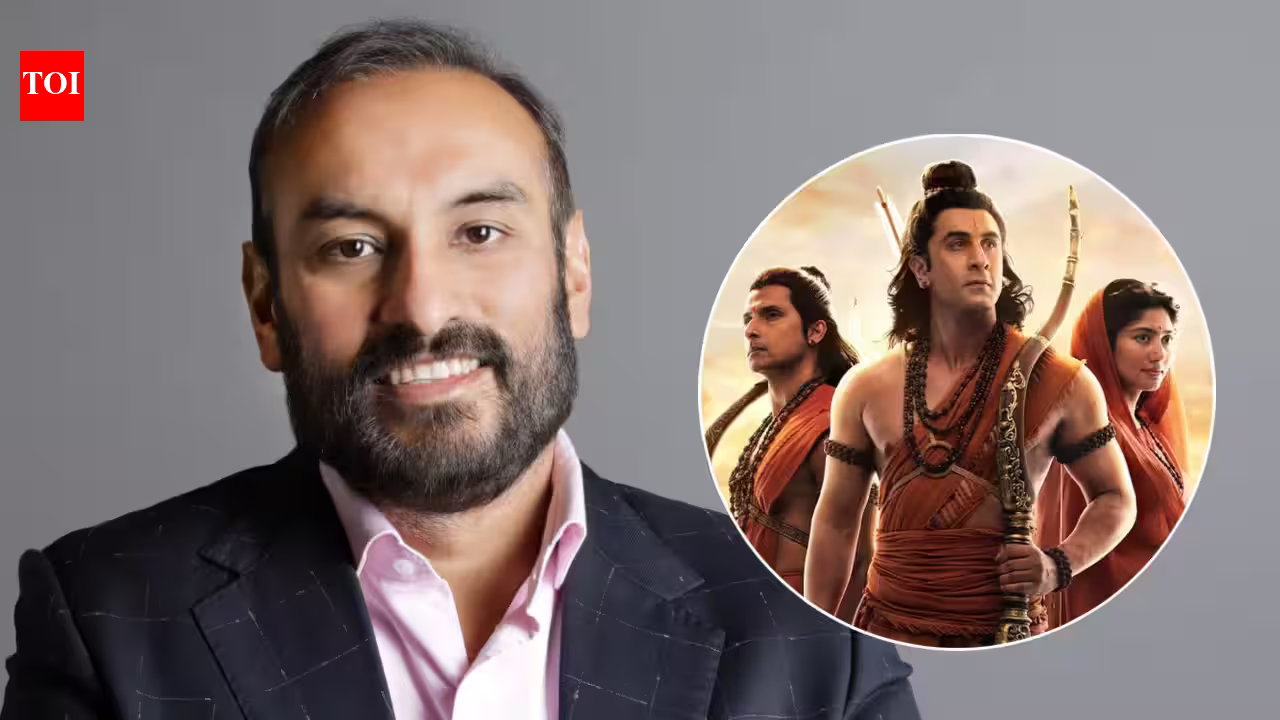
In the modern cinematic landscape, crossing the ₹1,000 crore mark is no longer just a benchmark for financial success; it is the starting line for building a brand that transcends the silver screen. Producer Namit Malhotra, the visionary force behind the gargantuan success of Ramayana: Rise of a Legend, is proving that he isn’t just interested in ticket sales—he’s interested in cultural dominance. As the film smashes records, cementing its place as a cornerstone of Indian pop culture, Malhotra has pulled the curtain back on an ambitious, transmedia roadmap that includes an interactive, open-world video game reminiscent of the legendary Grand Theft Auto (GTA) series.
Moving Beyond the Theater: A Digital Epic
The announcement, made during an interview with Doordarshan, caught the industry by surprise, but the logic behind it is sound. Malhotra isn’t just looking to sustain the buzz around the Ranbir Kapoor, Yash, and Sai Pallavi starrer; he is looking to integrate the Ramayana into the daily leisure habits of the next generation.
“Even a GTA-type game is coming, but I will reveal more at the right time,” Malhotra stated. “I want every child to play Ramayana just like they play GTA. I want them to enjoy as well as learn while playing the game.”
The ambition is clear: move from passive viewing to active participation. Malhotra recognizes that for a story as ancient and deep as the Ramayana, modern audiences—especially the youth—need a way to interface with the lore on their own terms. By leaning into the “sandbox” style of gameplay popularized by titles like GTA, the production team aims to offer a digital experience where players can traverse the forests of Dandakaranya, soar through the skies alongside Jatayu, or engage in the strategic, high-stakes combat that defined the climactic battle against Ravana. It’s a bold gamble to turn a mythic epic into a playable experience, but if any production team has the technical resources and the current market momentum to pull it off, it is Malhotra’s.
The Strategy: Building a Franchise Ecosystem
The decision to pivot into gaming isn’t a standalone gimmick; it’s a pillar of a much larger franchise strategy. Malhotra’s vision for Ramayana is clearly modeled after the multi-platform universes managed by global powerhouses like Marvel or Warner Bros.
“My strategy was that once people get the confidence that they are enjoying it after watching the film about its world, they can now fly with Jatayu and fight with Ravana; this is what we will show in our game,” he explained.
But the game is merely the tip of the spear. The producer has confirmed that his team is actively mapping out a robust ecosystem that includes theme parks, interactive museums, and dedicated animation projects. The intent is to create a “Ramayana world” that survives long after the film exits theaters. By diversifying the IP, Malhotra is attempting to insulate the project from the natural cooling period that hits every blockbuster, ensuring that Ramayana remains a permanent fixture in the Indian entertainment landscape rather than a fleeting cinematic trend.
The Numbers Game: A Historic Run
While the talk of games and theme parks provides a glimpse into the future, the present state of the film remains staggering. Ramayana: Rise of a Legend has officially crossed the ₹1,000 crore net mark in India, a milestone that puts it in the highest echelon of Indian cinema history.
As of day 23, with the film still commanding over 6,500 shows nationwide, it is clear that audiences haven’t finished their engagement with Nitesh Tiwari’s vision. The breakdown is as impressive as the total: even after three weeks, the Hindi version remains the primary engine of revenue, followed closely by robust performances in the Southern markets, where Kannada, Tamil, and Malayalam versions continue to pull in steady numbers. The film’s domestic gross, currently standing at over ₹1,195 crore, confirms that this isn’t just a northern phenomenon—it is a pan-Indian juggernaut that has resonated across every linguistic demographic.
The Star Power Behind the Mythos
It is impossible to discuss the success of Ramayana without acknowledging the massive heavy-lifting done by its cast and crew. Directed by Nitesh Tiwari, the film has been praised for balancing the solemnity of the source material with the high-octane spectacle of a modern fantasy epic.
The casting choices—Ranbir Kapoor as the stoic and heroic Lord Rama, Sai Pallavi as the embodiment of grace and resilience as Sita, and Yash as the formidable, layered antagonist Ravana—have been hailed as “perfect” by audiences and critics alike. Add in the high-impact presence of Sunny Deol as Hanuman and the meticulous craft brought by AR Rahman and Hans Zimmer on the soundtrack, and you have a recipe for a production that feels as grand as its budget suggests.
The Future of Indian Intellectual Property
Malhotra’s push toward a “GTA-style” game, coupled with his plans for theme parks and museums, signals a tectonic shift in how Indian production houses view their biggest hits. For decades, the goal was merely to produce the next blockbuster. Today, the goal is to produce a Universe.
If the Ramayana game succeeds, it could serve as the template for future Indian epics to follow suit. By marrying traditional storytelling with interactive, state-of-the-art technology, producers like Malhotra are changing the definition of what it means to be a “filmgoer.” We are moving into an era where “watching” the movie is no longer enough—producers want you to live in it.
As we await further details on this gaming project, one thing is certain: the Ramayana has left the screen and entered the real world, and the industry is watching closely to see if it can conquer this new, digital frontier just as effectively as it conquered the box office.
Disclaimer: This content is auto-generated for informational purposes only.
Source: Read Original News