








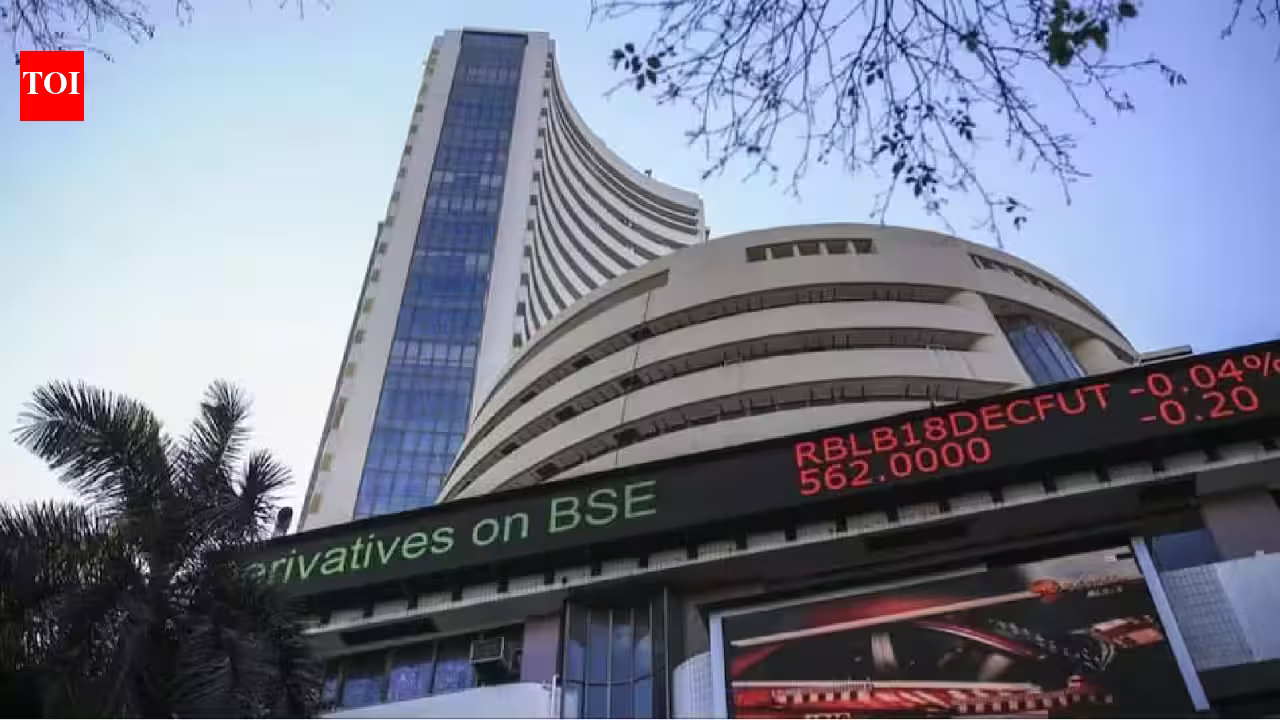
The Structural Resilience of India’s Capital Markets
The global financial landscape is currently undergoing a profound recalibration, with capital flows showing a marked preference for the United States. However, recent analysis by Jefferies has brought a distinct perspective to the forefront: India stands as the world’s most vibrant capital market outside of the United States. This resilience is not accidental; it is the product of specific structural safeguards, most notably the nation’s closed capital account policy.
In many emerging markets, particularly across Southeast Asia, domestic capital often leaks toward US equities. Driven by the allure of Big Tech and the accessibility provided by modern trading platforms, retail investors in these regions are increasingly bypassing local exchanges. This shift has resulted in thinning liquidity and stagnating trading volumes in several Asian markets. India, by contrast, has remained insulated from this trend. By restricting the free movement of capital, the Indian regulatory framework has forced a domestic focus, nurturing a self-sustaining ecosystem where local liquidity fuels local enterprise. This “closed-loop” model has prevented the flight of capital during periods of global volatility and ensured that the savings of the Indian populace are productively deployed within the domestic economy.
Contrasting India’s Market Health with the US Model
Beyond the protection offered by capital controls, the fundamental health of the Indian equity market presents a compelling contrast to the United States. The US market has become increasingly dominated by passive investment strategies and the heavy concentration of capital into a handful of “Magnificent Seven” technology stocks. Jefferies characterizes this reliance on passive index funds as “mindless investing,” where capital is allocated based on market capitalization rather than the fundamental value or performance of individual companies. This phenomenon creates a feedback loop that inflates valuations for the largest firms while potentially starving the broader economy of efficient capital allocation.
In India, the market dynamics are significantly different. The Indian equity landscape is characterized by a high degree of portfolio diversification and a remarkably robust mid-cap segment. Unlike the US, where passive inflows often dictate price action regardless of earnings or economic fundamentals, the Indian market remains anchored in active management. Investors, both retail and institutional, frequently participate in price discovery, assessing the viability of specific businesses. This active engagement creates a more rigorous market environment where individual company performance is better reflected in share prices. Furthermore, the absence of “payment for order flow”—a practice common in the US that can incentivize conflict-ridden brokerage models—ensures that the Indian market architecture remains focused on investor interests and transparent execution.
The Risks of Global Overexposure to American Equities
While the US market currently dominates the global stage—accounting for approximately 67.2% of the MSCI AC World Index—there are growing concerns regarding the sustainability of this concentration. Jefferies suggests that this dominance likely represents a cycle peak. The massive migration of global capital into US equities is increasingly viewed as a potential misallocation. This is particularly striking when compared to the behavior of international central banks. While private investors have poured nearly a trillion dollars into US equities over the past year, sovereign entities have been steadily reducing their holdings of US Treasury securities.
This divergence signals a fundamental disconnect. International central banks, tasked with reserve management and long-term financial stability, appear to be losing confidence in the debt profile of the US, while individual investors, driven by the recent hype cycle surrounding artificial intelligence and technological dominance, are continuing to push equity valuations to record highs. The Jefferies report warns that this concentrated reliance on US equities creates systemic fragility. If valuations in the US were to correct significantly, the downstream effects on global liquidity would be severe. For American retail investors specifically, a reversal in equity performance would likely trigger deflationary risks, further complicating the Federal Reserve’s monetary policy mandates and potentially leading to a period of protracted economic uncertainty.
The Role of Domestic Institutional Growth
The vibrancy of the Indian market is also a testament to the maturation of the domestic investor base. Over the past decade, there has been a paradigm shift in how Indian households manage their wealth. The transition from traditional physical assets, such as gold and real estate, toward financialized savings—specifically through Systematic Investment Plans (SIPs)—has provided a stable and growing pool of capital.
This steady inflow of domestic funds acts as a buffer against foreign portfolio investor (FPI) outflows. In previous cycles, the Indian market was highly susceptible to “risk-off” sentiment in global markets, often witnessing sharp corrections when foreign institutional investors withdrew liquidity. Today, the strength of domestic mutual funds and retail participation has created a counter-balancing force. This internal stability is a primary reason why India maintains its appeal as a long-term growth story. It is not merely the size of the market that matters, but the quality of the participation. With less dependence on passive index flows, the Indian market rewards companies that demonstrate consistent growth, robust balance sheets, and effective capital allocation, mirroring the characteristics of a mature and efficient financial system.
Future Outlook and Strategic Implications
As the global investment community grapples with the risks of US-centric portfolio construction, the case for diversifying into high-growth, internally driven markets becomes stronger. India’s trajectory suggests that it is not merely an alternative, but a structural necessity for a balanced global portfolio. The regulatory commitment to maintaining a robust and transparent marketplace, coupled with a growing domestic investor base that understands the value of active stock picking, positions India to sustain its momentum.
However, moving forward, the sustainability of this success will depend on continued reform and the ability of Indian corporates to navigate the complexities of global supply chains. While the “closed capital account” has protected the market, the long-term objective should remain the deepening of the market—improving corporate governance standards, increasing free-float availability, and ensuring that the mid-cap segment continues to provide opportunities for growth-oriented investors. As the US market faces the consequences of over-concentration and potential valuation fatigue, India’s “vibrant” market structure offers a model of resilience that is likely to command increasing attention from global strategists in the years to come. The era of assuming that American equities are the only viable destination for global capital may be drawing to a close, and India is well-positioned to capitalize on this shift in the international investment narrative.
Disclaimer: This content is auto-generated for informational purposes only.
Source: Read Original News