








The Growing Role of Digital Evidence in Tax Investigations
In an increasingly digitized Indian economy, the Income Tax Department has pivoted its investigative strategies to encompass the vast troves of data found on personal electronic devices. With the ubiquity of instant messaging apps like WhatsApp, these platforms have become primary hunting grounds for tax authorities during search and seizure operations. The recent ruling by the Delhi bench of the Income Tax Appellate Tribunal (ITAT) serves as a critical case study on the boundaries of using digital communication as the sole basis for tax assessments.
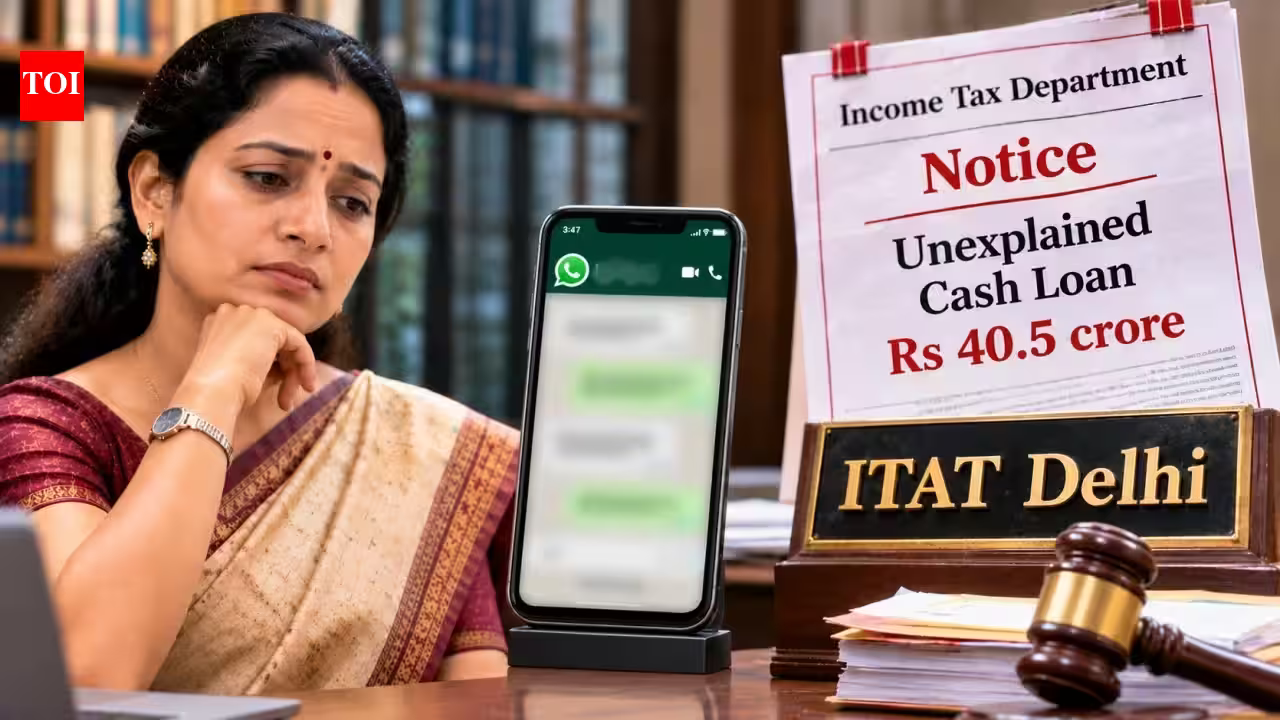
The case centered on an Assessing Officer (AO) who interpreted a cryptic WhatsApp message retrieved from a taxpayer’s husband’s phone as evidence of a massive, undisclosed cash loan. The AO’s leap of logic—transforming a string of numbers into a multi-crore financial transaction—highlights a broader trend where tax authorities rely heavily on digital snapshots, often without sufficient corroboration. This development necessitates a closer look at how taxpayers, particularly those with modest income profiles, must navigate the complexities of documentation and digital privacy when faced with aggressive revenue collection efforts.
The Pitfalls of Arbitrary Interpretation in Assessment
The crux of the dispute lay in the AO’s interpretation of the number “4050” within a WhatsApp conversation. Without concrete evidence linking the digital text to actual cash flows, the officer unilaterally concluded that the number represented Rs 40.50 crore. By applying an interest rate of 1.25 percent per month, the officer attempted to manufacture a tax liability of Rs 1.94 crore.
Such an approach places an enormous burden on the taxpayer to prove a negative—that no such transaction occurred. The ITAT’s intervention was pivotal, as it highlighted that the AO’s assessment was built upon speculation rather than substantive evidence. In the Indian legal context, the burden of proof initially rests with the tax department to establish that an assessee has indeed generated income. When that foundation is built on loose assumptions, the legal sanctity of the assessment is fundamentally compromised. The tribunal’s dismissal of the case underscores the judiciary’s commitment to preventing the tax department from substituting guesswork for diligent fact-finding.
Legal Standards for Evidence and Corroboration
A core issue raised in this case was the evidentiary value of third-party conversations. The ITAT rightly scrutinized whether an inference drawn from a WhatsApp chat between two parties can be legally attributed to a third party (the taxpayer) without any independent, corroborating material. Under Section 69A of the Income Tax Act, the tax department is empowered to treat assets as unexplained money only if those assets are found to be owned by the taxpayer and are missing from their formal books of account.
However, “ownership” and “transactional existence” require proof that goes beyond mere conjecture. The ITAT noted that the absence of reference to actual cash movement in the chat, combined with a lack of entries in the books of the alleged borrower, made the tax department’s case unsustainable. This ruling serves as a vital precedent: the mere mention of an individual’s name or a vague code in a digital chat log is insufficient to trigger tax additions. The department must demonstrate a “live link” between the digital evidence and the movement of funds to satisfy the requirements of the Income Tax Act.
Procedural Fairness and the Burden of Proof
The progression of this case through the Commissioner of Income Tax (Appeals) and finally the ITAT highlights a systemic issue where lower authorities sometimes validate the assumptions of the Assessing Officer rather than critically evaluating the evidence. The CIT(A), while reducing the magnitude of the addition, essentially replaced the AO’s “40.5 crore” theory with an equally unsubstantiated “40.5 lakh” theory. By acknowledging that this reduction was also based on assumptions, the ITAT took a stand for procedural fairness.
For the Indian business community and individual taxpayers, this case emphasizes the importance of maintaining robust, documented records. While digital surveillance is an expanding reality, the judicial system remains a buffer against administrative overreach. Taxpayers are encouraged to maintain clear audit trails of all transactions to ensure that if a digital “code” or informal communication is ever scrutinized, they have the documentation to debunk speculative interpretations. The ruling underscores that while the tax authorities have advanced tools to analyze data, the final assessment must still adhere to the fundamental principles of evidence law.
Strategic Takeaways for Taxpayers
As digital forensic capabilities improve, the Income Tax Department will likely continue to integrate WhatsApp logs and other metadata into their assessment processes. To mitigate risks, taxpayers should consider the following business insights:
First, maintain total separation between personal and professional communications. Informal discussions on sensitive financial matters, even if misinterpreted, can lead to years of litigation. Second, in the event of an IT notice based on digital evidence, taxpayers must contest the lack of corroboration immediately. The onus remains on the department to prove that a specific digital entry corresponds to an actual financial event. Third, the ITAT’s decision confirms that suspicion alone does not equal taxable income.
Ultimately, this case is a win for due process. It sends a clear signal to the tax administration that the digitization of investigations must be matched by a higher standard of proof. As the Indian tax landscape evolves, the courts are clearly setting boundaries to ensure that taxpayers are not harassed by algorithmic interpretations of their personal lives. For the ordinary individual, the message is clear: while one cannot always prevent an audit, having a transparent financial record is the best defense against assumptions disguised as evidence.
Disclaimer: This content is auto-generated for informational purposes only.
Source: Read Original News