








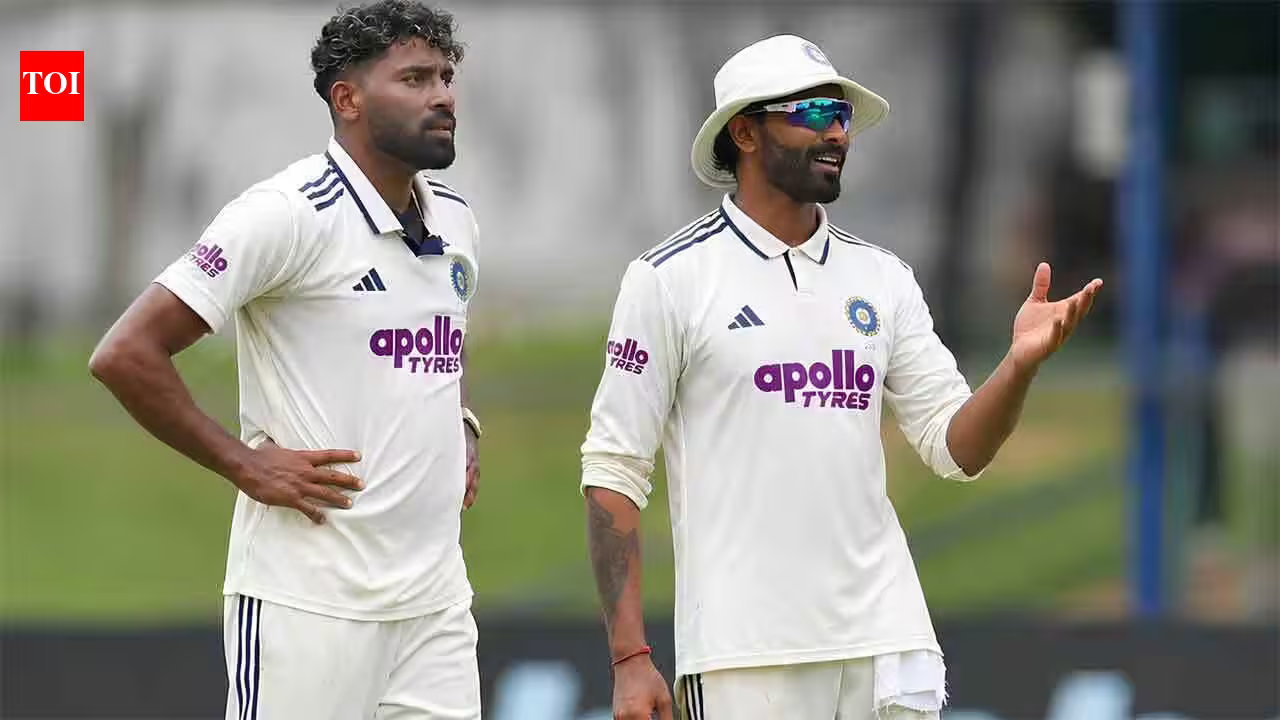
CHRISTCHURCH – The Indian Test squad has been dealt a significant blow in the ongoing second Test against New Zealand at the Hagley Oval, as fast-bowling sensation Akash Deep has been officially ruled out of the remainder of the contest due to delayed concussion symptoms. The Board of Control for Cricket in India (BCCI) confirmed the development on Sunday, opting to draft in tall pacer Prasidh Krishna as the mandated concussion substitute.
The incident traces back to a grueling third day of play, during which Akash Deep was struck on the helmet twice by New Zealand’s relentless fast bowler, Kyle Jamieson. At the time, the tail-ender underwent a standard on-field assessment and, appearing clear-headed, proceeded to battle on, eventually contributing a gritty 29 runs to India’s first-innings total. However, as is often the case with head trauma, the condition manifested later, necessitating the medical team’s intervention.
## The Selection Strategy: Why Prasidh Krishna over Mohammed Siraj?
The decision to elevate Prasidh Krishna into the playing XI over the more experienced Mohammed Siraj raised eyebrows among fans, but the logic behind the selection has been addressed by seasoned campaigner Ravichandran Ashwin.
With the team needing an immediate impact to balance the scales against a formidable Black Caps side, the management opted for familiarity with the current conditions. Ashwin, taking to social media to weigh in on the situation, noted that throwing a bowler in “cold” can often lead to lackluster results in the high-stakes environment of Test cricket.
“When there is an opportunity to use a concussion sub, it’s always a good idea to bring in a player who has already played in the series,” Ashwin explained. “Siraj could be too fresh to come in and create an impact straight away.”
Krishna, who featured in the first Test in Wellington and claimed three wickets, possesses a rhythmic familiarity with the Christchurch pitch that the team management believes is crucial. By utilizing a player who has recently been in the thick of the action, India hopes to minimize the disruption caused by the sudden exit of one of their most effective bowlers.
## A Double-Edged Setback for India
The loss of Akash Deep is more than just a personnel change; it is a tactical setback. Akash Deep had been a revelation for the visitors, delivering a standout bowling performance in the first innings, where he claimed five wickets for 99 runs. His ability to hit the deck hard and extract movement from the surface had proven to be a vital asset for the Indian pace battery.
Beyond his bowling, his presence in the lower order had offered stability. His 46-run partnership with wicketkeeper-batter Dhruv Jurel was instrumental in guiding India to a total of 246, preventing a complete collapse after the team had slipped to a precarious 117/7. While India currently trails New Zealand by a 110-run margin, the fighting spirit shown by the lower order suggests the match remains far from decided.
## Jurel’s Resilience Amidst Adversity
While the focus has been on the medical forced-substitution, the narrative of the match remains anchored in the individual grit displayed by the Indian contingent. Dhruv Jurel emerged as the star of the first innings, showcasing remarkable maturity by scoring 88 runs. Falling just twelve runs shy of what would have been a well-deserved third Test century, Jurel’s dismissal at the hands of Jamieson marked the end of a pivotal recovery phase for India.
Jurel’s ability to anchor the tail, coupled with a 64-run partnership with debutant Gurnoor Brar—who chipped in with 10 runs—kept India’s hopes alive. However, the loss of Akash Deep changes the complexion of the bowling attack significantly. The onus now falls on the shoulders of Prasidh Krishna to justify the team’s confidence and provide the penetration needed to dismantle the New Zealand batting lineup in the second innings.
The BCCI Medical Team continues to monitor Akash Deep, with the primary objective being his safe and steady recovery. As for the match at Hagley Oval, the spotlight now shifts to whether the infusion of Krishna’s fresh energy can translate into the breakthrough wickets that India so desperately requires to force their way back into a contest that has been defined by late-order resilience and the unpredictable nature of head injuries in professional sport.
With two days left, the stage is set for a dramatic conclusion in Christchurch, as both sides look to seize control in what has already been a physically and mentally demanding Test match.
Disclaimer: This content is auto-generated for informational purposes only.
Source: Read Original News