




INDIA Bloc’s Last-Ditch Effort to Stall Delimitation Bill Meets Resistance
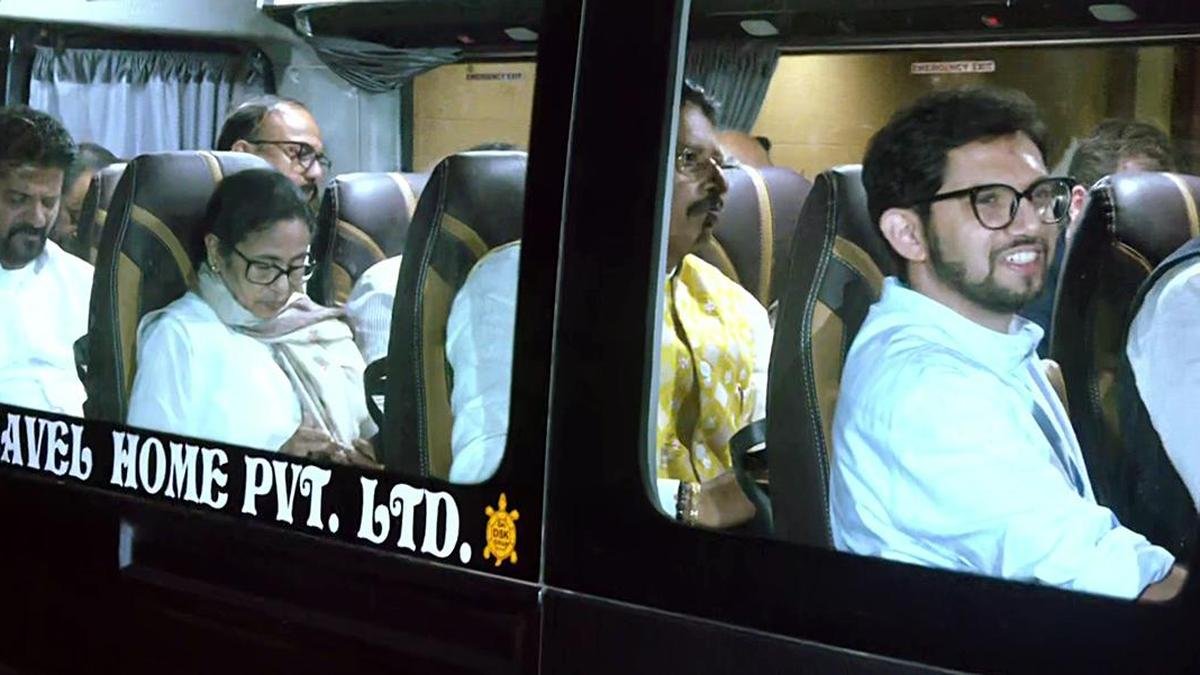
The opposition’s desperate attempt to consolidate a unified front against the contentious Constitution (132nd Amendment) Bill faced significant hurdles on Sunday, just a day before the start of Parliament’s special session. A high-level delegation from the INDIA bloc, spearheaded by Congress Parliamentary Party chairperson Sonia Gandhi, failed to sway two critical regional powerhouses whose support remains pivotal for the government’s legislative agenda.
The delegation’s first stop was Chennai, where they sought to convince DMK President M.K. Stalin to withdraw his party’s support for the legislation. Despite a display of personal warmth—with Mr. Stalin embracing Rahul Gandhi upon arrival—the DMK leader remained resolute. He maintained that supporting the Bill is a strategic necessity for Tamil Nadu.
The DMK’s “Tamil Nadu First” Stance
Mr. Stalin argued that the proposed legislation contains vital protections that safeguard the state’s current parliamentary seat allocation. He expressed fear that if the Bill were defeated, southern states would be left vulnerable to a future Delimitation Commission—slated for January 2027—which could drastically reduce their political influence.
“If the Bill is defeated, Tamil Nadu will lose the minimum protection it has secured,” the Chief Minister asserted. He underscored that his party’s primary directive is to protect the interests of Tamil Nadu, characterizing the situation as “do-or-die” for regional parties. He countered the opposition’s appeals by noting that the INDIA bloc had failed to provide a viable alternative to prevent the potential disenfranchisement of southern states.
Rahul Gandhi, who led the charge in persuading Mr. Stalin, warned that the expansion of the Lok Sabha to 850 seats was a calculated move by the BJP and RSS to reshape India’s electoral map. He alleged that the exercise would ultimately dismantle Indian democracy and disproportionately penalize the south. However, these warnings failed to shift the DMK’s position, with Mr. Stalin emphasizing that his party remains committed to “Tamil Nadu first.”
Uncertainty in Mumbai
Following the Chennai meeting, the delegation traveled to Mumbai to meet with Nationalist Congress Party (Sharadchandra Pawar) supremo Sharad Pawar at the Breach Candy Hospital. The 85-year-old leader, currently recovering from dehydration, held a 40-minute discussion with the delegation. While he reportedly listened intently to the concerns raised, he offered no immediate commitment, stating only that he would consult with his party’s MPs.
The NCP(SP) currently holds eight Lok Sabha seats. While senior party members remain divided, and some MPs insist that a formal decision will only follow a review of the Bill’s final draft, the government appears confident. Maharashtra Chief Minister Devendra Fadnavis dismissed the outreach as a futile, late-stage effort, claiming the opposition is merely attempting to block women’s reservation under the guise of protecting federalism.
The Numbers Game
The government is aiming for a two-thirds majority, which is essential to pass the constitutional amendment. While the opposition has been working to peel away potential defectors, the NDA maintains a strong position. With the support of the DMK, various defecting factions, and other regional allies, the government claims a support base of 371 MPs, comfortably surpassing the 359-vote threshold required for the amendment. As Parliament convenes on Monday, the focus will shift from the diplomatic efforts of the weekend to the floor of the House, where the legislative battle over the future of India’s electoral boundaries will reach its climax.
Disclaimer: This content is auto-generated for informational purposes only.
Source: Read Original News