







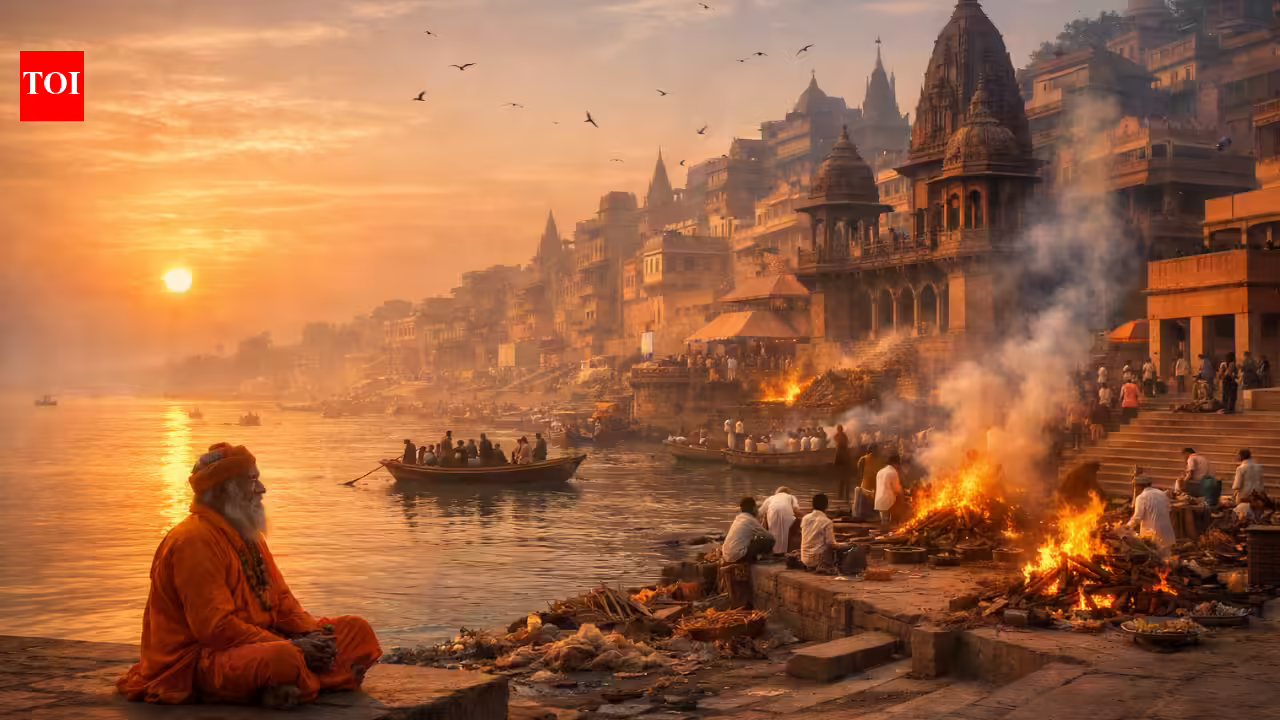
Perhaps the most profound shift happens when visitors realise how naturally Banaras holds both life and death together. At certain ghats, cremation fires burn through the day and night, a reminder that mortality is not hidden away here but acknowledged openly. Just a few steps away, children play, pilgrims pray and boats glide across the river.
For many visitors, this proximity changes perspective. Death feels less like an abstract fear and more like a natural passage in the larger rhythm of existence. Watching rituals unfold along the river often leads to quiet reflection about impermanence, purpose and what truly matters. In a strange way, confronting the reality of life’s end can make the present moment feel more vivid and meaningful.
Standing there, people often realise how fragile and brief life truly is. The constant reminder of endings makes everyday moments feel more precious, conversations with family, time spent with friends, even the simple act of watching the river flow. It quietly shifts priorities. Visitors often leave with the sense that life is not meant to be endlessly postponed or filled only with worry and routine. Instead, it becomes a reminder to value time, express love more openly, and not delay the things that genuinely matter. In the shadow of those ancient ghats, the urgency of living well suddenly becomes very clear.