









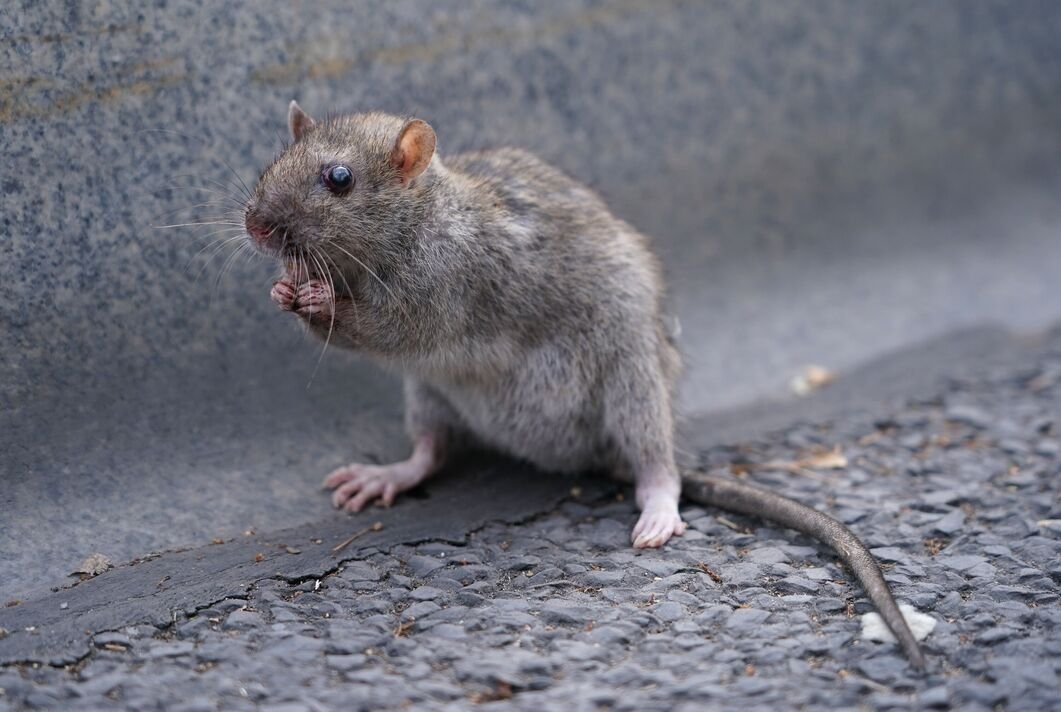

Rats are a common sight that most of us don’t want to see (Image: Getty Images)
It’s the time of year when many UK residents may be shocked to notice a rat visiting their garden – and this is a sight that nobody really wants to see. We all know vermin can be carriers of various disease-causing organisms, so if you see one or more rats visiting your outdoor area, you’ll certainly be looking for ways to get rid of them.
There are many natural scents that rats dislike, which can put them off entering a space, such as peppermint or clove oil, cayenne pepper or vinegar – and many people reach for these repellents first. However, rain or damp conditions can wipe these odours away which can cause these unwelcome visitors to return. The last thing anyone wants is rats setting up home in their roof, walls or outdoor decking, so if a rat begins showing itself at regular times, often in the same spot, most people are likely to turn to baited poison.
READ MORE: Owls come into gardens everyday if you do 30-second task at night
READ MORE: Natural mouse repellent ‘works after first spray’, say Amazon shoppers
Now, rat poison is of course an effective way to rid a complex infestation of vermin, however, there are two different types of poisonous bait, both (mostly) lethal to these unwanted pests, known as first-generation and second-generation poison.
The problem is that one type of poison bait, second-generation anticoagulants rodenticides (SGARs), has a knock on effect, potentially killing natural predators of rodents, such as foxes, birds of prey – and even crows and gulls that all catch and eat vermin, given the opportunity.
These natural predators are actually key to the long-term control of rat (and mouse) populations, yet owls, other birds of prey and foxes are facing an overall decline – and rodenticide residue has been found in the livers of dead raptors and foxes, according to recent reports.
Powerful SGARs can also be deadly to cats or dogs, both of which will also often catch a rat if the chance comes their way.
First-generation anticoagulant rodenticides (FGARs) were developed in the 1970s and contain warfarin, chlorophacinone, and diphacinone – and these tend to be recommended to be used initially due to them being “less toxic” to non-target animals.
FGARs therefore pose a lower risk of secondary poisoning in comparison to stronger second-generation anticoagulants (SGARs), they just take more time (days) to be lethal to a rat.
The Barn Owl Trust advises on their website that “all poisons should only be used as a last resort where non-toxic and less-toxic methods have been tried” and when a “significant rodent problem still endangers humans”.
The Barn Owl Trust also detailed other advice on their website to address rat populations:

Barn owl in a nest box (Image: Getty Images)
Nine ways to deal with rats
1 Remove access to food – get rid of whatever the rats are eating or “prevent their access to it”. If feeding birds in your garden you should “change feeder designs, feeder positions, and feeding regimes” and ensure rats “are more exposed to predation”.
2 Remove their hiding spots – remove “whatever the rodents are under, in, or behind”. Block any holes with concrete, stones, squashed wire netting or metal.
3 Encourage natural rodent predators – the Barn Owl Trust advised erecting “Barn Owl and Tawny Owl nestboxes” put them “high up but as close as possible to the problem rodents”. They added: “Be tolerant of Foxes – they also eat rats”.
4 Encourage domestic predators – such as cats or Jack Russell terriers (and similar) both of which “generally love ratting”.
5 Live traps – perhaps not for the faint-hearted, but “trip-traps and cage-traps are readily available”, the Barn Owl Trust advised, recommending that you “release rodents at least several kilometres away”.
6 Instant-kill traps – snap-traps should be baited with hard food morsels carefully tied on with thin wire (be careful of your fingers).
“DOC traps and Perdix traps set in wooden tunnels are amongst the most humane. Slightly time-consuming; traps should be checked daily”.
7 Electrocution devices – Rat Zapper (or similar) are battery powered devices that “do work”.
These “small electrocution devices should be checked daily” and larger types such WiseBox as are also available “a very humane and safe way of killing”, according to the Barn Owl Trust.
8 Shooting – a pre-charged pneumatic air rifle with an infra-red or thermal gunsight “used at night can be very effective, but very time consuming”.
9 Cholecalciferol – this is a biocide poison which “causes a fatal vitamin D3 overdose when ingested”.
It’s available in bait block form and can be used “in the same way as first and second-generation rodenticides”.
The risk of secondary poisoning to birds of prey is low, but cholecalciferol is extremely toxic to pets (especially dogs).