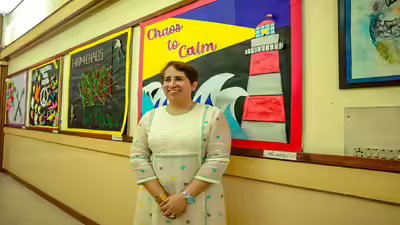
The focus on cinema is often divided between the flamboyance of the faces we see on screen and the creative minds behind it – the directors, the lyricists, screenwriters, musicians, cinematographers, etc. But the credit that rolls out last – that of the producer – is not usually as fascinating for those of us who write on, or read about, the world of cinema. Logistics, finance, permissions – where’s the romance or the flamboyance in that, eh?Guneet Monga, as the only Indian producer so far, to hold an Oscar in her firm grip, forces you to rethink that. The self-taught go-getter of a girl who left Delhi for Bombay, heartbroken, in her early 20s, having lost both parents. The hustler par excellence who feels she just took ahead the school prefect confidence. The daughter who today feels she is closer than ever to her parents, who attributes all her swag and her mindset of abundance to the core beliefs that her dad instilled in her. The production geek who understands the global business of cinema and thinks India has barely scratched the surface. The daughter-in-law who today wants to spoil her mother-in-law in the way she couldn’t spoil her mother. Guneet’s trajectory and life are as filmy as it gets. Read on:Describe your learning curve to becoming the first Indian Oscar-winning producer.I began working in films very, very early. Meri pehli internship thi 2004 mein with Anureeta Sehgal, joh meri best friend ki mother hain, for Valley of Flowers. It was a Pan Nalin (whose Chhello Show went to Oscar) film. Subsequently, poora liaison ka kaam main karti thi. End to end – from equipment to ministry. I built a bond with American, French, Italian producers. I used to get ₹2 lakh per week at that time in dollars. Logistics did not scare me. Maybe because I was a prefect in school – we used to put up large scale events and wohi core of leadership ban gaya tha. I was flown to Ladakh for my first film. It was August 15, 2004. Meri life ka itna bada high tha. But I had just spent a couple of days when I got a call ki mummy ko cancer nikla. And so the very next day I had to come back. Maybe, if I had stayed for that shoot, had been on set, my life journey would have been in another direction. But because I came back and then I handled all the logistics of the film from Delhi, it kind of defined my life, I constantly took on producer roles. My mother passed away in 2008. It was a four-year journey. I was with her throughout. She was pushing me to go to Bombay. My friends were all in FTII, SRFTI, Jamia for post-graduation. Mujhe lekin course nahi karna tha, mujhe paise kamane thay, ghar khareedna tha parents ke liye. They were living in a rented place (after having to leave father’s family house in very difficult circumstances).
The journey of a producer is so different and so difficult. I’ll not want to water it down. It is very difficult. Things take two-three years. There is no instant gratification. You are not making a reel. Three years is a long gestation period
Guneet Monga
I learnt on the job. I did a lot of freelance international work. I was also a location scout; I was hired for one year by the producer of The Lord of the Rings, Tim Sanders. I had to go pan-India and find locations for a sci-fi film that was supposed to star Johnny Depp. That film never happened. But it built me many contacts. I became somebody who was a very integral part of any film setting up in India. I was often the first one hired and then the line producers.
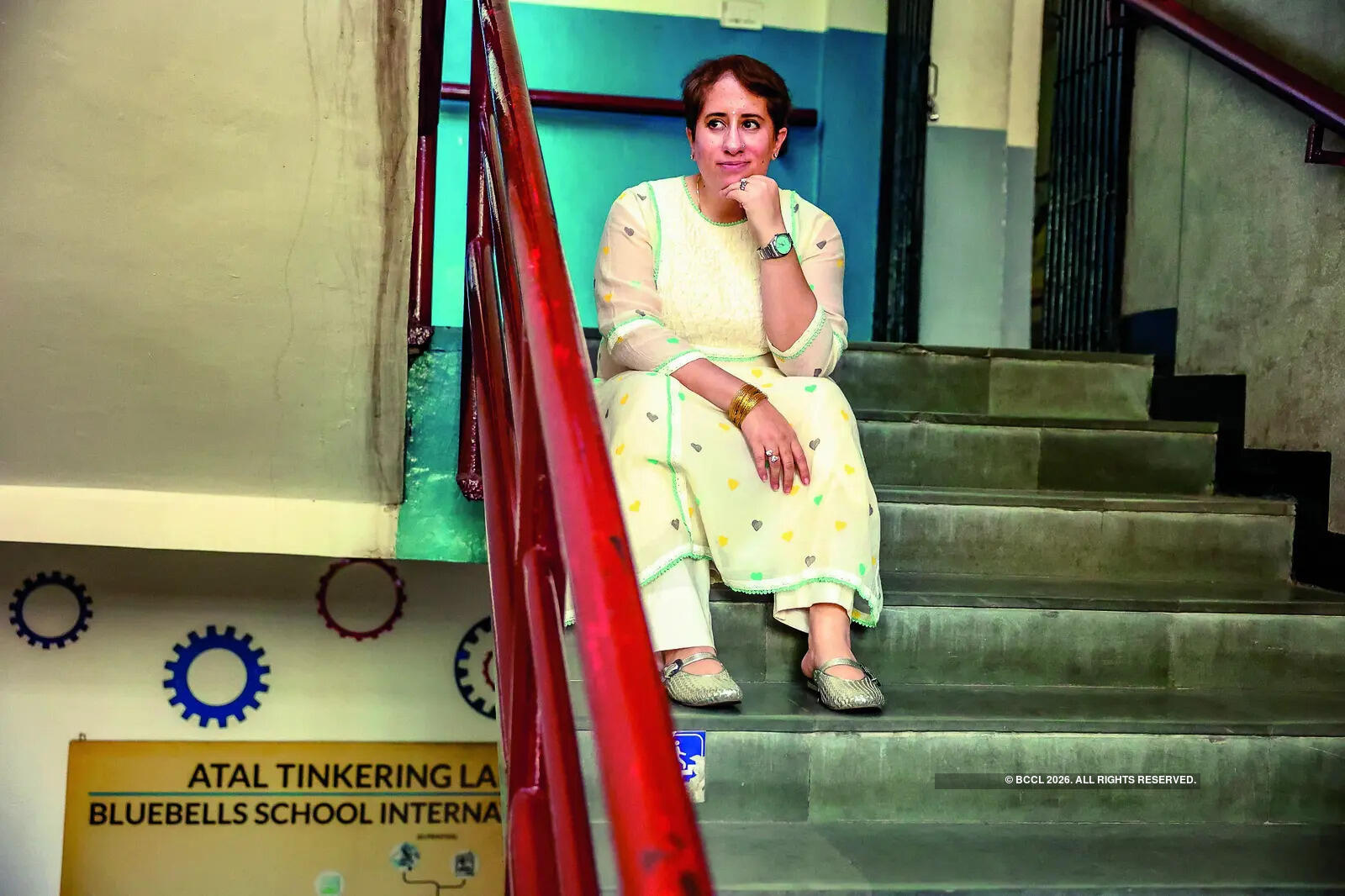
‘In India, if you have a 100 crore film, you have validation. But if I have made a film in 15 crore and I have made 30 crore from it, I am very high ROI’
I worked on a Canadian TV film, Murder Unveiled, directed by Vic Sarin. After wrapping that film, Vic Sarin landed back in Delhi to work on a project of his own – Partition. He asked me to run the film as his line producer and assistant. Sarin empowered me to take charge. I learned a lot.After post-graduation, my friends were moving to Bombay, and my mother also wanted me to go. So I went, but har weekend flight le ke ghar aati thi kyunki main dollars mein weekly kamati thi. I did this for one year. And then she got better and life was good. The cancer relapsed in 2008. And it got very bad. She passed away in July. I had barely come to grips with that when, very unexpectedly, dad had a sudden heart attack in February 2009. And so I lost them both in six months. When she was dying, my mother used to talk to me, she also knew Dad was very unwell. She would say tu kya karegi humare baad, tu maasi ke paas chali jaana. And I would say bakwaas mat karo, kuch hoga hi nahi. I was delusional. My maasi herself lost her 21-year-old son three months after my mom’s death. So it was July, my mom; November, my cousin; February, my father. My maasi went into depression. Mummy ka grand plan tha ki maasi will be your guardian after we are no more, but that never happened.How did you recover?I have lived through so much personal tragedy in my twenties, so much. Insaan khatam ho sakta hai uss se. But it was my dad’s resilience and joy that kept me going. Money has come to me easily; kabhi paise ke liye kaam nahi kiya, kabhi nahi. I have never negotiated and I have always gotten in abundance, because it is my dad’s mindset. Main apne kaam se bahut pyaar karti hoon, toh mujhe kaam karna hai. Paisa, they will manage, the universe will manage. Tabhi main itne logon ki anxiety handle kar paati thi as a producer kyunki mujhe anxiety nahi hoti thi… because of my dad. Then I moved to Bombay and sought work. I just had to stay occupied to keep my mental sanity. I was interviewed by Ekta Kapoor for Balaji. They asked me what I was expecting and I said it doesn’t matter, give me ₹25,000, I just need to keep busy. They were very surprised but didn’t say anything. But when the first cheque came, it was for ₹1,25,000.And then, I worked with Anurag Kashyap. I went to school basically working with Kashyap. Six years, I was his producing partner. Gangs of Wasseypur, Shaitan, Shahid… Bahut saari filmein banayi with AKFPL (Anurag Kashyap’s production house). I learnt how you make a good script better. How do you add value on content? What is good writing, what is good material, what do you take back, how do you impact?Kashyap said meri picturien international hain, so yeh meri life ka mission ho gaya – to find international platforms for them. Main 40-40 ghante ki flight lekar kahin bhi pahuch jaati thi to pitch for a film. I have lived in Paris with no money in Pan Nalin’s house for almost a month to be able to pitch my films, get sales agents, build the word – and then they got selected in Cannes. That is the role of a producer, Kashyap used to tell me. So, I was like okay, I’ll do it. Like that, karte karte bahut travel kiya, har film festival gayi.
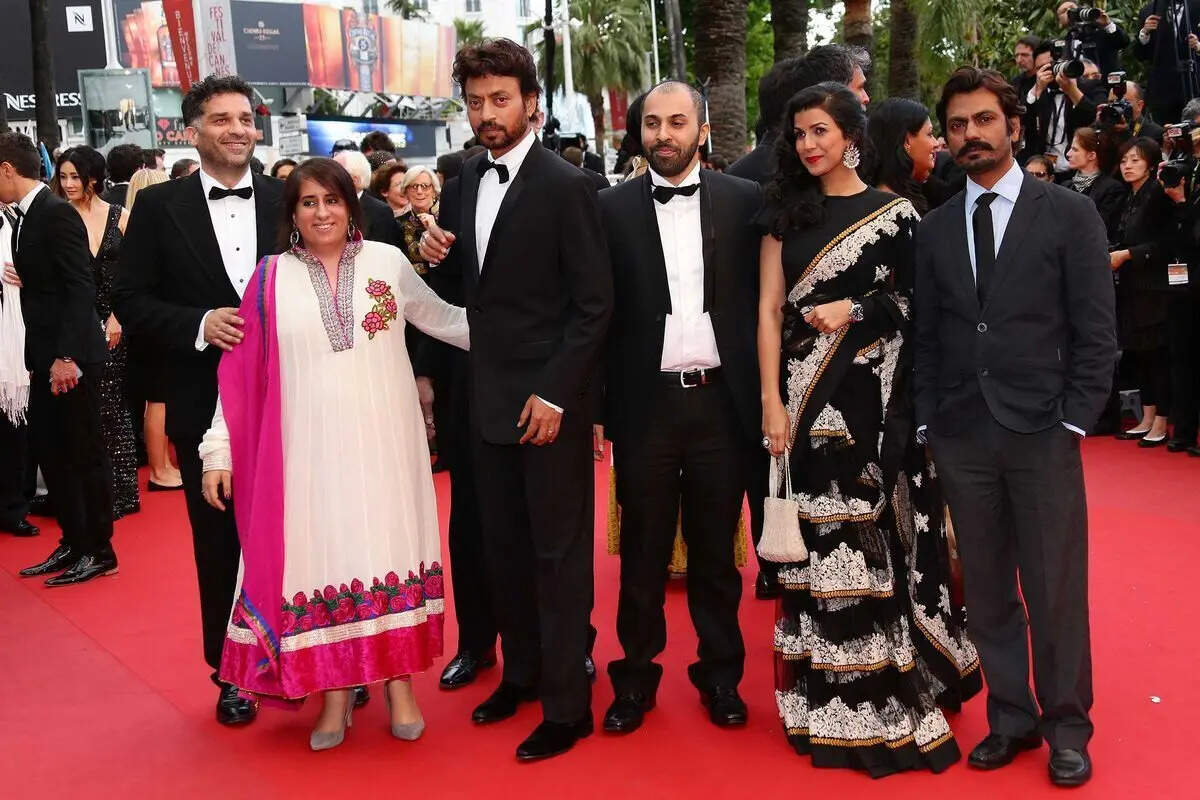
Guneet at the Cannes premiere of The Lunchbox in 2013
Today I stand at a career where I have had 9 film premieres at Cannes, 16-17 films in Toronto, 3-4 in Sundance, 4 in Venice, 4 Oscar nominations for my films, 2 wins. And this whole international vocabulary that I built was because Kashyap used to tell me to go out and figure how we can sell our films. In my 20s, I was able to do that. Jab Lunchbox release ki Karan Johar ne, and following him, I learnt marketing. Suddenly I became an intern. I have a beautiful relationship with Karan. He is a friend, a mentor; he does not even realise ki itna kuch life lesson sikha ke chala jaata hai. He is one person who has never made me feel like I am young. He has treated me like an equal. Karan is an absolute cinephile. I feel he has a talk show and an image in the janta, but like Kashyap, he is an absolute cinephile. Knows about history of cinema like no one else. When you travel, you understand how films are distributed around the world. And it is amazing. And we have not even scratched the surface of it.Why would you say that? We read about record-breaking overseas collections fairly often, don’t we?The numbers are not comparable. In 2000, Crouching Tiger, Hidden Dragon made like 300 million dollars. Humne 30 million nahi cross kiye hain. Abhi Dhurandhar ke kya latest stats hue honge – 30-35 million. Aur usse pehle everything is about 24 million. We have not cracked global distribution – because global distribution is above 100 million, 200 million, 300 million. There is a conscious effort in how distribution is done. Hum log sirf diaspora ko distribute karte hain. So now I am a producing geek. I know so much about global business, about worldwide business. I have innovated distribution in Lunchbox and in Kill. Kill became Lionsgate’s first-ever acquisition for India. Sony Pictures Classic had bought Lunchbox. These are not diaspora sales. These are all A-list sales. Kill released in a thousand screens in US. These are all huge things in our industry to pull off. John Wick’s director Chad Stahelski has acquired the remake of Kill. These are the things I have done, I have been able to propel IPs on, and that is my joy as a producer. We got invested in by Jio in February, so I have built a production company of value that got invested in. They took 50% of Sikhya, so we were able to encash these years of mehnat. To be able to make that level of business where you are doing a merger with a company… and I feel I just got started at 42.
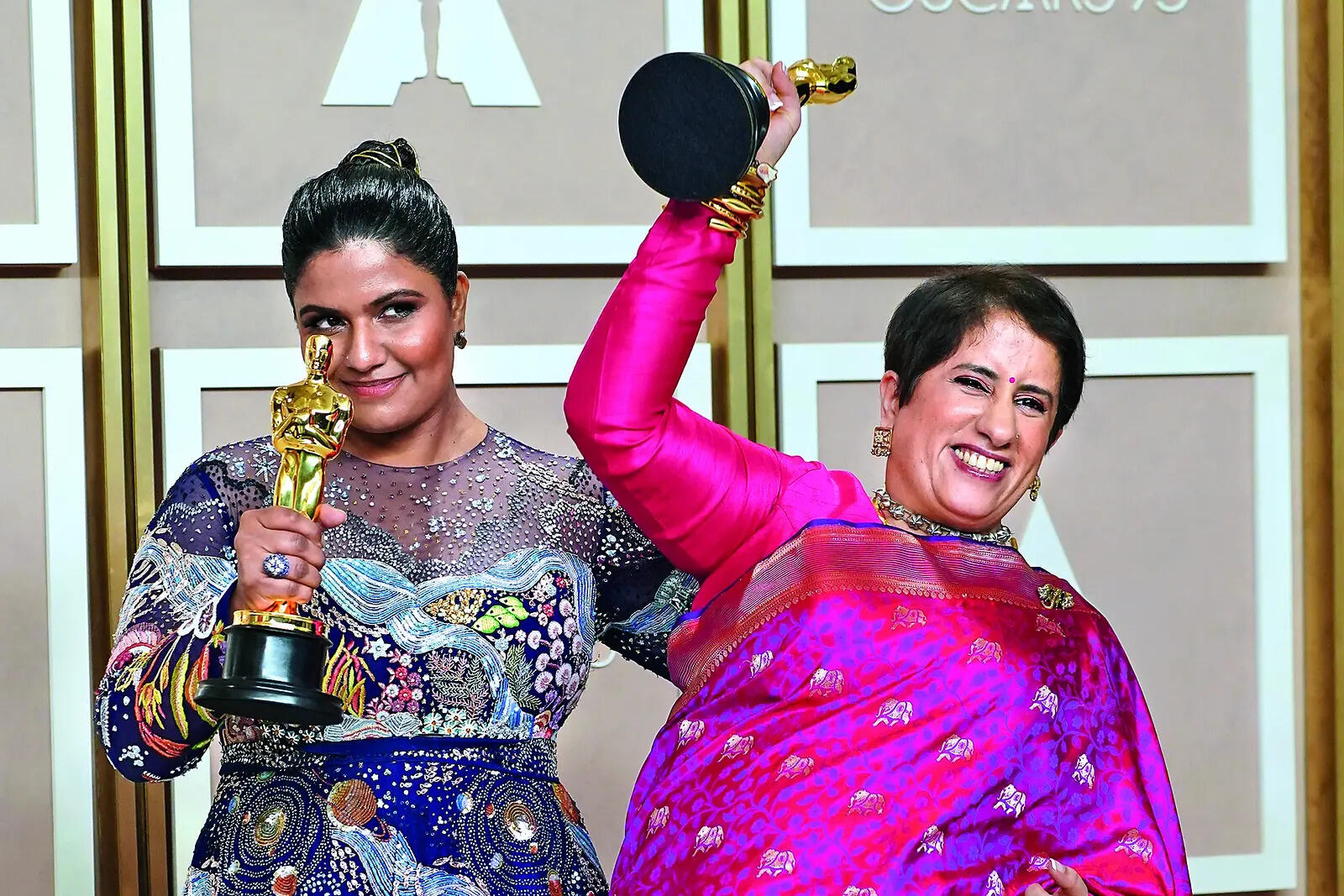
Guneet at the Oscars for The Elephant Whisperers in 2023. It won Best Documentary Short Film
Doubts, criticism, pressure?Gurbani mein Kabir ji ke kuch dohe hain jinko sun kar mere dwar khul gaye. A lot of things about criticism, about what someone said, who is unhappy with you, who you have to impress – it stopped affecting me. A lot of brain cells get damaged in sorting ki saamne wala kya bol raha hai. So it was actually taking your own power back from the world and being sure of what you are doing. And you need that, because we are in such a subjective industry. When you are making a film, har koi aa kar bolta hai ki bakwaas hai. Ya log kehte hain ‘mujhe samajh aa gayi, pata nahi logo ko aayegi ki nahi’ – this is classic. Art is so subjective. And then today, validation lies only in the box office.As in crossing 100 crores, and so on?To be honest, I have never had a 100 crore film. But I am among the most successful producers. In India, if you have a 100 crore film, you have validation. But if I have made a film in 15 crore and I have made 30 crore from it, I am very high ROI and I am very successful. Aur maine yeh therapy mein bhi seekha. Otherwise, you make it to the front pages basis this. Jisne 100 cr kamaya woh accha hai. Jisne 500 cr kamaya woh bahut hi acchha hai. Acche bure mein farak aaj hum paison se dekh rahe hain… Where have we led ourselves?Mere saath to aaj tak aisa hua nahi. Hoga ek din, main banana chahti hoon ek film jo itne paise kamaye. Lekin mera jitna access tha maine uss dayere mein kaam kiya. Mera access first-time directors thay. Mera access younger actors hai. I work with people who want to work with me. So I have never waited in the line for validation or for bigger access – ki yeh actor yes bolega tabhi yeh picture banegi.
We have not cracked global distribution – because global distribution is above 100 million, 200 million, 300 million. There is a conscious effort in how distribution is done. Hum log sirf diaspora ko distribute karte hain
Guneet Monga
Does production need you to be hardheaded as a professional, distinct from the clearly sentimental, emotional individual persona?No, I am not hardheaded. I am just clear. I’ve learnt to have clear conversations. Because we are dealing with bad situations all the time. We are dealing with unfulfilled dreams all the time. When you are making a film, aap ka director, aap ka actor, kuch bhi bol sakta hai. You are constantly dealing with expectation management. I have never been fascinated by vanity. And that comes from my dad. Because I have been able to hold my own. ‘This is how we will shoot. This is how we will do it. This is what you will expect. This the time it will start, this is the time it will end’ – very clear conversations. I have just decided to be clear. Because we are always negotiating. But when you take off the producer’s cap, are you not inherently a much more sentimental, softer person?Yeah, yeah… even at work. I am from the heart. But the brain is practical, towards the money. That combination makes me a good producer, I believe. Because you need a lot of empathy to be a producer.
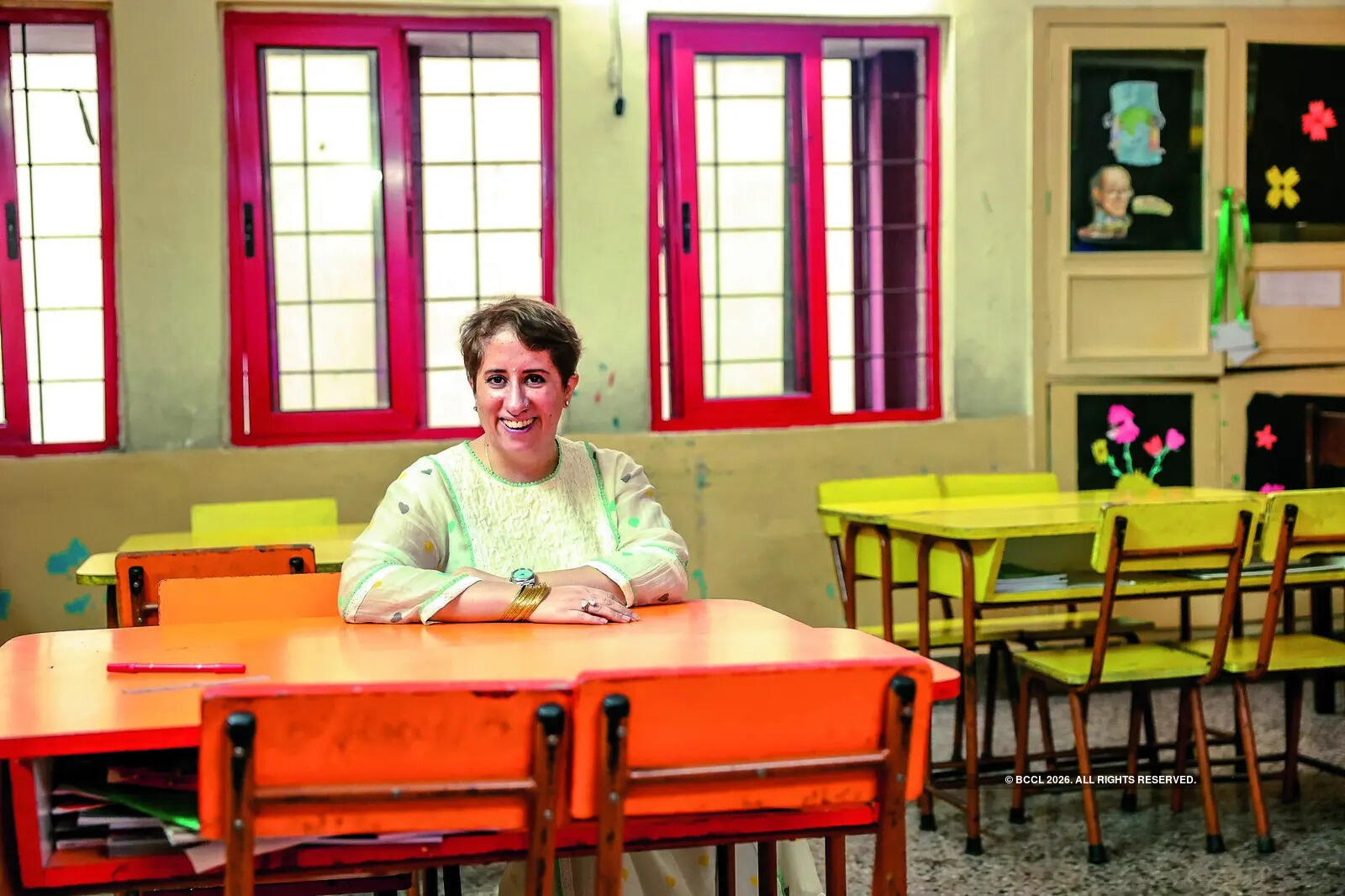
‘I am not hardheaded. I am just clear. I’ve learnt to have clear conversations’
Itne gaane nahi afford kar sakte… uski shoot nahi afford kar sakte… yeh nahi kar sakte.. itne halls mein release ho jaaye… articles chhap jaayein… sab ko sab kuch chahiye hota hai. Everyday is expectation management. Every day! I pray for clarity. I only pray for clarity. Otherwise, there is no end. Your skill set is specific to the cinema industry, but at the core of what you do is the approach, the self-belief, for which you give all credit to your father. Your differentiator, to me, is your execution and mindset.Yes, it is the execution. But you see, when someone like that, like my father, says ki aap kabhi bhookhe nai soge, bindaas raho – toh bahut stress khatam ho jaata hai.Aisi-aisi cheezein sikhai hain na papa ne mere…Ki kabhi paise khatam ho rahe ho na, toh saare kharch kar dena. Bachana mat. Mann nahi maarna. Kyunki maine tumhe itna padhaya hai. Tum kuch bhi kar sakte ho. You will be able to fend for yourself.That taught me abundance. That taught me my relation with money – it was never of scarcity. And that is why I could do what I did. My mindset is very different. Every penny on the screen – it should be the best version.That mindset took us forward. Producer ka ek mindset ho jata hai – jo de rahe ho, thoda kam de do, thoda kam spend kar do. Woh hai hi nai, bachapan se hai hi nai.(Pauses)Bas yeh regret raha hai… Mummy kabhi India se bahar nahi gayi thi. Unko duniya dikhani thi. Venice film festival mein mujhe kamra mila thaa joh samundar pe khulta thaa. And I was asking myself, main yeh kya duniya dekh rahi hoon? And my parents can’t see it. That is my angst. Which will always stay. ________________________________________________________________________________________________________________PART 2:The story of Say Salaam India: ₹75 lakh, 27 volunteers on bikes, and 350 showsGuneet started her journey as a production coordinator in Delhi for many international films before turning producer. She recounts the story of one of her initial films that tested her commitment to the profession and her level of hustlingMaine Delhi mein bahut international films ki thi. Mere neighbour, Kamlesh Aggarwal, ek din aaye with a business idea: ‘Newborn babies ki videos bana kar parents ko bechenge.’ I asked him, aap kitne paise lagana chahte ho ismein? He said 50 lakh. I said, bahut waahiyat idea hai. Instead, aap mujhe 50 lakh de do, main Bombay ja kar film banaungi. I was 22-23, and had only seen Bombay on a school trip. Since I used to work on international films in Delhi, I knew the light vendors in Bombay – at that time Delhi didn’t have the big lights, toh main Bombay se mangwati thi. So the light vendors, gaffers – woh sab mere dost thay. I started asking them, kisi writer–director ko jante ho? Mere paas 50 lakh hai, main film banana chahti hoon. Food court mein meri ye meetings hoti thi. Unhone mujhe kuch ADs, writers, directors se milwaya. Some thought they could con me. But I was like – ‘No. I’m from Delhi. I know better.’ (Laughs) Dilli ka khoon hai. Jugaad 101.Then I met the wonderful Subhash Kapoor, who is also from Delhi. He has now made films and shows like Jolly LLB, Maharani. Unki pehli film thi – Say Salaam India. He told me the story – it was a classic underdog story. Very Jo Jeeta Wohi Sikandar. This was in 2006 and 2007 mein World Cup tha. We were thinking hum kitne amazing hai, 2006 mein film bana kar 2007 mein World Cup ke dauran release karenge.
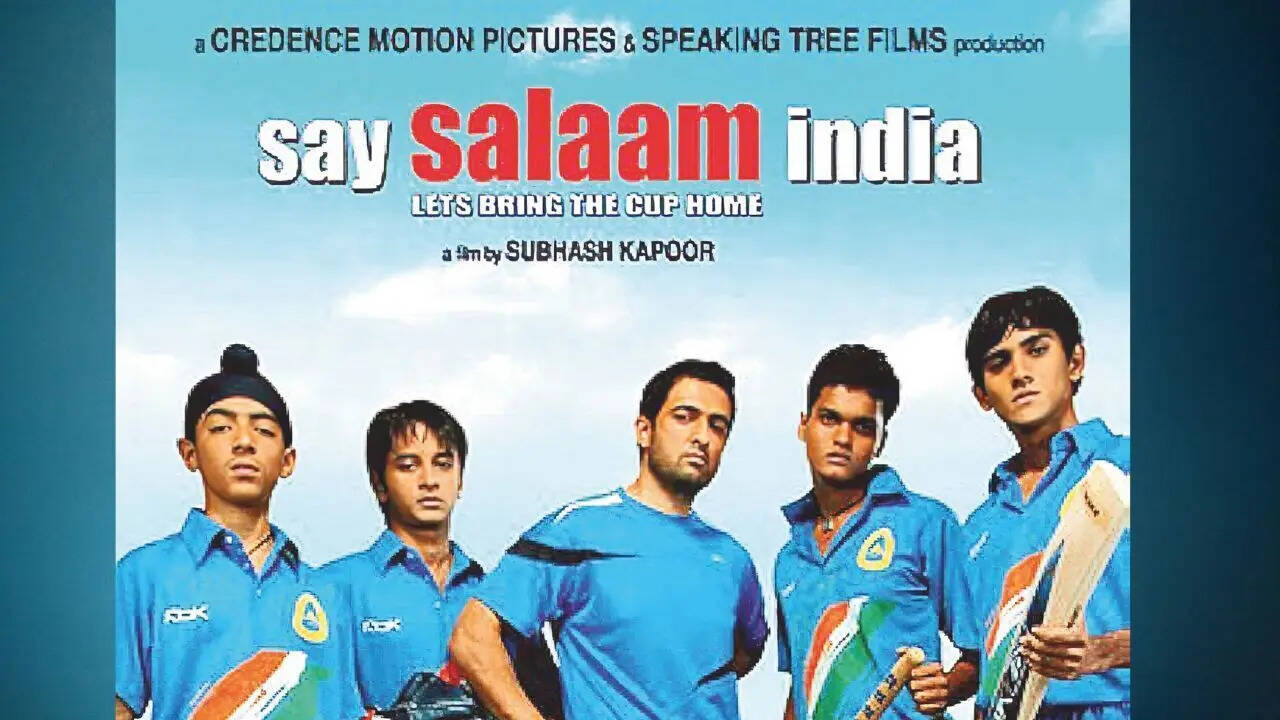
‘We made the film with Milind Soman, Sanjay Suri, Shweta Nigam – lots of amazing actors. That was my first feature film as a producer’
So I had 50 lakh, Subhash ji had 50 lakh. The film’s budget was 1.5 crore, so we both raised 25 lakh each. We made the film with Milind Soman, Sanjay Suri, Shweta Nigam – lots of amazing actors. That was my first feature film as a producer. We were also able to raise marketing money because there was a lot of surrogate marketing with World Cup. Then in the Group stage India lost the first match. People were furious, matlab putle jalne lag gaye. But in the next match they made some 420 runs. They were our heroes again. Meanwhile, my movie was ready for release. Humein kaha ja raha hai – dekho, India pe 2,000 crore lage hain toh haarega nahin. Adlabs came on board to market and distribute the film. Ek independent filmmaker ke liye bahut badi baat thi. Then came the third deciding match to go to the next round – there was so much hype, people were doing hawan, etc. My film was supposed to release the next Friday. And India loses. Phir se putle jal rahe hain. Dil toot gaya hamare desh ka. Then the cinema halls started calling – ‘Ye dabbe (film reels) wapis le lo, purani picture de do. Agar abhi cricket ki baat kar di na toh log theatre jala denge. And I was in shock. I was like – main producer kaise banungi main agar ye paise wapis nahi kar sakti! And, I had actually taken a job for Ghajini. It was very exciting for a young producer. But I had to leave it. I told the producer that I have to go figure out my film. Mujhe paise recover karne hain. And I came back to Delhi. I went to my school – Bluebells. They used to sometimes take kids for movie screenings for ₹50 per student. I told my principal, ‘I have made this beautiful film and it’s for children. Would you please do a paid show with students?’ And she said yes. Then I went to Sapna Cinema, which was behind my house and asked how much do they make from the morning 9am show. They said ₹3,000– 5,000. I booked the hall for ₹10,000, a 1000 students came to watch the film and the teachers gave me ₹50,000 – ₹10,000 went to the hall and 40,000 mere. This was the first paid show. And kids loved the film. I heard a thousand kids jump and celebrate and laugh. And I remember – my parents standing there with a 1000 chocolates – ₹5 wali. The principal had great feedback and I asked her for a letter of appreciation. I took it straight to DPS RK Puram – 25,000 kids. The minute DPS RK Puram got on (board), all the DPS of the city got on (board). And it got overwhelming for me. It took a week to crack one school. So, I went to my college to get student volunteers. I told my principal that I will get all volunteers internship letters from Adlabs studio. So I got interns for the next 2–2.5 months – 27 boys on bikes. They’d all come to my house in the morning, mummy aloo parantha banati thi, then they would go to different schools. There was one day when there were 50 shows in Delhi simultaneously. Then I went to the offices of Lintas, and told then I have so many shows happening, I will give you the interval, you can bring brands in. Those brands gave me ₹10,000 per show. So, per show I increased my revenue. I had my volunteers stand in front of every screening with the audio CDs – ₹10 cost, we sold them for ₹25 each. Aise karte–karte 350 shows kiye and we recovered all the money. We did shows in Sonipat, Panipat, Karnal, Chandigarh – school after school. It took nine months of my life. But I gave the money back to Kamlesh ji. And I became a producer.