





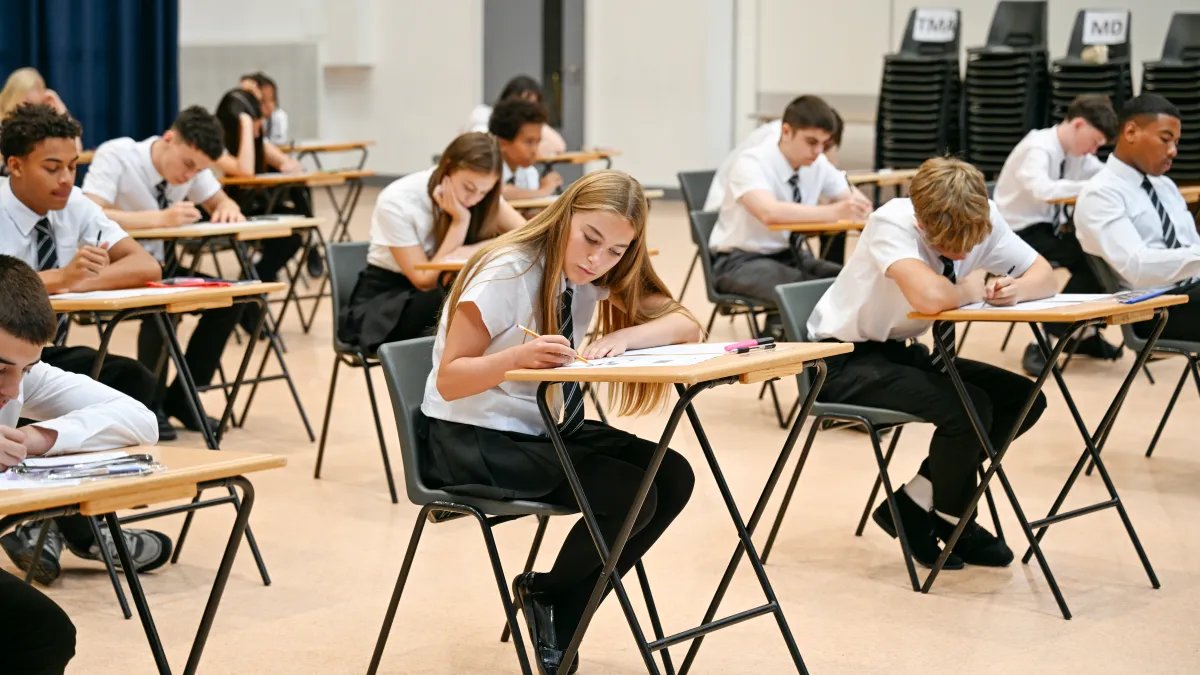
They say that the most stressful life events are death, divorce and moving house. I’d add a fourth: steering your teenager through their GCSEs. (I can’t bear to think about A-levels.)
My almost 16-year-old daughter is sitting her first exam in just under two weeks so my husband and I, along with thousands of other parents across the country, are surrounded by revision timetables, brightly coloured flashcards, and a very tightly wound and jittery teenager.
Here’s how to keep calm and carry on for the next two months, according to the experts.
Watch out for one-upmanship on Snapchat
Like many teenagers, my daughter and her friends use an app called Study Bunny, which allows them to time their revision sessions. Sounds great, right? Well yes, until somebody posts their five-hour Study Bunny revision score on Snapchat and your teen starts freaking out.
“It’s like Strava for revision and it only serves to make a dent in your teenager’s self-esteem,” says Tanya Goodin, author of The Teenage Guide to Digital Wellbeing. Instead, she recommends initiating a conversation with your teenager to find out what their tech habits are going to look like for the next few weeks. “Rather than reacting angrily whenever you see them scrolling, talk to them. We know smartphones are distracting and addictive by design, so point out how much more they’ll get done if they keep their phone out of the room when they’re studying. Encourage them to turn off notifications, leave their phones outside their room at night, and watch your own tech habits too. They’re less likely to be sensible if they see you scrolling all the time.”
Prioritise sleep over revision
“Sleep is important for memory and learning,” says Dr Neil Stanley, a sleep consultant and former director of sleep research at the University of Surrey. “Imagine their brains as a desk with mountains of paperwork on it. When they’re asked a question their brain thinks, ‘Give me a minute and I’ll find it.’ Sleep is the filing fairy who comes in and tidies everything away and puts it all in order, so when they read an exam question their brain can retrieve it from the files almost immediately. Rather than imposing strict bedtimes, explain the messy desk story to them so that they see sleep as an effort-free way to boost their revision.”
Besides aiming for a good eight hours, Stanley suggests a regular bedtime, which improves sleep quality. “Studies show if we keep to a regular sleep schedule, we find it easier to fall asleep and are more likely to wake up energised. Lastly, adopt good sleep habits yourself: exam season is tough on everybody, and a parent who is well rested is less likely to have a short fuse.”
Focus on their process — not their results
“The biggest anxiety driver for kids is thinking about results day in August,” says the psychologist Dr Linda Papadopoulos. “Instead, help them focus on the process rather than the outcome. Shift your thinking from, ‘Hey, do you think you’ll get a 9?’ to ‘What’s your plan today?’ This helps to give them a sense of control, by encouraging them to focus on the act of revision rather than worrying about the final results.”
Help them to get the basics right, which means they’re eating, sleeping and moving well, because that’s where things can fall apart. “Movement reduces cortisol, which is the body’s primary stress hormone, so get them out for a walk whenever you can,” Papadopoulos says. Research shows that 20 minutes is enough to lower cortisol levels. “This will also help your own stress levels. Lastly, remember that you need to set the emotional temperature of the house so keep your own anxiety in check.”
Get them to eat well — start with a brain-boosting smoothie
“Steady energy levels are key for focus,” says the dietician Helen Bond, who suggests prioritising balanced meals (“Whole grains, lean protein and healthy fats”), proper hydration (“Which helps keep their brain sharp”) and eating regularly to avoid energy slumps.
“If your teen is struggling with nerves, boosting their breakfast is a quick win to calm them down,” adds the nutritionist Sam Rice, author of Supercharge Your Diet. “Start with three tablespoons of Greek yoghurt and a tablespoon of chia seeds; the latter are loaded with omega-3 fatty acids that help lower cortisol. For a serious brain boost, add a handful of frozen blueberries, as studies show their antioxidant content can sharpen memory recall for up to six hours. Lastly, blend with a frozen banana for steady, slow-release energy to bypass the afternoon slump and keep them focused until the last flashcard.”
Be honest with yourself about why you want them to do well
“A lot of parents are losing their heads right now,” says Cary Cooper, a stress expert and professor of organisational psychology and health at Manchester Business School. He sees the most pressure among middle-class parents who have done well for themselves but didn’t do as well as expected at school or university. “They don’t want their children to repeat their mistakes. I also believe some parents see their child’s academic success as a form of their own, like a good job or a nice house. ‘Look what we achieved, we have a child with straight nines!’”
Instead of asking a teenager “Have you studied? How many hours?” try “How are you feeling?”, he suggests. “An emotionally intelligent parent knows their own child and knows when to nudge them into working harder and when to lighten the pressure. Take them for a nice breakfast at the weekend, order their favourite takeaway midweek, or offer to watch their favourite TV show with them.”