









The recent pulse of warm, sunny weather has encouraged butterflies to fly in large numbers in Dorset. They were everywhere when I visited Powerstock Common: the moment I opened the car door, a brimstone fluttered sulphur-yellow over the parking area, lifted on a stream of blackcap song.
Bright as butter in the sunshine, it’s possible that brimstones are the species that inspired the word “butterfly”. When this one settled on a hazel, its underwings merged green among the new leaves, the colours indicating it was a male. Females are much paler, sometimes almost white. Both sexes have a pair of browny-orange spots on their wings, which are foxed like the page edges of an old book.
The common is one of the best places in west Dorset for butterflies, particularly the dismantled railway line where it opens out into a broad, south-facing cutting. Short, rabbit-nibbled turf dotted with low scrub merges into taller woodland, providing a fabulous mixed habitat that includes a spring-fed pond – insects need water as well as warmth.
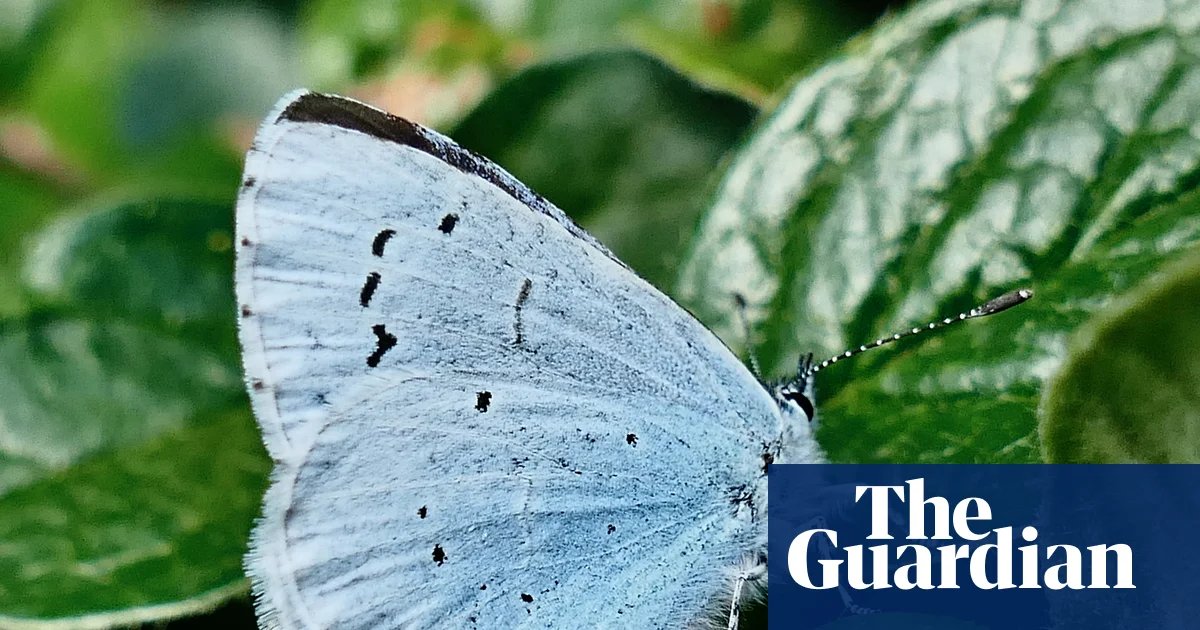
A peacock butterfly dabbled at the pool’s muddy margin, sipping up essential minerals along with the moisture, while an orange-tip flipped across the old track. It’s proving a good year for holly blues and one danced like an erratic snippet of sky high above a golden clump of flowering gorse. Large whites flapped about the lower bushes.
Not all butterflies thrive in direct sunlight – on the bridleway among the trees, speckled woods flitted in dappled shade, their brown wings spotted with yellow, echoing the patterns of light and dark under the canopy. The relative scarcity of flowers in summer woodland poses no problem because they mostly feed on aphid honeydew collected in the treetops.
I often find it’s the borders between habitats that attract the greatest variety of creatures. Sure enough, while following a well-trampled path made by the cattle that roam the site, I came across an adder basking at the fringe between scrub and grass. It was a fiery copper-brown with a coffee-coloured zigzag from head to tail: a plump juvenile, possibly female. Adult males are usually silvery grey with charcoal markings, although melanistic specimens can be entirely black.