









Biffa and FCC Environment are among the ‘first’ waste management companies globally to use AI for compliance reporting.
The waste management companies have begun using AI to submit waste composition data on outbound material streams directly to the Environment Agency (EA), as part of their existing compliance reporting.
Since October 2024, expanded Material Facilities (MF) regulations have aimed to improve the accuracy and consistency of composition reporting from UK materials recovery facilities (MRFs).
Recent work by Biffa and FCC Environment with AI company Greyparrot has focused on how AI‑supported sampling can be applied to selected outbound products as part of compliance reporting.
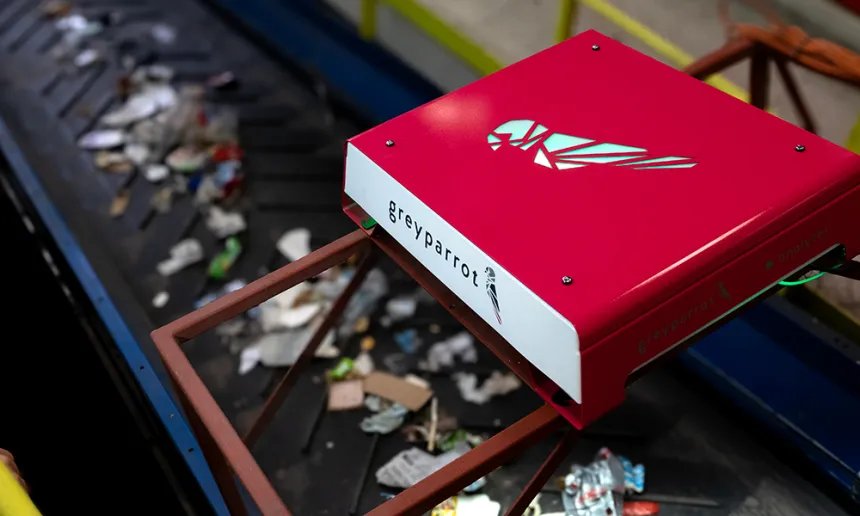
Biffa and FCC Environment’s facilities have been running Greyparrot Analyzers for several years, which use AI cameras to monitor waste streams in real time across conveyor belts.
Rather than periodic manual samples in outbound material streams, the system generates continuous, shift-by-shift compositional data that can be used to inform and support reporting activities.
To enable this transition, Greyparrot has developed an AI-supported sampling methodology designed to align with the Environment Agency’s MF regulations and reporting requirements.
Mikela Druckman, CEO of Greyparrot, said the technology feels like a ‘turning point’ in understanding waste infrastructure.
“Operators like Biffa and FCC Environment are setting the standard for how technology can transform the way facilities operate – one I believe the rest of the world will look to,” Druckman said.
Pedro Faraldo García, Senior Technical Manager, FCC Environment, commented: “Access to continuous compositional data helps our teams focus on operational performance, with compliance being one of several areas where these tools can add real value.”
Ian McSpirit, Head of PRFs, Biffa, said: “Access to reliable, real-time data is helping move the industry from reactive processes to smarter, data-driven action, an essential shift if we want to accelerate the circular economy at scale.”