








A prolonged supply shock is likely to translate to higher inflation and tighter margins, which could weaken incomes, consumer confidence and investment, translating to a demand shock, and stagflationary outcomes, ICRA said in its latest report.
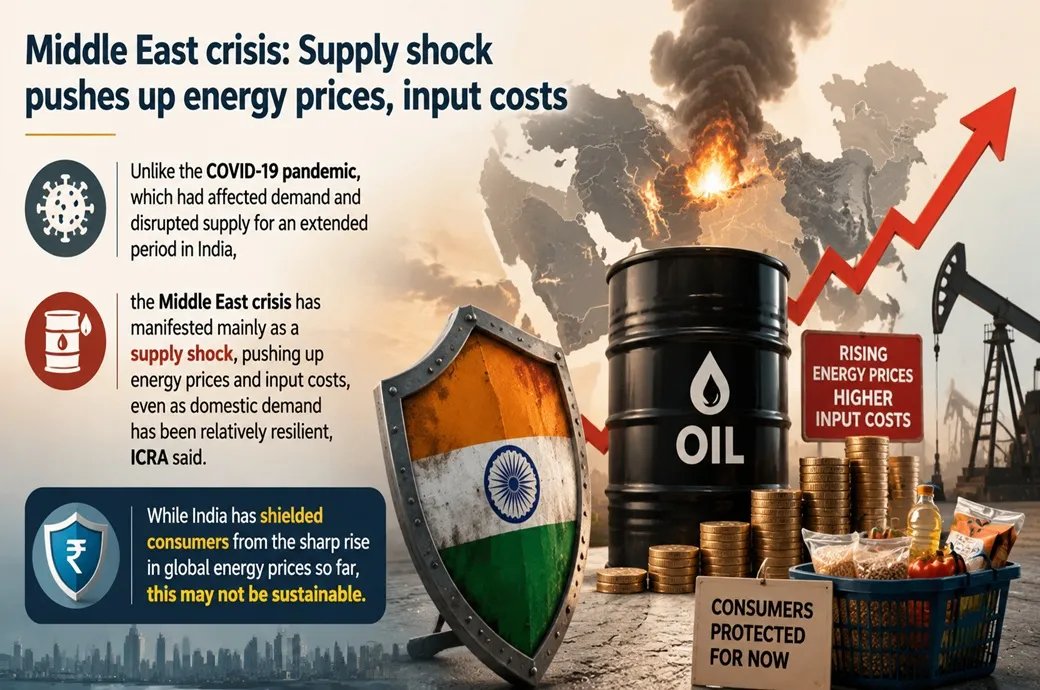
Unlike the COVID-19 pandemic, which had affected demand and disrupted supply for an extended period in India, the Middle East crisis has manifested mainly as a supply shock, pushing up energy prices and input costs, even as domestic demand has been relatively resilient, ICRA said.
While India has shielded consumers from the sharp rise in global energy prices so far, this may not be sustainable.
ICRA has lowered its fiscal 2026-27 (FY27) gross domestic product (GDP) growth forecast to 6.5 per cent from 7.1 per cent and raised its CPI inflation projection to 4.5 per cent from 4 per cent, assuming an average crude oil price of $85 per barrel for the fiscal.
However, these estimates are subject to sizeable risks; a longer conflict with average crude oil at $105 per barrel could drag growth below 6 per cent and push inflation above 5 per cent, it observed.
While the Indian government has shielded consumers from the sharp rise in global energy prices so far, this may not be sustainable, and an eventual rise in fuel prices would readjust the balance between the fiscal and inflation outcomes, ICRA said.
The most significant difference in the macroeconomic impacts of the Middle East conflict and the pandemic would be visible on the balance of payments (BoP) front, with the current account deficit expected to surge to a four-year high of 1.7 per cent of GDP, in contrast to the surplus of 0.9 per cent of GDP seen during the pandemic in FY21.
Fibre2Fashion News Desk (DS)