







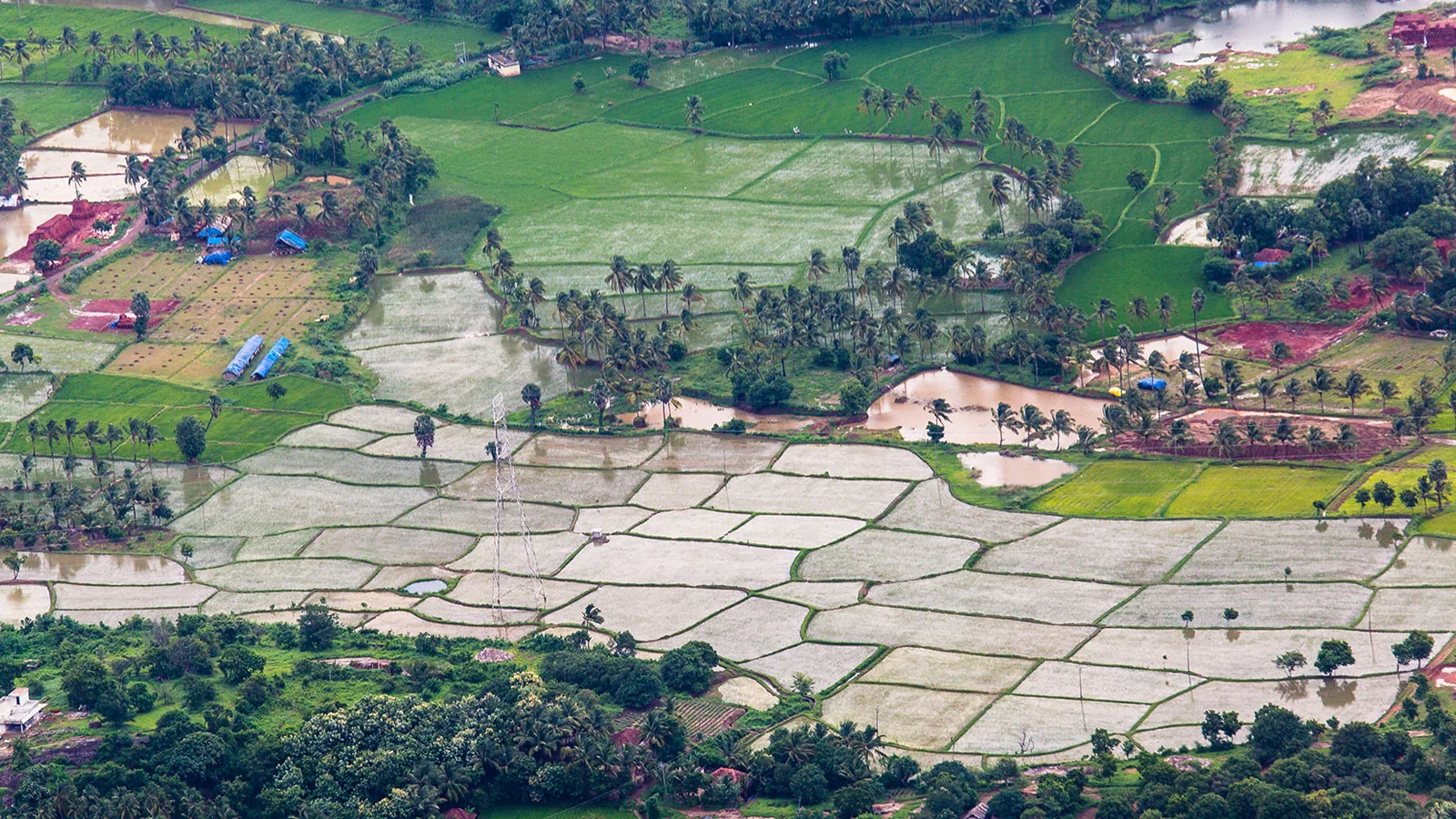
On April 1st, 15 leading companies and 12 partners came together to kickstart the workplan of the India Landscape Accelerator (ILA). This newly launched regional flagship initiative under the Action Agenda on Regenerative Landscapes (AARL) convenes leading corporates, financial institutions, governments, and on-the-ground implementers to jointly identify and scale investable Climate-Smart Agriculture (CSA) and regenerative agriculture landscapes in priority states.
The virtual Kickoff, co-hosted with Boston Consulting Group (BCG), marked the launch of the Accelerator’s 2026 workplan and gathered input from participating companies and partners on its proposed deliverables and approach. Across the interactive discussions, a strong consensus emerged on the need to move beyond pilots toward landscape-scale and systems-level impact, aligned with existing value-chain and landscape programs, district and state planning processes, and government priorities relevant to the private sector.
This direction is being shaped with a core group of confirmed multinational corporate members spanning agri-food and inputs, reflecting real business demand for scalable, landscape-level solutions. The ILA has identified two key levers as essential to unlock this transition.
Scaling Proven Models Across Landscapes
Moving from pilots to landscape‑scale impact requires more than technical solutions: it requires finance mechanisms that work for farmers, the private sector, and public institutions alike. While proven CSA and regenerative agriculture models exist across India, their scale-up is often constrained by fragmented financing, risk and return uncertainties at the farm and landscape level, and misaligned incentives along value chains.
A central challenge highlighted during the Kickoff was the “income valley” faced by smallholders during the first three to five years of transition to CSA practices. During this period, farmers often bear higher costs and production risks before financial benefits – such as yield gains or cost savings – materialize. Discussions therefore emphasized the importance of blended public and private finance for risk-sharing, alongside outcome-based mechanisms that can help ensure farmers receive timely and tangible returns.
By identifying CSA models with evidence of scale, distilling the drivers behind their success, and aligning them with the right mix of public, private, and philanthropic capital, the ILA aims to replicate what works – faster, at lower cost, and across landscapes rather than isolated projects.
Co-designing Collective MRV Solutions
Companies and partners strongly aligned around the view that today’s MRV landscape in India is fragmented, costly, and inconsistent, creating barriers for smallholder farmers, implementers, and investors alike. Key themes included the need to reduce data fragmentation and reporting burden, particularly for smallholders engaged in multiple CSA programs, while ensuring data quality and credibility.
Equally important were questions of data governance and integrity. Companies underscored the need to ensure that data collection protects farmers, avoids double counting, and clearly defines how MRV data can be used to support credible corporate sustainability claims, policy reporting, and blended finance mechanisms.
Against this backdrop, the importance of harmonized, India-specific MRV approaches that are credible yet practical and cost-efficient for smallholder systems is clear. Through the ILA, stakeholders will convene to co-design MRV solutions that ensure data accuracy and transparency, are fit-for-purpose and cost-effective, and respond to farmer economics. In this way, MRV becomes a shared infrastructure – one that enables trust, unlocks finance, and supports coordinated action toward climate-resilient landscapes across India.
Convene. Connect. Co-design. Collaborate.
As the ILA transitions from design to delivery, the focus will be on creating a live, shared view of CSA and regenerative agriculture programs, delivery partners, and public‑private funding flows across India, while advancing India‑specific MRV alignment to adapt global approaches into collective solutions that work credibly and practically in local contexts.
This next Diagnose phase will be driven by the active engagement of ILA’s corporate members – Bayer, OCP, Olam Agri, Syngenta, and Unilever – and partners, who bring deep value chain experience, diverse partnerships, and global-to-local sustainability ambitions and implementation. Together, these companies and partners will help anchor the Accelerator in real business demand, align private-sector action with public priorities, and convert shared insights into scalable, investment‑ready pathways across priority landscapes.
Learn more about our work on our website and reach out to Deviah Aiama (aiama@wbcsd.org) to explore collaboration opportunities.