









Session panelists discuss how sustainability expertise is creating new opportunities in finance, manufacturing, law and consulting


Environmental expertise is increasingly becoming a core competitive asset across industries rather than a specialized niche, according to industry experts gathered at H.eco Tech Festa 2026 on Thursday.
Speakers from the finance, manufacturing, legal and consulting sectors said companies are no longer treating sustainability as a secondary corporate initiative, but as a strategic factor tied directly to profitability, brand value and global competitiveness.
The discussion took place during the forum’s second session, “Next Stage: How Environment Becomes the Ultimate Competitiveness,” held at Yonsei University’s Baekyang-Nuri Event Hall and moderated by Kim Kwang-woo, staff reporter of Herald Business.
Speakers argued that sustainability is no longer simply a matter of corporate responsibility, but increasingly a source of profitability and long-term market survival.

Cho Sun-young, ESG team lead at Kakao Bank, said ESG initiatives are becoming deeply tied to customer identity and loyalty in the financial industry.
“Our role is not just to create financial products, but to help build a more sustainable future through technology and finance,” she said.
Cho explained that Kakao Bank’s ESG team oversees sustainability reporting, ESG evaluations, risk management and social contribution projects while exploring ways financial technology can encourage environmentally responsible consumer behavior.
Unlike traditional financial institutions, Kakao Bank sees itself as a technology platform closely connected to customers’ daily lives, she said, adding that this creates opportunities to reward eco-friendly activities through financial services.
“Adding environmental value to the Kakao Bank brand can transform customer relationships into a kind of fandom,” Cho said. “Customers begin to see the company not just as a financial partner, but as a community that reflects their values.”
She also stressed the importance of speaking “the language of numbers” in business settings.
“When working with companies, you cannot persuade them with values alone,” the Kakao bank official said. “You will become an irreplaceable talent if you prove results through numbers and execution, while infusing a unique character of sustainability.”

Jeong Soo-jeong, head of LG Electronics’ ESG Strategy Planning Team, echoed the idea that environmental initiatives are increasingly becoming economically rational business decisions rather than cost burdens.
“There are many cases where environmentally friendly design ultimately becomes the more profitable choice in the long term,” Jeong said.
She pointed to energy-efficient product design as an example, noting that while environmentally friendly products may sometimes require higher upfront costs, they can significantly reduce energy expenses over a product’s lifespan.
Jeong said perceptions inside corporations are also changing rapidly.
“In the past, environmental departments were often viewed as teams that only spent money,” she said. “Now, many global clients are actively checking whether companies are pursuing carbon neutrality and sustainability goals.”
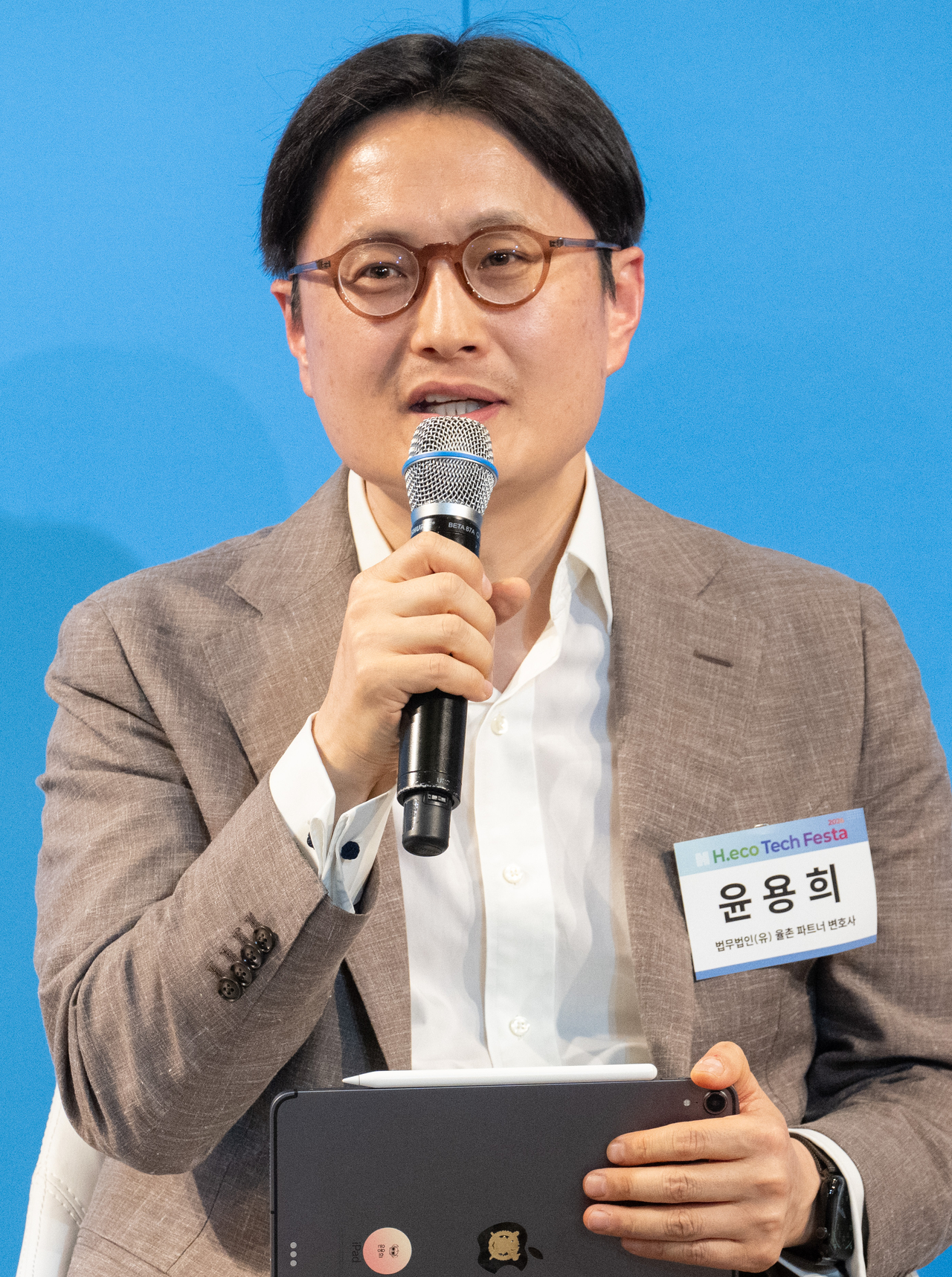
Yoon Yong-hee, a partner at law firm Yulchon, said Korean society’s awareness of environmental and safety issues has shifted dramatically over the past decade.
“When I joined Yulchon in 2009, there was no dedicated environmental team,” Yoon said.
He said major social disasters, including the 2014 Sewol ferry disaster and the 2016 humidifier disinfectant scandal, became turning points that fundamentally changed how companies and society viewed environmental and safety risks.
“In the past, economic growth was considered the highest priority,” Yoon said. “Today, companies are paying far more attention to environmental protection, safety, renewable energy and ESG-related risks.”
As global ESG regulations expand, companies are increasingly seeking legal advice on environmental compliance and supply-chain risk management, he added.
“Companies that can prove their environmental performance through data and measurable indicators are gaining premiums in the global market,” Yoon said.
He warned that even highly competitive companies could lose business opportunities if ESG risks emerge either within their own operations or among suppliers and partners.
Kim Kyeong-yeon, head of global strategy at Eco&Partners, emphasized that climate and environmental issues cannot be solved by governments or individual institutions alone.
“Environmental problems require cooperation among governments, companies, institutions and local stakeholders,” Kim said.
Drawing from consulting experience across multiple countries, Kim said successful climate and sustainability policies often depend on adapting international best practices to local economic and industrial conditions.
The session also included audience questions on the qualities needed for future ESG professionals.
Asked what kind of talent stands out in the ESG sector, Cho pointed to challenge and innovation.
“If someone has the passion and vision to solve social problems using technologies like AI, I would consider that person a strong talent,” Cho said. “I want to work with people who are not afraid of taking on new challenges.”

jychoi@heraldcorp.com