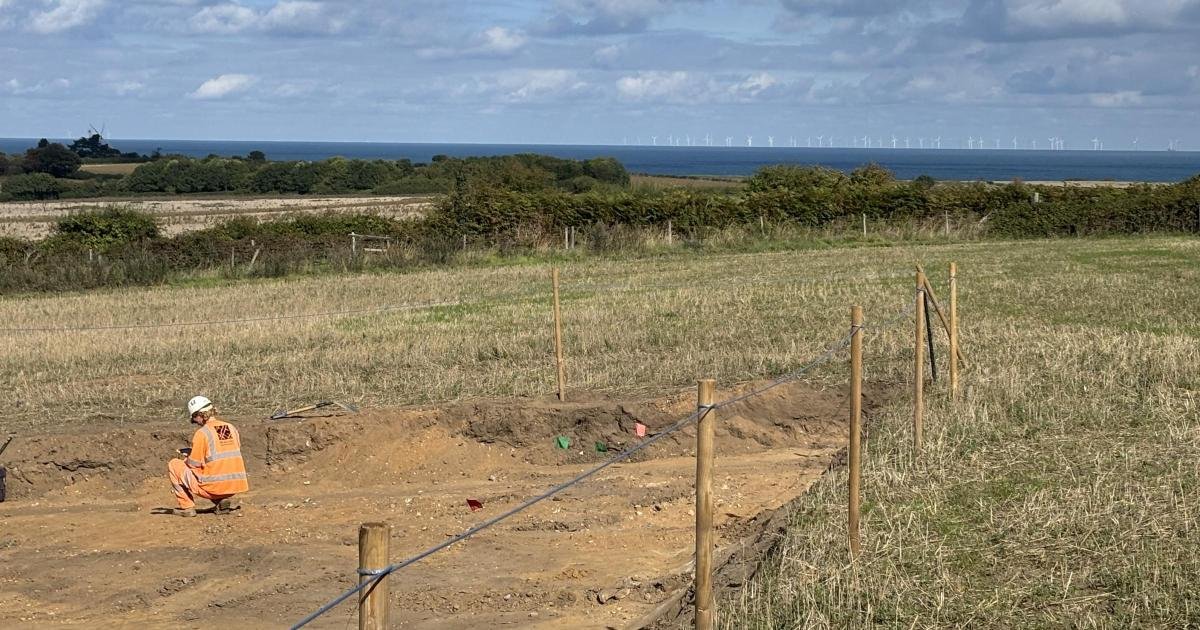









Northumberland Wildlife Trust’s Biodiversity Project has ended after a successful eighteen months.
The Biodiversity project
Two years ago, the Species Survival Fund gave almost £750 000 to the Biodiversity Boost Project to enhance habitats and increase biodiversity across the Druridge Bay area at three of the Trust’s most popular reserves: East Chevington, West Chevington and Hauxley.
At East Chevington, the habitat improvement works focused mainly on habitats in and around water.
Previously, opencast mining in the area had reduced the Chevington Burn to a featureless channel that really needed improvement.
The watercourse was rebuilt with heavy machinery, over the course of a week in challenging weather conditions with the support of TM Lindsay Ltd and Dynamic Rivers (Surveys and Design) Ltd.
Following the work, the waterway now meanders gently through a wet woodland, and a series of ponds and pools. Northumberland Wildlife Trust says that “it now responds to the rapidly changing water levels during rain, slowing the flow of water, trapping sediment, and creating a variety of habitats both in the water and on the banks. The changes to the area were instantly visible, and for the first time the water could be heard flowing”.
South pool
While all this work is going on downstream at the Chevington Burn, a lot of work is also taking place at the south pool.
South pool is well known for the bird life that lives there including reed warblers, water rail and marsh harriers. However, the reed beds had had little management since the pool was established following the restoration of the area from opencast mining around about the Millennium.
The reed bed needed re-profiling and the Sustainable Water Company took on the challenge. To help them they had an amphibious Truxor Reed cutting machine which they affectionately called Gertrude. With this machine they were able to cut a series of channels in the reeds. They took out the rhizomes and relocated the material to create new areas of reedbed in other places.
Hopefully the increase in the amount of reed margin will mean that there will be more opportunities for wildlife, especially visiting bittern.
Bylines Network Gazette is out!
The latest Bylines Network Gazette is out now. Become a Friend of Bylines Network or upgrade to a paid Substack subscription, and you will get access to a vital collection of citizen articles and stories days before seminal elections in Scotland, Wales and English councils.
Journalism by the people, for the people.
West Chevington
At West Chevington, woodland was the most important part of the habitat. Here there were closely planted conifer plantations which were thinned by up to 30% to allow more light to shine through. This light will naturally regenerate the native trees within the woodland.
In other parts of West Chevington as many as 10,000 native trees such as popular Rowan and Hazel were planted. This created a one kilometre hedgerow and seven new copses, delivering a woodland corridor across the site from the well-established woodland in the west to the less diverse plantations in the east.
Improvements were also made along the footpaths and bridleways to improve access for visitors. New signs and way markers have been installed across this site.
Hauxley
In the Hauxley area of the project there were amazing results, focusing on improving the visitor experience.
A wider range of people to view the birds visiting the feeding station has been possible due to a new, accessible hide being installed.
Meanwhile newly installed wildlife cameras now stream live footage on two screens on Hauxley reserve, at the Wildlife Discovery Centre and Lookout Cafe. This allows people a glimpse of what goes on in the pond, bird boxes, and across the reserve when nobody is watching. The Northumberland Wildlife Trust reports that “camera highlights have included an epic battle between a blue tit and a tree sparrow and a raid on the stock dove’s nest by a stoat”.
At the same time, lovers of nature have also been able to take part in the creation of a new wildflower meadow, by planting 390 plug plants such as tufted vetch, yellow rattle and meadow cranesbill. Families also had a lot of fun, spending a morning creating seed bombs and then launching them with a giant catapult across the meadow!
Spring and summer time will see a path mown through the meadow which will allow visitors to watch the meadow grow during the next few years.
A film highlighting the work of the project can be viewed here .
Helen Walsh, Northumberland Wildlife Trust’s Druridge Bay Estates and Engagement Officer commented:
“The Species Survival Fund was a great project as it gave us the opportunity to enhance a variety of habitats across Druridge Bay and make things better for wildlife watching. It’s amazing to see how the sites have changed as a result and we look forward to seeing the positive impacts of the work over the years to come.”
Hippolotafun guaranteed at Alnwick Castle
Meanwhile, a member of Northumberland Wildlife Trust and his wife are said to be counting down the days until they host a mega two day, hippo themed fundraising extravaganza in support of the wildlife charity.
Phillip Angier is a self confessed hippo enthusiast and along with his wife Elizabeth he has spent the best part of two years planning a special exhibition. This exhibition will take place over two days and will feature the sale of their 1 000 strong collection of hippo figure artefacts, soft toys and figurines they have amassed over a period of 55 years.
It is expected that the two-day celebration will be a hippolotafun and will take place at Alnwick Castle at the guest hall on Friday 15 and Saturday 16 of May from 10 am to 4 pm.
Every penny that is raised will be donated to Northumberland Wildlife Trust.
Many of the hippos have individual names and there were stories behind them, so Philip and Elizabeth didn’t want to simply send them to auction. Instead, they decided to have a joyful farewell for the collection and a chance for the public to see the entire herd of hippos together
Many of the items are inexpensive pocket money toys, but some are more valuable and a few have been valued at over £100. These include a coffee table in bronze cast made by sculptor Mark Stoddart, which is valued at over £5 000.
There will also be a tombola and auction with other items donated by North East businesses.
Event organiser and hippo fan Philip Angier said:
“This will be first and only opportunity to see the entire collection gathered in one place and on display in one room. It will be a first for us too, so don’t miss it!”
Northumberland Wildlife Trust Chief Executive Mike Pratt commented:
“Philip and Elizabeth are such an inspiration to others with their love of wildlife and passion for fundraising. They have been supporters of the Trust for over thirty years, so I am delighted that money raised at the event will be a fitting legacy to their much loved collection.”
Entry is free.
More details are available here .
Newt survey
Now the warmer weather is here Northumberland Wildlife Trust is hosting a series of amphibian training sessions at one of its most popular sites Northumberlandia near Cramlington. A team from the UK ecology and arboricultural consultancy Eco north have joined with Northumberland Wildlife Trust to go to the site to be trained under the guidance of licensed colleagues.
You need to have the licences to handle some amphibians such as newt pool frogs and newt jack toads, if any organisations or individuals are involved in activities that might disturb or remove them, so people need training to be able to do this in the right way.
The law safeguards great crested newts because of their declining populations and as there are some of them in Northumberlandia, the training is really important.
So far, the training has involved looking for newts late at night and in the early morning using torchlight. This helped the trainees to learn six new techniques and they came across five different amphibian species; the common toad, smooth newt, the common frog, the great crested newt and palmate newt.
By the end of the sessions Northumberland Wildlife Trust will be able to recommend the thirteen members of staff for the great crested newt survey level 1 licences. This is absolutely vital for survey work where there is a chance of species being disturbed. For more information about Northumberland Wildlife Trust and how to get involved in their work please see here.

CLICK HERE TO DONATE TO OUR CROWDFUNDER
HELP US BECOME STRONGER SO THAT WE CAN CONTINUE TO DELIVER POWERFUL CITIZEN JOURNALISM!