









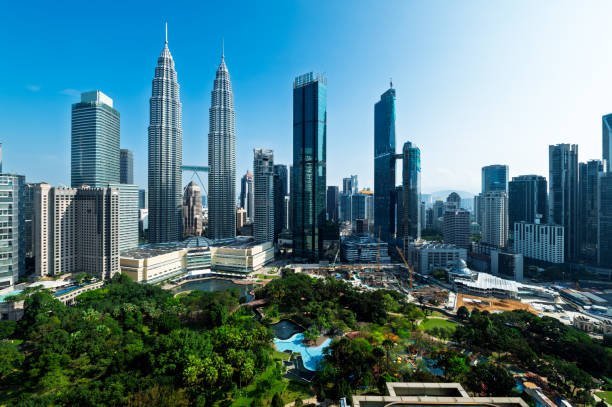
The following gives an overview of the fintech, digital and wider economic development of the Southeast Asian nation of Malaysia in 2026.
Malaysia has long been viewed as one of Southeast Asia’s more structured digital economies. It is less chaotic than its regional peers, but arguably more deliberate in how it builds financial innovation. The past few years, the country’s fintech ecosystem was already among the most developed amongst the Association of Southeast Asian Nations (ASEAN). This was supported by strong regulation, high digital adoption, and a diversified financial sector. Now, that positioning has deepened. Malaysia is no longer simply a regional participant in fintech. It is increasingly shaping the architecture of digital finance in Southeast Asia.
Minus ASEAN nations of Singapore and Brunei, Malaysia is one of the wealthiest nations in the region with a gross domestic product (GDP) per capita of over $16,000. Last year, GDP as a whole grew 5.2 per cent. This is supported by domestic demand, exports, and investment.
Spanning towards the fintech sector

Malaysia’s economy is highly diversified, spanning manufacturing, services, finance, and digital industries, with Kuala Lumpur serving as the financial and commercial hub. Major institutions such as Maybank remain central to the financial system, while increasingly embracing digital banking and fintech partnerships.
This economic structure has enabled Malaysia to build one of the most mature fintech ecosystems in the region. There are over 500 fintech players in the country. In terms of active players, there are, as of last year, shy of 400 active fintech players. Payments remain the dominant segment, followed by e-wallets, lending platforms, and digital wealth services. Importantly, the ecosystem is no longer defined by early-stage experimentation. Rather, it is entering a phase of scale, integration, and regulatory sophistication.
At the heart of this transition is Bank Negara Malaysia, which is the country’s central bank. In the last few years, they have taken a highly proactive approach to fintech development. One of the most notable milestones has been the full rollout of five licensed digital banks, which are now operational and targeting underserved segments such as small and medium enterprises (SMEs), younger consumers, and rural populations. This move signals a deliberate effort to expand financial inclusion through digital-first models.
At the same time, Malaysia’s payments infrastructure has undergone significant upgrades. Last year, the launch of RENTAS+ positioned Malaysia as ASEAN’s first country with a 24/7 real-time gross settlement system, enabling continuous interbank transfers and improving liquidity efficiency. Complementing this, the DuitNow ecosystem has expanded rapidly, with millions of QR acceptance points and widespread consumer adoption, reinforcing Malaysia’s transition towards a cash-lite society.
What is particularly notable this year is the shift towards open finance. Bank Negara Malaysia has introduced exposure drafts outlining a consent-driven data-sharing framework, designed to give consumers greater control over their financial data while enabling innovation across the ecosystem. This marks a critical evolution from open banking concepts towards a broader, system-wide approach to financial data interoperability.
Alongside this, Malaysia is also advancing in digital assets and next-generation finance. The launch of the Digital Asset Innovation Hub in 2025 created a controlled environment for testing new financial products, including tokenised deposits and stablecoin-based settlement solutions in collaboration with major banks and corporates. These initiatives suggest that Malaysia is positioning itself not just as a consumer fintech market, but as a laboratory for financial innovation.
Boosting financial and digital inclusion
Financial inclusion in Malaysia is relatively high compared to many emerging markets, with widespread access to banking services and digital payments. The growth of e-wallet usage, which accounts for a significant share of e-money transactions, highlights how digital finance has become embedded in everyday life. At the same time, fintech solutions are increasingly targeting SMEs, where access to financing remains a persistent challenge despite the sector accounting for over 96 per cent of businesses.
Beyond financial services, Malaysia’s broader digital transformation agenda continues to reinforce fintech growth. Government strategies emphasise digital economy expansion, with projections suggesting digital technology could contribute over 25 per cent of GDP in the coming years, according to PwC. This aligns with the country’s ambition to position itself as a regional hub for digital services, Islamic finance, and technology innovation.
Institutionally, Malaysia benefits from a well-developed ecosystem of regulators, industry bodies, and innovation platforms. Regulatory sandboxes, fintech associations, and strong collaboration between banks and startups have created a relatively balanced environment. This is one where innovation is encouraged, but within clearly defined regulatory boundaries.
On thing to note – one aspect of financial inclusion in Malaysia has been the popularity of QR payments. Like much of Asia, this is a reflection of its impact in the country. In fact, the country is reported to be the second highest user of QR payments in the world behind China.
Despite Malaysia’s successes, challenges remain. Competition from regional fintech hubs such as Singapore and Indonesia continues to intensify, while regulatory complexity and the need for continuous innovation place pressure on both incumbents and startups. Additionally, ensuring that fintech growth translates into meaningful inclusion. This is in particular with SMEs and lower-income segments.
Malaysia represents one of the more complete fintech ecosystems in Southeast Asia – they combine scale, structure, and strategic intent. By this year, its fintech landscape is no longer defined by growth alone, but by maturity, integration, and a clear sense of direction. The challenge now is to sustain innovation, deepen inclusion, and maintain regional competitiveness in an increasingly crowded and fast-evolving fintech landscape.