




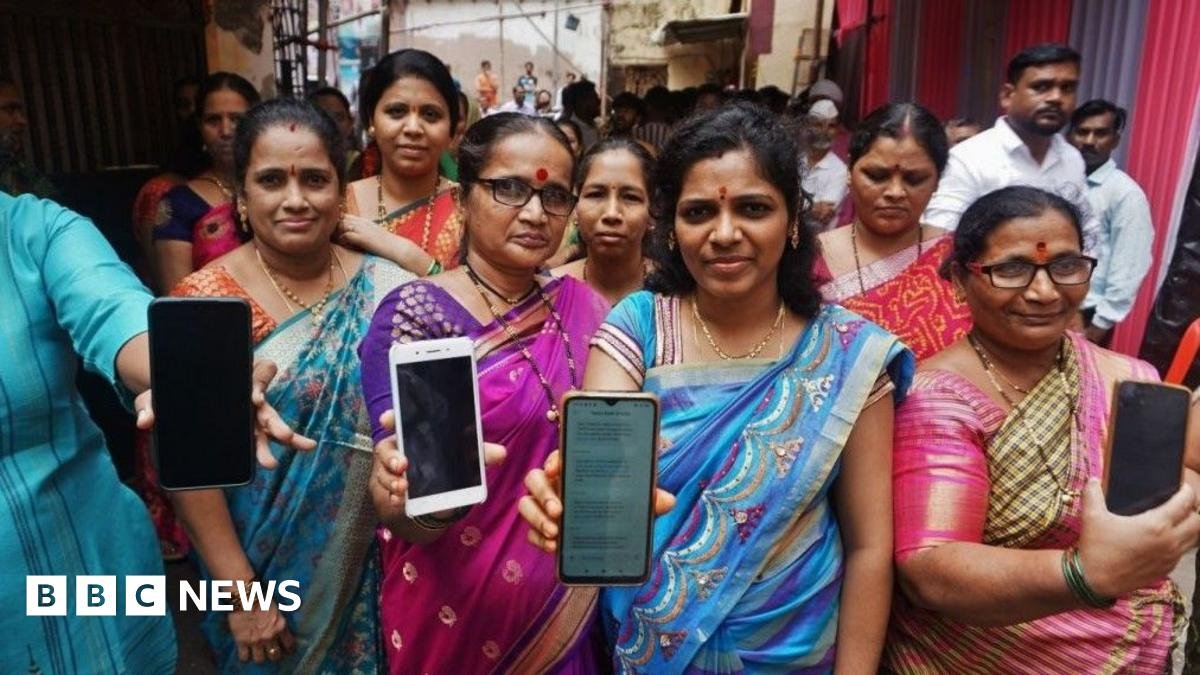
Yet the survey reads less like a celebration than a warning.
India’s states, it argues, are increasingly borrowing to fund recurring welfare payouts while squeezing spending on roads, schools, health systems and job creation.
With salaries, pensions, subsidies and interest payments already consuming more than 60% of state revenues, every additional rupee spent on cash transfers risks crowding out capital investment – the kind economists associate with longer-term growth and employment.
That trade-off is beginning to shape the political debate too.
“Election after election, we’ve seen that welfare alone is not enough to win,” says Louise Tillin, a professor of politics at King’s College London. “It may help at the margins, but it is rarely the decisive factor.”
One reason, Tillin says, is the rise of “competitive welfarism”: almost every major party now offers some version of cash transfers, subsidies or free services, often trying to outbid rivals during campaigns.
“That makes it harder for voters to distinguish between parties on welfare,” she says, “and harder for parties not to have a welfare offer at all.”
In a forthcoming paper using government survey data, Tillin found that even many welfare beneficiaries preferred higher public spending on infrastructure over expanded welfare – especially those who voted for the BJP-led government.
The research points to a growing gap between the political imagination of welfare and the way many recipients themselves understand it.
Voters may value welfare – but increasingly ask what comes after it: jobs, wages, mobility, aspiration.
“People do not aspire to be beneficiaries,” says Tillin.
The shift has also reshaped the political language of welfare itself.
“Much of welfare delivery in India remains top-down and paternalistic – the political leader dispenses benefits and claims credit for them. It becomes a politics of gifts rather than rights,” says Tillin.
Yamini Aiyar, a senior visiting fellow at Brown University, calls this “techno-patrimonialism” , externalto describe how governments use “cash-transfer technology to recast welfare as a personal gift from political leaders”.